
Skip to content
APPLICATIONS · CHEMISTRY / RESEARCH FUNDING

BIRD backs a quantum project aimed at the surface of a catalyst

Qarakal Quantum and Quantum Elements will develop a prototype for mapping surface reactions. The $7.4 million headline covers seven partnerships.
Published Source report Sources checked
My reading list
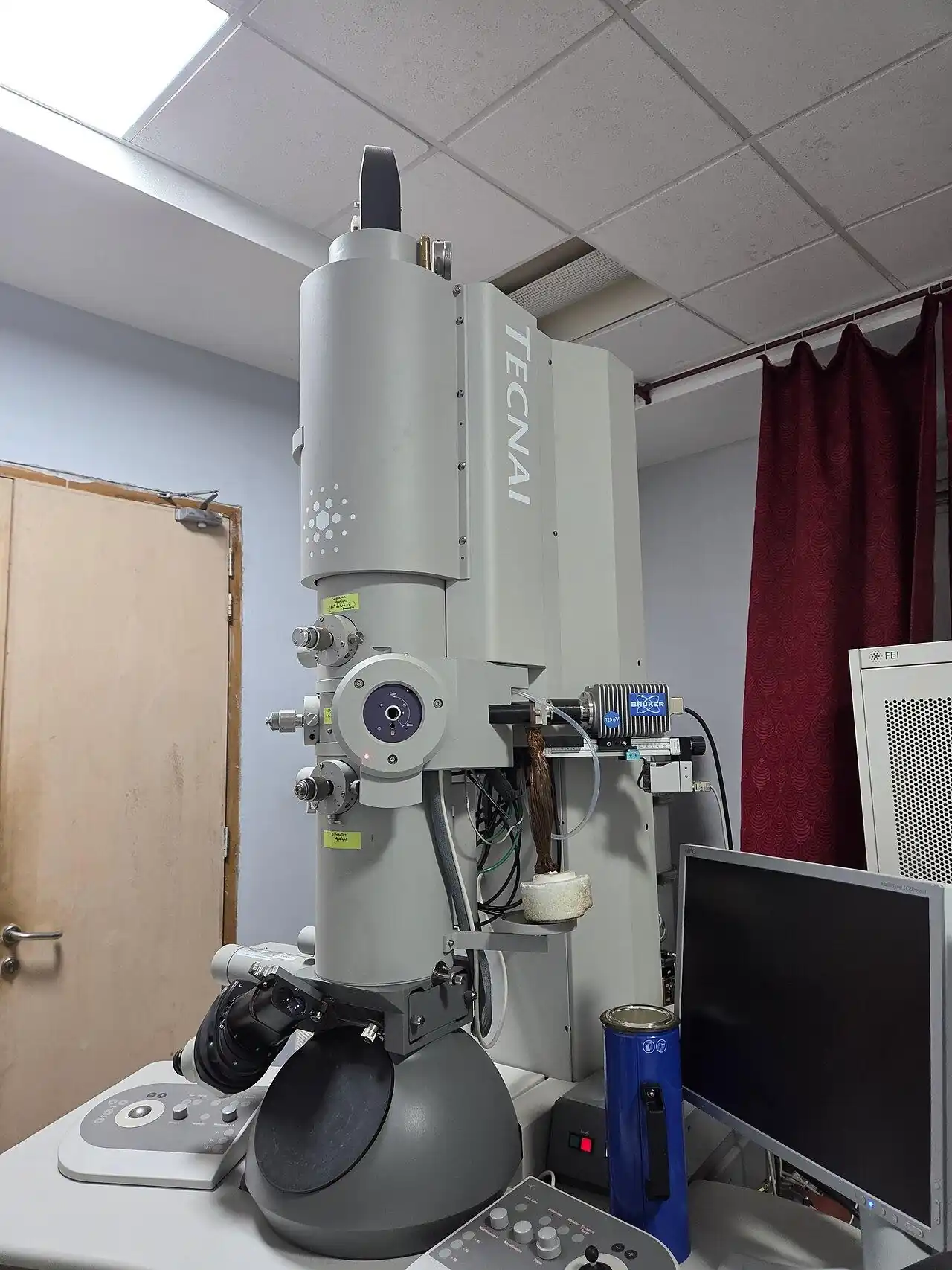
A tall transmission electron microscope with its laboratory controls.
A conventional transmission electron microscope, photographed in 2025. Materials-characterization context for catalyst research; this is not the proposed Qarakal–Quantum Elements quantum-computing prototype.Photo: Transmission electron microscope (1).jpg · Gannu03 · CC BY-SA 4.0Full image credit

Qarakal Quantum in Israel and Quantum Elements in California are among seven partnerships selected for BIRD Foundation support. Their proposed product would use quantum computing to model complex reactions on catalyst surfaces. BIRD announced the round in October following a September board decision; its distributed release is dated October 20.[1][2]

The approved $7.4 million is a total across all seven projects, spanning several industries. It is not the quantum partnership’s award. BIRD describes conditional grants and expects combined public and private investment across the round to reach $20 million. The announcement does not disclose how much of either total belongs to Qarakal and Quantum Elements.[1]

The partners’ stated deliverable is a minimum viable product. That makes this a development commitment: the foundation is backing an attempt to build and test a useful tool. The release provides no completed benchmark, independently measured accuracy gain or customer production result for the proposed catalysis system.[1]

A surface-reaction model is useful only if it answers a defined chemical question. In QubitWire’s assessment, a meaningful demonstration would identify the material and reaction being studied, state which quantities it predicts, and compare those predictions with a credible reference. A small calculation that reproduces a known result and a model that changes an experimental decision establish different kinds of progress.

The computing boundary matters too. An evaluation should separate work performed on a quantum processor from classical preparation, simulation and analysis. It should report accuracy and total resources together. Otherwise, a more elaborate calculation could appear impressive while adding little to the chemist’s available evidence or taking substantially more effort to reproduce.

The collaboration is worth following because it names a specific industrial modeling problem. Its next useful milestone would be a reproducible prototype result with a classical comparison and clearly defined limitations. Until then, the grant supports research and product development; it does not certify that quantum computing has improved catalyst discovery.

Keep your reading trail

Your Updates →

Evidence & context

2 linked sources

foundation funding announcement; prototype and performance remain prospective

How to read the evidence and dates

An announcement records what an organization stated. An experiment reports an observation. A simulation or resource estimate depends on its assumptions. QubitWire’s analysis connects these sources; the labels are not quality scores.

Published is the article’s first QubitWire publication. Updated marks a substantive content change. Sources checked records a review of the underlying evidence. An older paper can support a new explanation, and another press release about the same work is not independent replication.

QubitWire take

A shared funding total supports a development program; the useful result will be a measured chemical prediction.

Sources

  1. BIRD Foundation: seven new US–Israel R&D partnerships

    October 2026 announcement records a September board decision. No individual quantum-project grant amount is disclosed.

  2. BIRD Foundation release distributed by PR Newswire

    Distributed October 20, 2026; same foundation announcement, not independent corroboration.

READ NEXT

Continue exploring

All Applications stories
  1. Explore quantum chemistry

    What a Quantum Chemistry Calculation Actually Solves

    A lower energy is useful only when you know the model, the uncertainty and the question. Follow one VQE calculation from molecular choices to a defensible answer.

    Published · Sources checked
  2. Explore quantum chemistry

    A quantum NMR simulation recovers a molecule’s missing spectral detail

    Quantinuum’s H2 reproduces a molecular spectral feature in a 21-spin model. Resolution and full computing cost remain the practical tests.

    Published · Source report · Sources checked
THE QUANTUM BRIEFING

A clearer signal.
Read the latest edition.

A little perspective on a fast-moving field.

Read the on-site briefing →

Read selected quantum coverage in the on-site briefing, or register your interest below.