
Skip to content
APPLICATIONS · RESEARCH COMPETITIONS / JAPAN

NEDO’s quantum awards range from drug models to music

Nine projects received awards, but only one category had a first-place winner. IBM’s account also distinguishes hardware experiments from simulated final results.
Published Source report Sources checked
My reading list
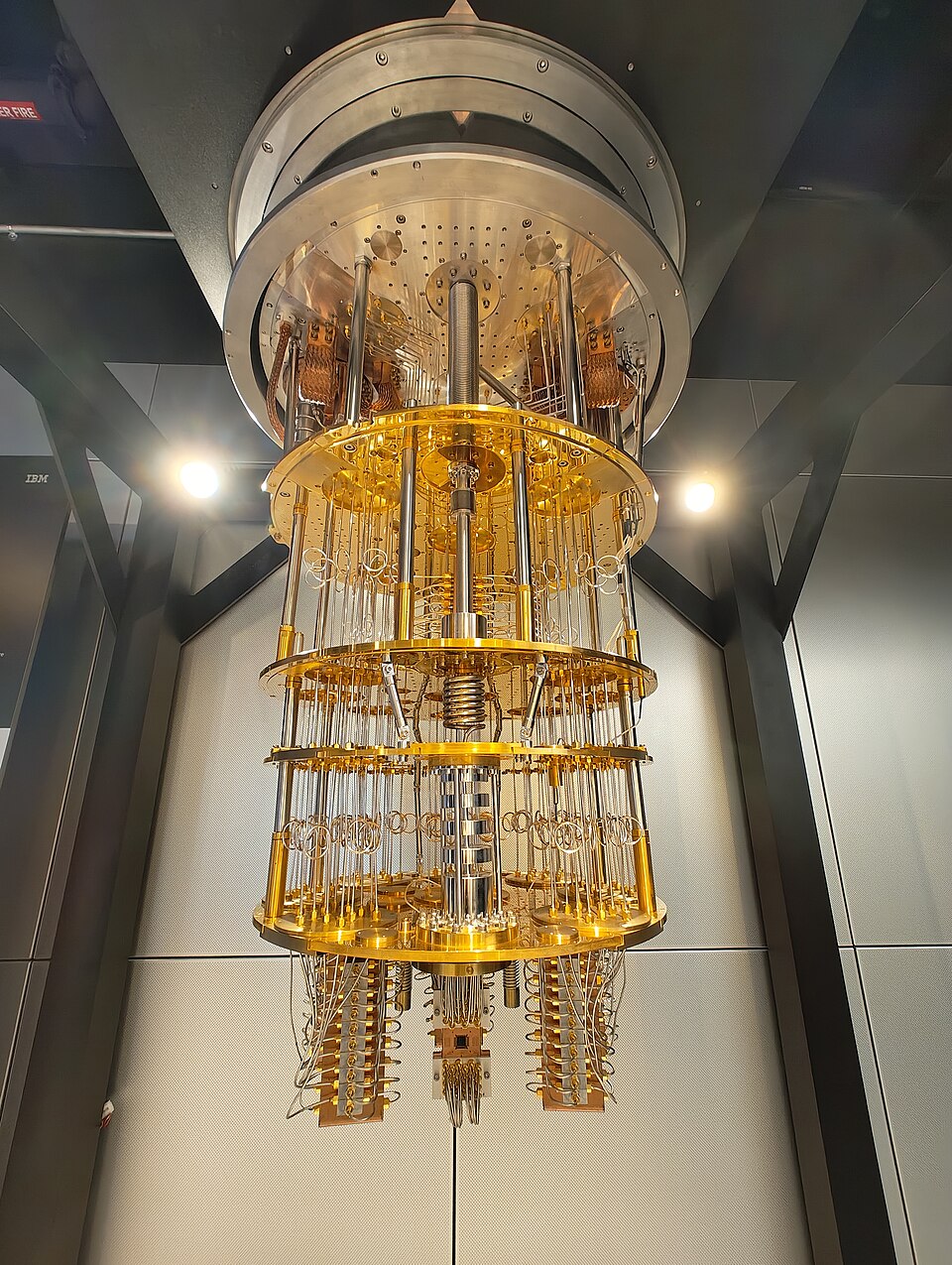
Gold-colored refrigeration stages and wiring of an IBM Quantum System One at IBM's Yorktown Heights research center.
IBM Quantum System One at the Thomas J. Watson Research Center in Yorktown Heights, New York, photographed in 2024. Context image for IBM quantum hardware—not Nighthawk r2 or a verified Nighthawk installation.Photo: Onri Jay Benally / OJB Quantum · CC BY 4.0Full image credit

Japan’s NEDO quantum challenge rewarded nine projects from 87 entries at an October 15 ceremony. Official results published the next day cover societal infrastructure, quality of life and Japanese cultural or industrial strengths. IBM published its account of the teams’ work on October 23.[1][2]

The results were not a clean sweep of first prizes. Shionogi won first place in the quality-of-life category for work connecting candidate-molecule generation with interaction-energy assessment. NEDO awarded no first place in either Society 5.0 or Cool Japan under its criteria. Those distinctions matter when interpreting a list of winning teams.[2]

EntangleTune received second place for music and sound generation; Qrazy Qreators received third place for manga and animation tools. Other awarded projects addressed disaster-related prediction, vehicle design and blockchain hashing. These are research projects, rather than evidence that each has become an operational service.[2]

IBM says all nine winning teams used its quantum hardware at some point in their research, with six using it exclusively among quantum-hardware providers. But Shionogi’s final results were obtained through simulation. Using a processor during development and producing the reported final result on that processor are different claims; a project summary needs to preserve that distinction.[1]

QubitWire’s assessment is that the breadth of the entries is useful for generating testable application ideas. An award recognizes performance under a competition’s rules. It does not by itself establish an advantage over the best classical method, a clinically useful drug candidate, a reliable disaster warning or a production-ready creative tool.

NEDO plans to publish a use-case collection around December 2026, offering a basis for following individual projects into further research and commercialization.[2]

The most informative follow-up would report the task, baseline and complete execution method. The accompanying 2024 System One photograph provides IBM hardware context; it is not a picture of the award-winning experiments.

Keep your reading trail

Your Updates →

Evidence & context

2 linked sources

official award results and IBM participant account; awards do not prove practical quantum advantage

How to read the evidence and dates

An announcement records what an organization stated. An experiment reports an observation. A simulation or resource estimate depends on its assumptions. QubitWire’s analysis connects these sources; the labels are not quality scores.

Published is the article’s first QubitWire publication. Updated marks a substantive content change. Sources checked records a review of the underlying evidence. An older paper can support a new explanation, and another press release about the same work is not independent replication.

QubitWire take

Follow the task and execution method behind each prize before drawing conclusions about application readiness.

Sources

  1. IBM: NEDO Challenge 2026 projects

    October 23, 2026 account. All nine winners used IBM hardware during their research; Shionogi’s final results were simulated.

  2. NEDO: official award results

    October 16, 2026 publication documents the October 15 ceremony, 87 entries and nine awards. Japanese-language primary source.

READ NEXT

Continue exploring

All Applications stories
  1. Explore the related question

    IonQ’s Cambridge Centre Opens With Nine Research Projects

    The Ray Dolby Centre now houses the research partnership. IonQ describes its planned 256-qubit computer in future tense, keeping the opening distinct from hardware delivery.

    Published · Source report · Sources checked
  2. Explore the related question

    Washington Moves Closer to the Quantum Cap Table

    Three final awards of up to $100 million each advance a funding framework that gives Washington a stake in quantum companies. The manufacturing targets explain why.

    Published · Sources checked
THE QUANTUM BRIEFING

A clearer signal.
Read the latest edition.

A little perspective on a fast-moving field.

Read the on-site briefing →

Read selected quantum coverage in the on-site briefing, or register your interest below.