
A cloud-accessible quantum memory improves with code size, with a long-run caveat
A rectangular surface-code memory improves as one dimension grows. Longer sequences reveal why the duration of the test matters too.
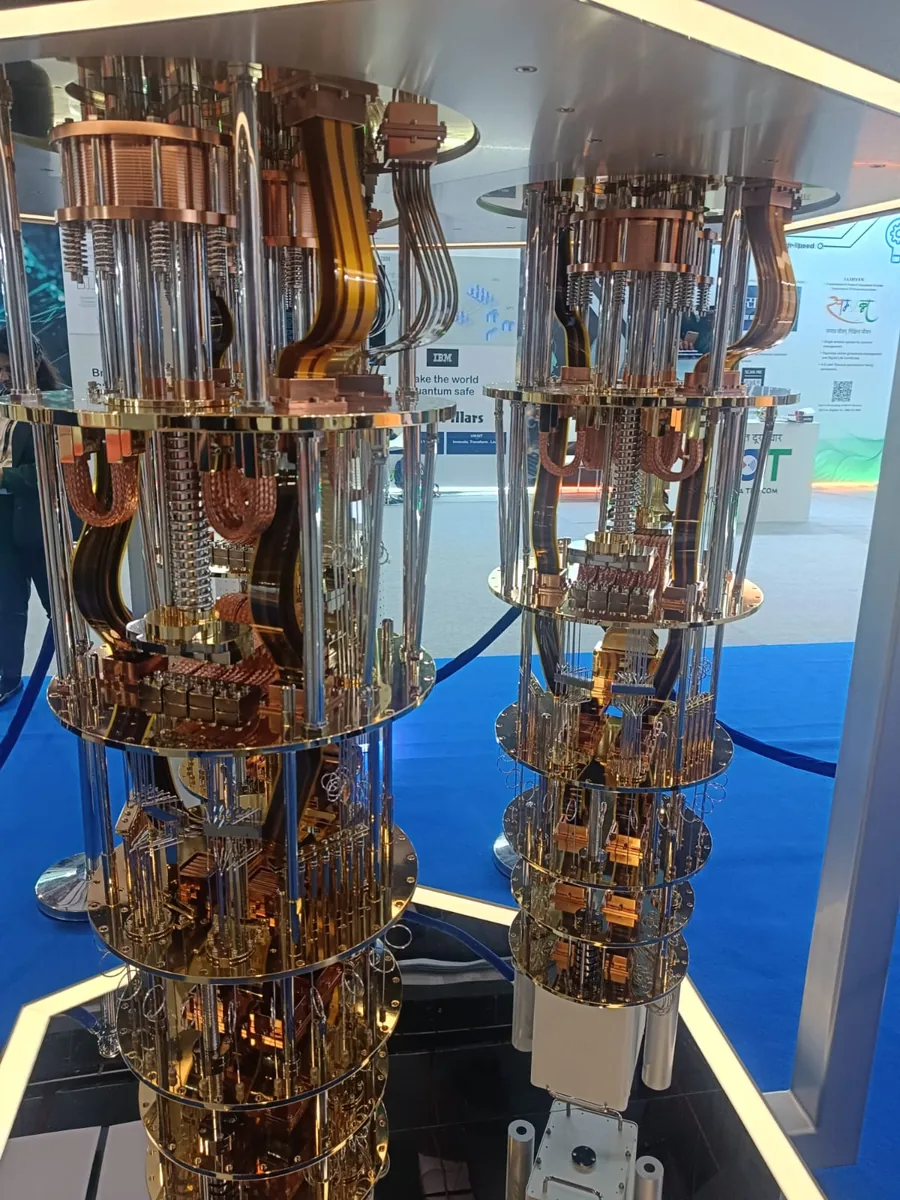

The reported development
An October 16 preprint reports logical error suppression in rotated surface-code memories on IBM Nighthawk r2. Increasing one protected code distance while holding the other fixed reduced measured error per round. Tests extended to 150 rounds, where the advantage weakened in the presence of long-lived correlations. The result concerns memory, with performance dependent on placement and operating choices.[1]
In selected rectangular patches, increasing the protected distance from three to six while holding the other distance at three reduced the reported per-round Z error from 0.53% to 0.24% and X error from 0.52% to 0.22%. These tests used 20,000 shots per configuration and all shots, with exact maximum-likelihood decoding over short sequences of three to thirteen rounds. The separate 150-round study used a matching decoder.[1]
Size and time ask different questions
Increasing a code's protection asks whether extra physical resources reduce logical failures. Running it longer asks whether that benefit survives repetition. Both tests are necessary for a memory that must wait during a calculation.
A device can look promising in a short experiment while accumulating a kind of disturbance that becomes visible only over a longer sequence. The experiment's duration is therefore part of the result, rather than a footnote to an error number.
Why correlations change the story
A simple mental model treats each correction round as a fresh chance for an independent fault. Under that assumption, repeated-round statistics can be summarized relatively compactly. A disturbance that persists across rounds breaks the reset implicit in that picture. Evidence from one round can then be related to evidence much later. A decoder and a performance model must account for that structure if it materially changes the protected information's survival.
Keep the code geometry attached
Code distance describes a particular kind of protection against logical error. In an asymmetric memory experiment, changing one direction while holding another fixed is a controlled comparison, but it is not the same as enlarging every aspect of a square code. The changing dimension and the fixed dimension therefore belong beside the reported distance. Otherwise a shorthand such as distance six can invite readers to compare physically different layouts as though they were identical.
An instructive comparison
Imagine two hypothetical memories with equal short-run error per round. One experiences mostly brief disturbances; the other occasionally enters a persistent bad condition. Their average rates could conceal different distributions of failed runs. Reporting variation across placements and run lengths would expose that difference. A user interested in a long waiting operation may care especially about the tail of the distribution, whereas a short diagnostic test might barely encounter it.
What the next result should resolve
The important follow-up is whether a model of the persistent component predicts behavior in data it was not fitted to. Repeating the experiment at new placements and calibration times could test that prediction.
Separately, logical gates would need their own evidence before a memory result could support a complete computational claim. The new preprint gives readers a productive way to follow progress: ask whether protection improves with resources, then ask how long that improvement lasts under a fully stated protocol.
Keep your reading trail
Keep up with these topics
Choose the subjects you want to find again in Your Updates.