
Quantum Computers Need “Magic.” Making Enough Is the Hard Part.
Some error-corrected quantum computers need a steady supply of specially prepared states. A laboratory result shows one way to make them cleaner.
Earlier source checks
Previously checked
.jpg)
A future quantum computer may spend a surprising amount of effort making something it consumes almost immediately: magic states. The name is not a claim about supernatural physics. These specially prepared quantum states supply an ingredient that lets certain error-protected computing schemes carry out a wider range of operations.[1][2]
The difficulty is producing that ingredient cleanly. Magic-state distillation starts with several imperfect resources and uses a checking procedure to produce fewer, better ones. A factory is the part of a proposed machine dedicated to that preparation, rather than an ordinary building making chips.[1][2]
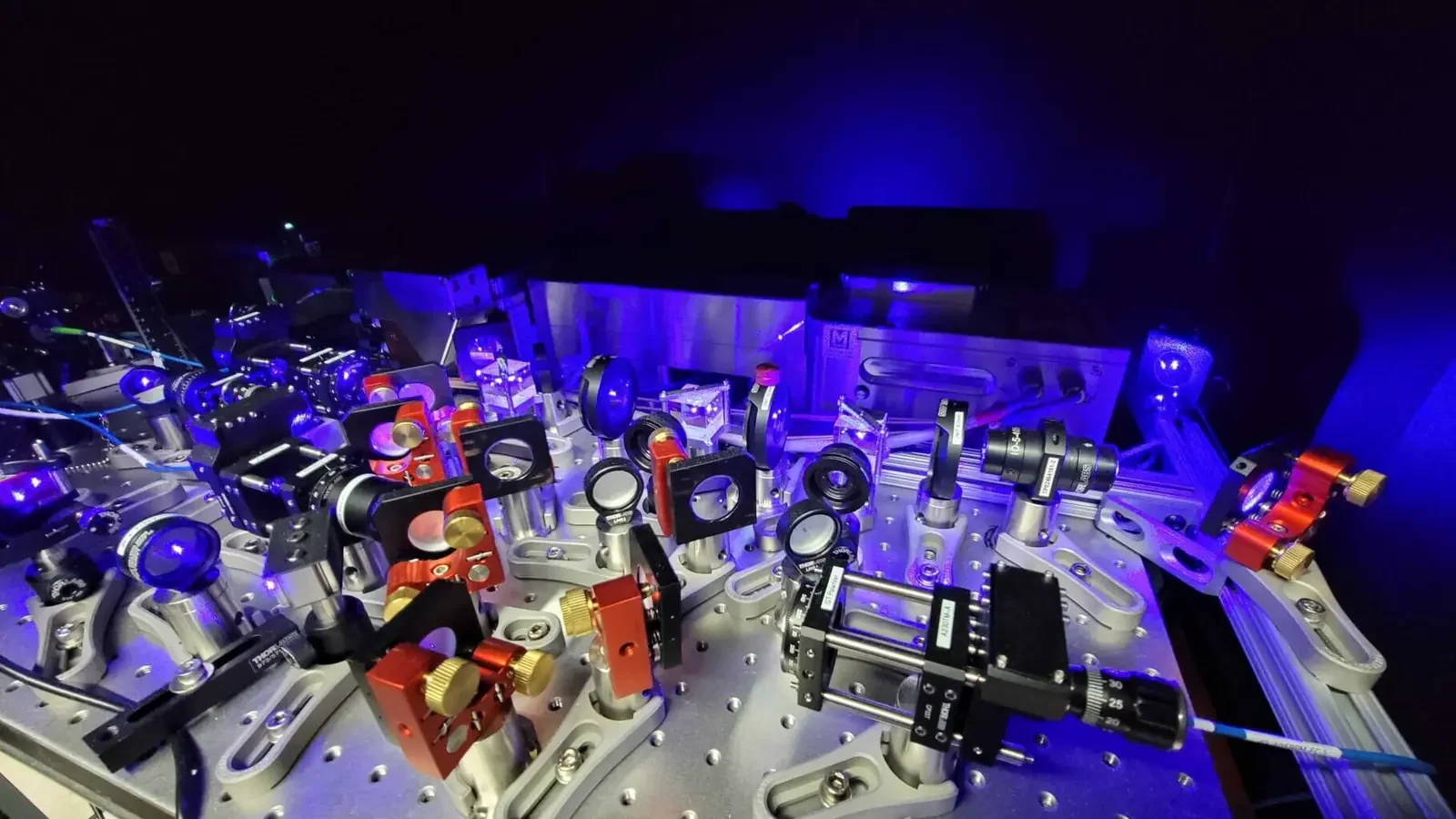

In work published in 2025, researchers demonstrated distillation at the logical level on a neutral-atom platform. Logical means the information was encoded across with error protection. The reported accepted output magic states had higher fidelity than the input states, providing an experimental step beyond simply drawing the process on a circuit diagram.[1]
That does not mean a complete useful fault-tolerant computer is finished. A demonstration of improved states is different from a factory that supplies them fast enough, reliably enough and at a manageable hardware cost for a large application. Different architectures can also implement the required operations in different ways.[1][2]
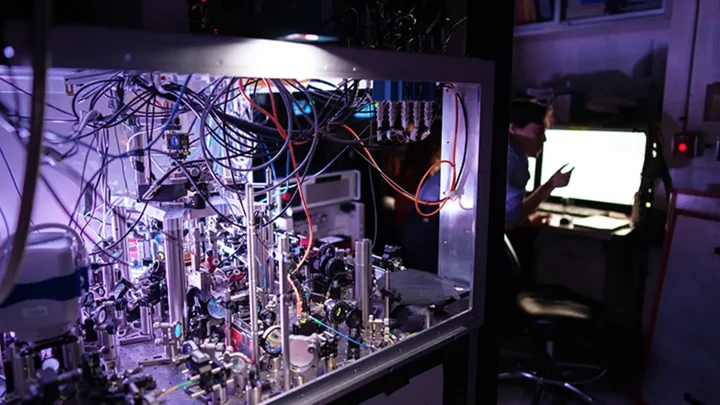
This is why a qubit headline rarely tells the whole story. A machine needs not only protected storage but a dependable supply of the resources its calculations consume. The striking image is less a lone superpowered processor than an operation with production lines working behind it. Useful quantum computing will need good logistics as well as good qubits.[2]
October 15 update: a different kind of factory proposal
A preprint submitted October 7 proposes a factory built from high-rate quantum low-density parity-check codes. It prepares resource states and transfers them into a more protective code, evaluating a circuit-level noise model and a proposed neutral-atom layout. This protocol and simulation study is separate from the 2025 hardware experiment above. No operating factory is demonstrated.[3]
“Single-shot” concerns a constant number of noisy check rounds, rather than rounds growing with code distance. It does not make a whole computation a one-measurement task. Acceptance is reported per block; the full factory needs three accepted pairs, so its modeled yield is the cube of the quoted fraction. That lower yield enters the space-time accounting.[3]
The most-likely-error decoder used in the simulations is too costly for real-time operation at scale. The table normalizes CCZ-resource yield but omits downstream logical-measurement costs and the error and space-time costs of T-to-CCZ conversion. Decoder latency is also outside its totals. Practical decoding and full production accounting remain engineering tests.[3]
A smaller footprint can still cost more
Here is a deliberately fictional comparison with the same output target. Factory A occupies 400 qubits for 100 cycles per attempt and accepts 80% of attempts. Its average cost is 400 × 100 ÷ 0.8 = 50,000 qubit-cycles per accepted output. Factory B occupies 250 qubits for 200 cycles and accepts 90%, giving about 55,556 qubit-cycles. The smaller factory costs more on this limited measure.
That arithmetic assumes each successful attempt supplies one equivalent resource, and repeated attempts have the stated acceptance rate. It leaves out waiting memory, routing and decoder costs. These are teaching assumptions, not estimates for the preprint. A useful comparison needs the same output quality and task, the cost of rejected attempts, and a clear boundary around what must happen before the resource can actually be consumed.
October 15 update: account for both CCZ outputs
A separate October 14 preprint studies direct CCZ-state cultivation. Its reported infidelity is joint: it compares an accepted pair with a target containing two CCZ states. Dividing that number by two is not justified because output errors can be correlated.[4]
The simulation language needs precision too. Trajectories and measurement probabilities are evaluated exactly within a noise model that assumes zero idling error; acceptance and mean fidelity are estimated by Monte Carlo sampling. These are modeled outputs after noiseless terminal syndrome extraction and recovery, not measured factory yields.[4]
The resource comparison is a tradeoff. The smaller direct factory has lower estimated space-time volume than the paper’s matched T-state-cultivation-and-conversion benchmark. At the larger factory’s fidelity target, that benchmark has the lower volume, although both direct factories use fewer peak physical qubits. Footprint, accepted-output quality and total production cost therefore belong together.[4]
Keep your reading trail
Keep up with these topics
Choose the subjects you want to find again in Your Updates.