
Quantum computers need repeatable parts. NPL is working on the packaging.
A UK project will develop batch packaging for ion traps. Repeatable manufacturing results will show what the funding delivers.
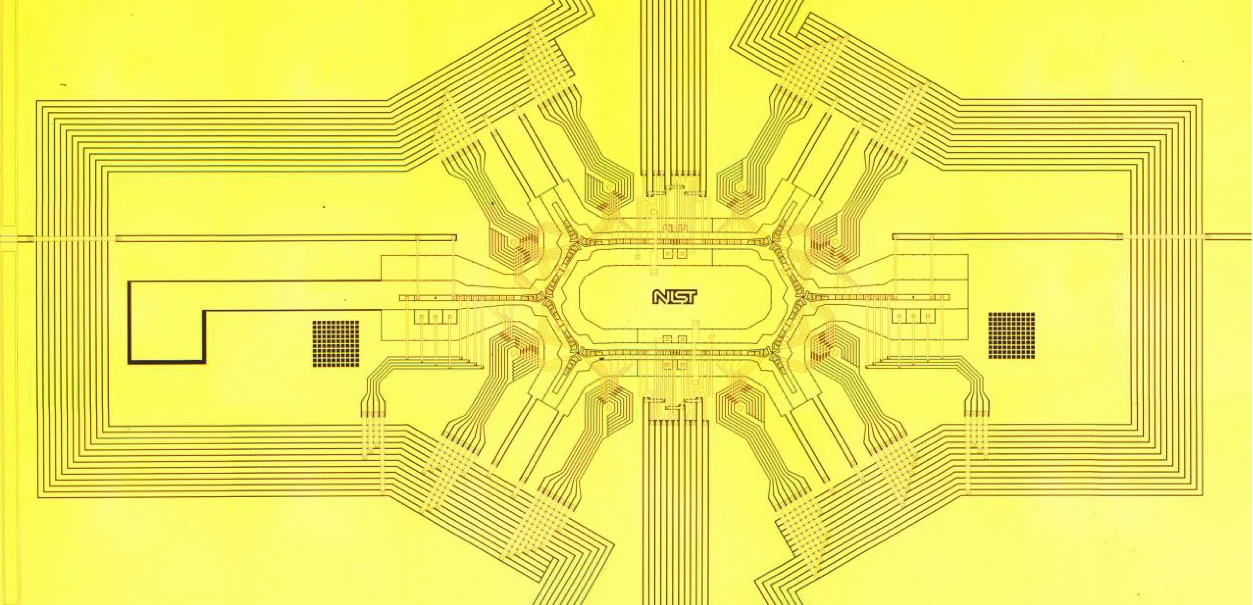


From one device to the next batch
One working quantum device does not tell a manufacturer how reliably the next hundred can be made. The National Physical Laboratory is targeting that gap with a £230,000 award from the UK’s Government Office for Technology Transfer, announced on October 21.[1]
The project will develop a batch packaging process for ion-trap devices. NPL says the work addresses production yield and bottlenecks near the end of fabrication, with the aim of supporting larger, interconnected trapped-ion systems.[1]
What the package has to connect
The trap is the structure that holds charged atoms in position. In NPL’s earlier description of its technology, the chip sits inside a vacuum chamber among optical and electrical equipment. Electric fields confine the ions; lasers cool, manipulate and measure them. A small component therefore has to work as part of a much larger instrument.[2]
That integration has already been tested in a specific transfer. NPL’s July 2025 account describes completing the final packaging and connecting optical and electrical systems for a microtrap delivered to the National Quantum Computing Centre. The centre first trapped ions in that system on March 28, 2025.[2]
The result still to be measured
The earlier milestone establishes a working research installation, not the results of the newly funded packaging programme. The October announcement describes a funded development project; it does not report a measured yield improvement or a completed networked quantum computer.[1][2]
What to watch next
QubitWire’s assessment is that the useful follow-up questions concern consistency: how many packaged devices pass inspection, how performance varies between units, and how much assembly or rework each needs. Comparable before-and-after measurements would make the manufacturing claim easier to assess.
The distinction matters for readers following quantum scale-up. More dependable components could help builders assemble systems, while reliable operation across those systems remains a separate test.