
Skip to content
SECURITY · POST-QUANTUM SOFTWARE SIGNING

AWS’s Quantum-Resistant Signing Guide Shows Where Policy Stops

The October 12 deployment guides connect keys, identities and software verification, while leaving application-level cryptography outside cloud API controls.
Published Source report Sources checked
My reading list
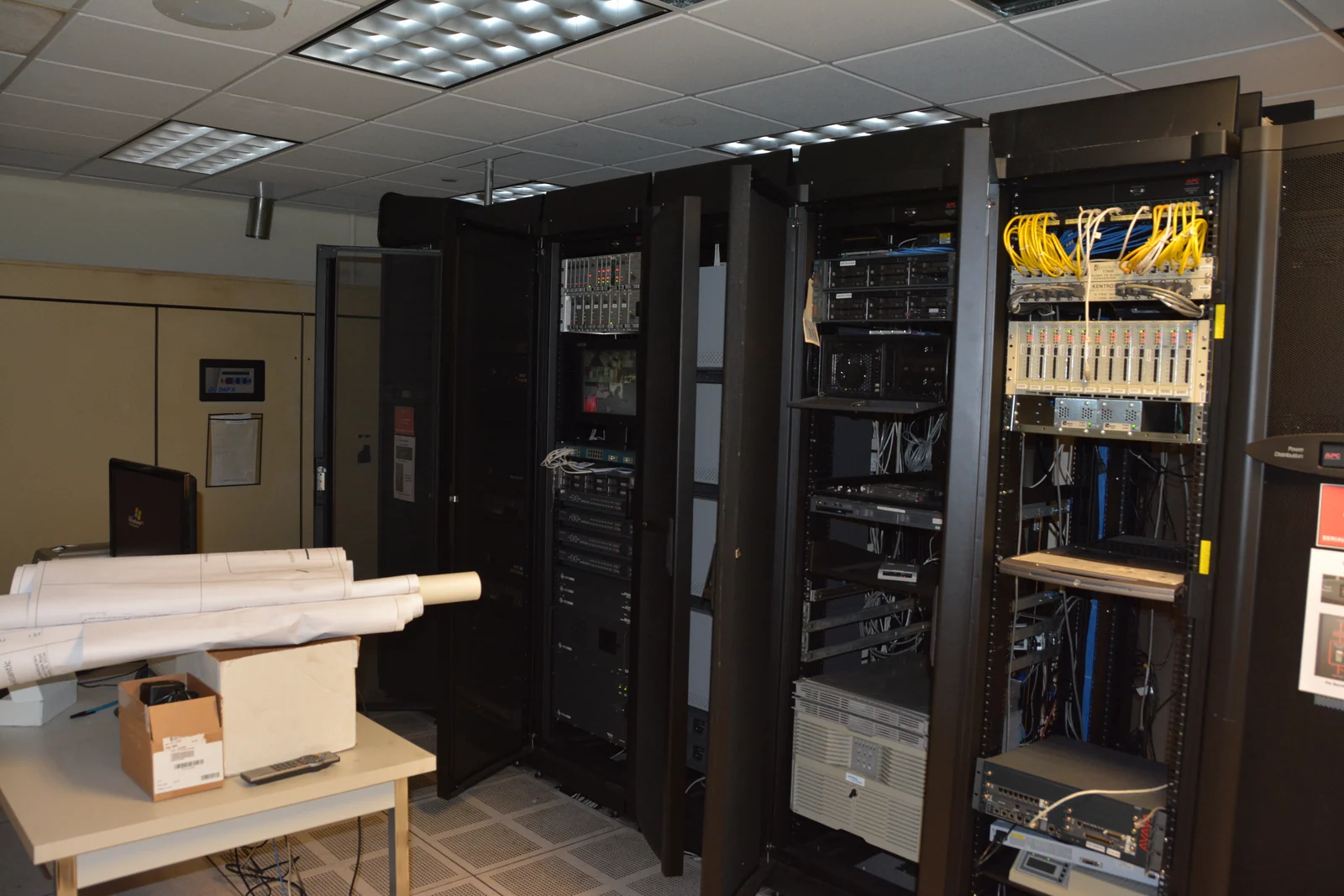
Open black server cabinets stand beside worktables in a room lit by ceiling panels.
A server room photographed on November 4, 2015. Archival infrastructure context; the photograph does not document AWS’s signing pipeline. Photo: Carl Lender, CC BY 2.0.Photo: Archival server room, November 2015 · Carl Lender · CC BY 2.0Full image credit

AWS has published a two-part guide to quantum-resistant software signing that makes a crucial boundary visible: controlling a cloud service is different from controlling every application running in that cloud. The October 12 tutorials combine existing capabilities; AWS Key Management Service (KMS) added ML-DSA signing in June 2025.[1][2][5]

ML-DSA, standardized by NIST in August 2024, verifies digital signatures intended to remain secure against a future large-scale quantum attacker. Signatures help establish who signed data and whether it changed. This is preparation for future attacks, not evidence that present quantum computers can forge deployed signatures.[3]

The design links KMS-held signing keys, Private CA certificates and Roles Anywhere authentication for external build agents. It signs software artifacts and a software bill of materials, the dependency inventory accompanying a release. A signed statement binds that inventory to a specific artifact through its digest, a content-derived identifier.[1]

There are implementation details behind the architecture. Current KMS documentation limits direct signing input to 4 KB. Larger inputs use an externally computed, 64-byte message representative through EXTERNAL_MU. AWS explicitly distinguishes this procedure from the separate HashML-DSA construction in the standard; substituting an arbitrary file hash is not equivalent.[4]

The policy boundary is equally important. Service control policies and identity permissions can constrain selected AWS API operations, but they do not police OpenSSL or application-level signing inside EC2 instances, containers or Lambda functions. Part 2 also leaves Roles Anywhere controls outside its scope, despite that service appearing in the pipeline.[2]

AWS illustrates an organization choosing ML-DSA-65 and ML-DSA-87 while excluding ML-DSA-44. That is an example organizational policy, not a finding that ML-DSA-44 is insecure. The guide calls for testing controls outside production; broad restrictions can interrupt legitimate workflows.[2]

QubitWire’s analysis: a valid signature is evidence about origin and integrity, not a certificate that software is harmless or its dependency inventory complete. Algorithm choice, access policy and release verification therefore answer separate questions. Passing one check cannot establish that the entire delivery process meets its security goals.[3]

A useful next test would deliberately alter an artifact, substitute a correctly signed inventory belonging to another release, and confirm that deployment rejects both. An unchanged, authorized release should still pass. Those paired tests would probe enforcement at the point of use, beyond merely demonstrating that a signing key works.[1]

Keep your reading trail

Your Updates →

Evidence & context

5 linked sources

October 12 vendor deployment guidance, checked against the existing NIST standard, current KMS documentation and the June 2025 service announcement. QubitWire did not execute AWS commands or independently test the pipeline. No new quantum processor, production-security benchmark or universal compliance claim is established.

How to read the evidence and dates

An announcement records what an organization stated. An experiment reports an observation. A simulation or resource estimate depends on its assumptions. QubitWire’s analysis connects these sources; the labels are not quality scores.

Published is the article’s first QubitWire publication. Updated marks a substantive content change. Sources checked records a review of the underlying evidence. An older paper can support a new explanation, and another press release about the same work is not independent replication.

QubitWire take

A quantum-resistant signature helps protect origin and integrity. A trustworthy release also needs correctly scoped controls and verification that rejects the wrong artifact or dependency inventory.

Sources

  1. AWS: quantum-resistant software supply-chain signing, Part 1

    October 12, 2026 tutorial by Harshvardhan Chunawala. Vendor implementation guidance, not an independent production trial.

  2. AWS: algorithm-policy enforcement and its scope, Part 2

    October 12, 2026 tutorial by Harshvardhan Chunawala and Blake Roberts. The examples do not govern arbitrary application cryptography.

  3. NIST: FIPS 204 final standard

    Published August 13, 2024. The live record includes a July 31, 2026 planning note about potential minor corrections.

  4. AWS KMS: current ML-DSA documentation

    Current service documentation for message-size handling and the distinction between EXTERNAL_MU and HashML-DSA. No publication or revision date is displayed.

  5. AWS: original KMS ML-DSA availability announcement

    June 13, 2025 general-availability announcement. Historical context; this article does not repeat its initial region list as current availability.

READ NEXT

Continue exploring

All Security stories
  1. Related reading

    The Web Is Quietly Changing Its Locks Before Quantum Computers Arrive

    Post-quantum cryptography is moving from standards into browsers, cloud services and migration plans. Most people will never see the change - which is exactly the idea.

    Published · Sources checked
  2. Related reading

    IETF Publishes Post-Quantum Algorithms for OpenPGP

    RFC 9980 adds composite encryption and signatures, plus standalone hash-based signatures, to the OpenPGP protocol.

    Source report
THE QUANTUM BRIEFING

A clearer signal.
Read the latest edition.

A little perspective on a fast-moving field.

Read the on-site briefing →

Read selected quantum coverage in the on-site briefing, or register your interest below.