
A Quantum Chip Ran a Particle-Collision Model. No Collider Was Built.
A 2025 research study used a quantum processor to explore a simplified field-theory collision. The achievement is a controlled simulation, not the creation of high-energy particles in a computer.
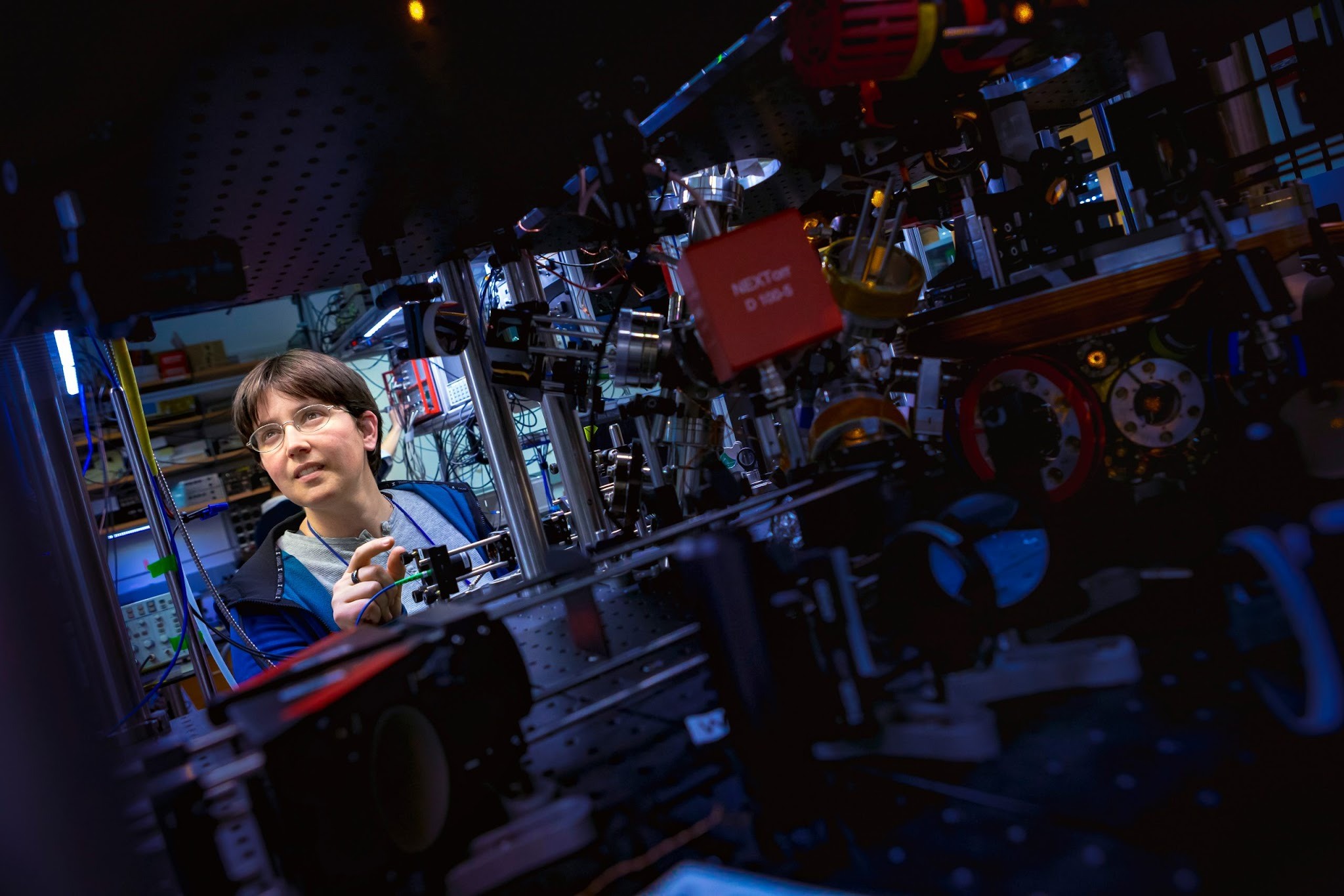
The phrase “particle collision on a quantum computer” invites an irresistible mental image: a tiny accelerator hidden inside a chip. That is not what this experiment did.
First posted in May 2025 and revised on 30 October 2025, the research simulated scattering in a one-dimensional Ising field theory on IBM’s ibm_marrakesh processor. The experiment used 104 and up to 5,589 two-qubit gates. Wavepacket preparation, mid-circuit measurement and feedforward helped make the calculation possible. These are historical research details, not a new October 2026 experiment.[1]
The real attraction is different from the imagined collider. A controllable quantum system can be arranged to explore the dynamics of another model, letting researchers ask questions about how quantum information and interactions evolve under specified rules.
A simulation is a mapping
Every simulation chooses what to represent. It includes some features of a target problem and simplifies or omits others. A weather model does not contain a miniature atmosphere; a field-theory simulation does not necessarily contain the particles or energy scales of a physical accelerator.
The scientific task is to define the mapping and show what the implemented system can tell us about the model. Which degrees of freedom are represented? Which interactions are included? How are initial states prepared? Which quantities are measured? What approximations are used?
The one-dimensional field model determines which questions this experiment can address. It does not contain all the particles, interactions or spatial dimensions of a physical collider. Conclusions about a different model or energy regime would need their own calculation and validation.
Preparing the starting state
A collision calculation needs an initial condition. Preparing that condition can be a substantial part of the quantum workload rather than a trivial prelude.
The study’s use of W-state preparation belongs to that problem. A W state distributes a particular kind of excitation coherently across a register. It is not simply a list in which one qubit is secretly active and the others are not; the coherent structure matters to what subsequent operations can do.
The relevant preparation technique must therefore be judged by whether it creates the intended state within the experiment’s assumptions and resource budget. A clever later evolution is not enough if the starting state is wrong.
Measurement can guide later operations
Measurement need not occur only at the end of a quantum circuit. In some workflows, observations made during execution can determine later operations. Feedforward is the use of that information to guide what happens next.
That makes the timing and control system part of the experiment. The program is not merely a static drawing of gates with a final measurement symbol. It can include conditional steps whose correct execution depends on the available hardware and software support.
The existence of mid-circuit measurement does not mean that all quantum information can be inspected freely without consequence. The circuit design has to account for what is measured and how that affects the remaining state.
A gate count needs context
A circuit with thousands of two-qubit gates sounds large. The number becomes more informative when connected to the task, device, error handling and measured observables.
It should not be treated as a universal score that ranks the experiment against every other quantum demonstration. Different circuits have different connectivity, depth, noise sensitivity and measurement requirements. A gate count alone does not show whether an application is useful or whether the best classical method has been surpassed.
The reported qubit and gate figures do not, on their own, establish a general advantage over classical computing. The paper’s task, observables and validation define the scope of its result.[1]
A model can make a process tractable enough to study while retaining features that are scientifically interesting. Researchers can vary parameters, compare predictions and examine observables that connect the experiment to the mathematical description.
A 2025 result with a current lesson
This is a research explainer about a 2025 paper. A later explanation can connect the work to current questions about preparation, control and resource costs without changing the experiment’s original date.
A future update could genuinely become news if a follow-on study changes the model, scales the experiment, improves validation or demonstrates a new comparison. That update should state exactly what changed rather than resetting the clock on the old result.