
A Quantum Computer Made a Time Crystal. The Name Is Only Half the Fun.
Google’s qubits settled into an unusual repeating rhythm, giving researchers a new way to explore how matter behaves.
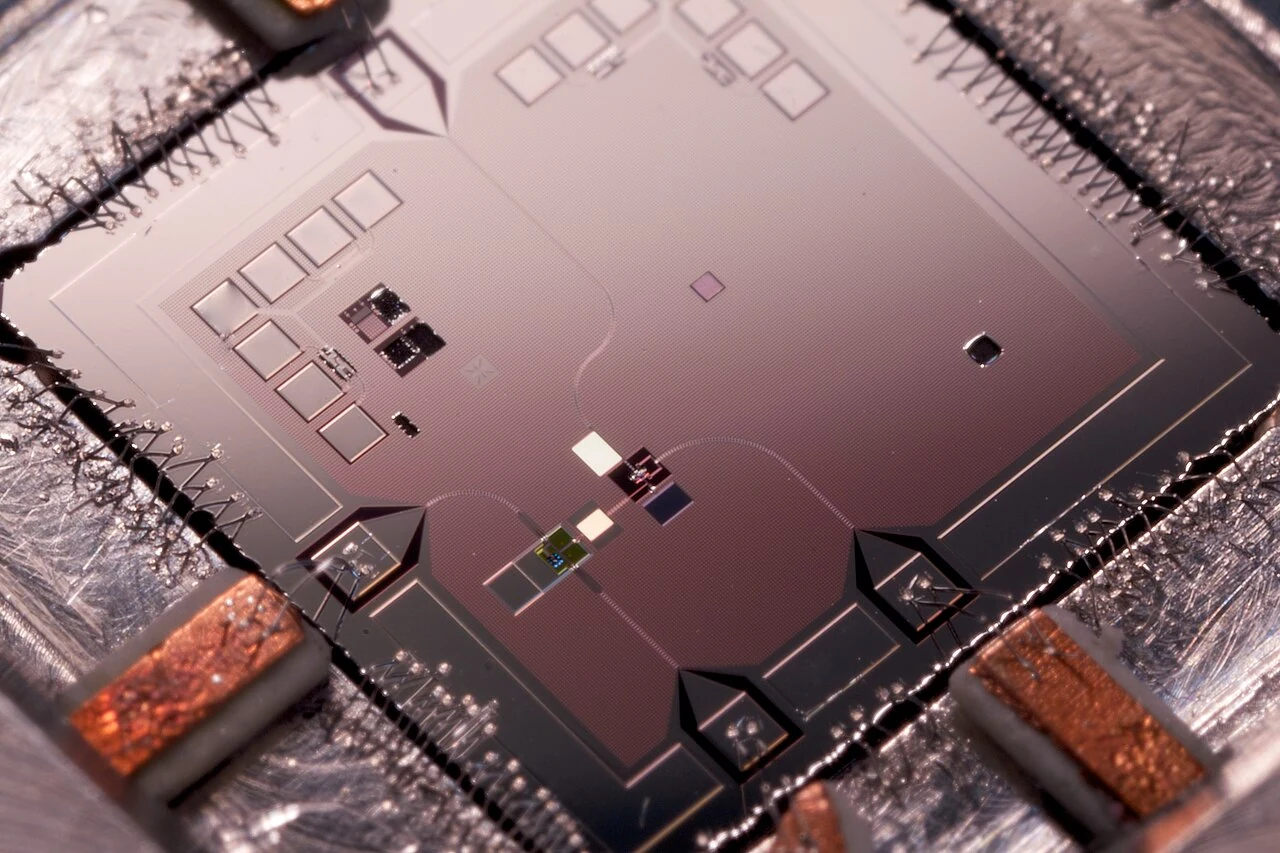

A time crystal sounds like an object you would steal in a science-fiction heist. The real version is stranger in a quieter way: a quantum system whose collective behavior repeats in time. In 2021, Google researchers and collaborators used the Sycamore processor to observe one of these unusual states.
Start with an ordinary crystal. Its atoms form a pattern that repeats across space. A discrete time crystal introduces a pattern in time, emerging in a system driven by repeating pulses. The interesting feature is a collective rhythm that stays locked to a different period from the driving rhythm.
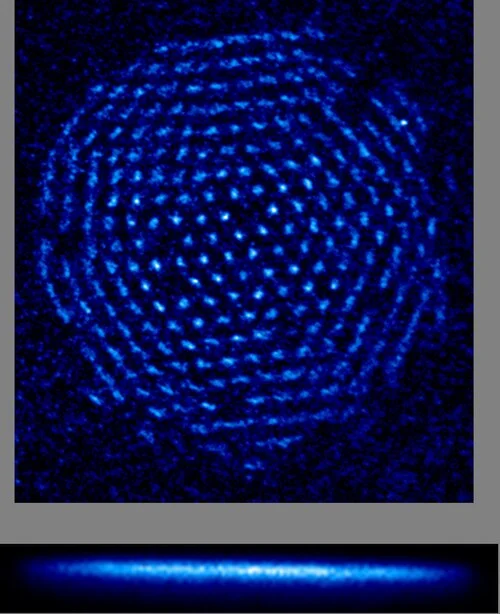
In the researchers’ experiment, a chain of 20 was repeatedly driven through the same cycle. Their response repeated every two cycles and remained robust across a range of settings. That persistence mattered: merely making something oscillate would not, by itself, establish a time crystal.
This was no eternal-motion machine. The apparatus needed control pulses, and real-world noise limited the observed signal. The team used additional tests to distinguish noise from the system’s own tendency to lose order. The paper appeared online in November 2021, before its January 2022 journal issue.
The practical excitement is the experiment itself. A programmable quantum processor let scientists adjust interactions and probe an unusual phase of matter with considerable control. That is a distinctive role for quantum computing: giving researchers a laboratory for quantum behavior, even while larger, more reliable machines remain an engineering challenge.
October 2026: protecting the rhythm
Research note added . The historical explanation and its original publication date are retained.
A separate preprint by Benedikt Fauseweh, submitted on 13 October 2026, asks whether acting on error signals can preserve the repeating response for longer. Experiments using up to 68 physical qubits on IBM’s Kingston processor combined parity measurements with conditional bit-flip correction. The reported time-crystalline response persisted over more drive cycles; a control that measured without applying the correction decayed faster.
The recovery protects a particular repeating pattern. It does not correct phase errors or establish protection of arbitrary quantum information. The paper’s fitted persistence is expressed in drive cycles; its conversion to elapsed time uses an estimated schedule, not a directly measured device lifetime. The useful next comparison keeps the observable, fitting interval and full correction cost together.