
Skip to content
APPLICATIONS · SOFTWARE / SOLVER EVALUATION

QCentroid Missions starts with the solver a business already uses

The new workflow proposes AI-driven experiments across classical, quantum-inspired and quantum approaches. Its announced rollout begins in Q4, with human validation gates.
Published Source report Sources checked
My reading list
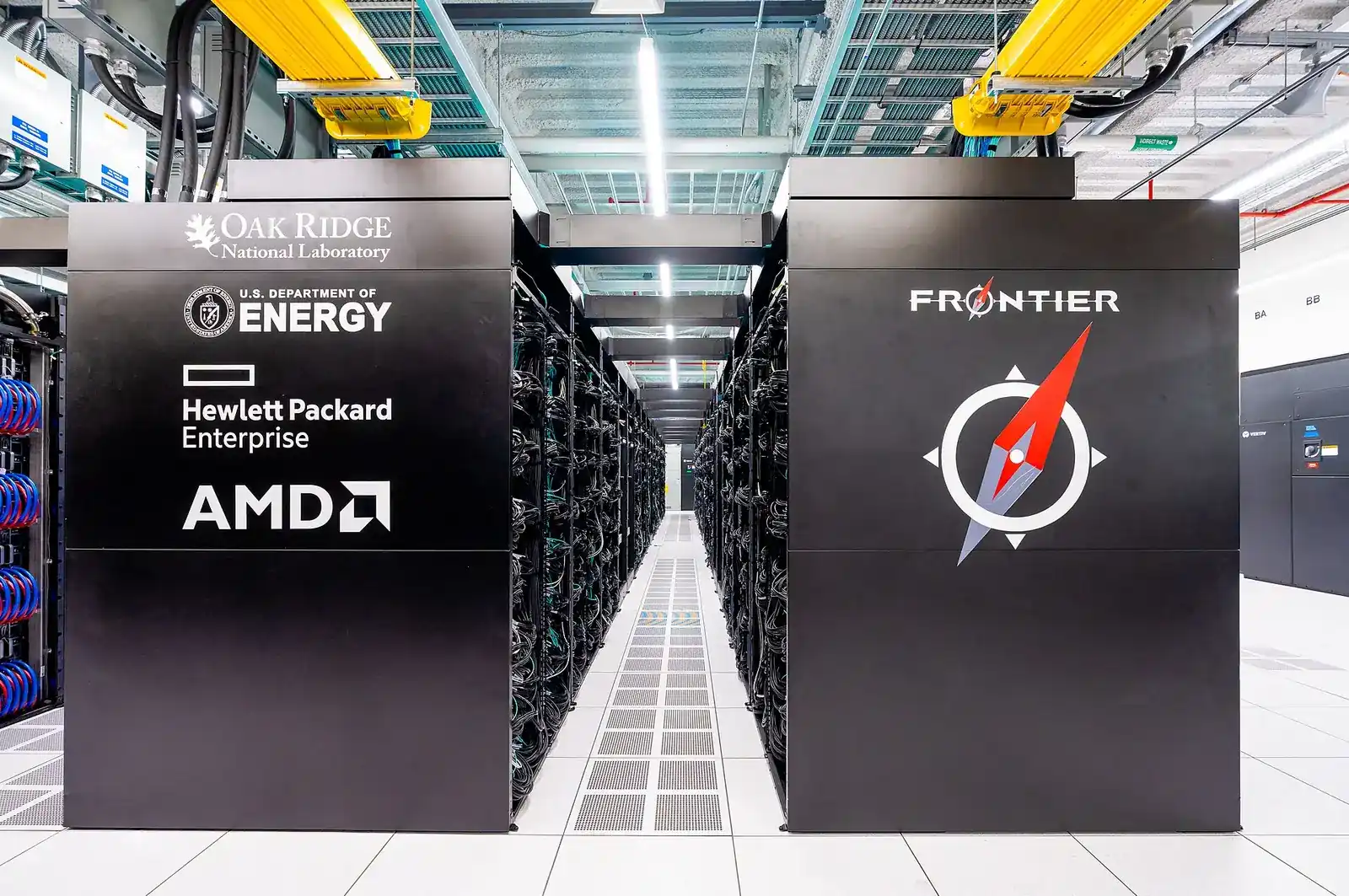
Rows of Frontier supercomputer cabinets at Oak Ridge National Laboratory.
Frontier at Oak Ridge National Laboratory. Archival high-performance-computing context; this is not a QCentroid installation or evidence of the performance of a Missions solver comparison.Photo: Frontier supercomputer · OLCF at ORNL · CC BY 2.0Full image credit

QCentroid announced Missions on October 21 as a new way to organize experiments in its QuantumOps platform. A team specifies a measurable objective and its existing computational solution; software agents then explore alternatives. The company demonstrated the capability at NVIDIA GTC Berlin and says rollout to platform customers will begin in the fourth quarter of 2026.[1]

The proposed workflow compares classical, quantum-inspired and quantum approaches under agreed limits. Those limits can cover time, compute resources, data and permitted execution systems. Human approval and validation gates are part of the design. QCentroid says a recommendation may also be to retain the existing classical method if the comparison supports it.[1]

Quantum-circuit simulation runs by default on NVIDIA accelerated computing through CUDA-Q. Running on a quantum processor remains a separately gated option. That distinction matters: a workflow that considers a quantum algorithm is not necessarily executing it on quantum hardware, and a successful simulation does not establish a hardware speed advantage.[1]

QubitWire’s assessment is that the baseline deserves as much scrutiny as the new method. A comparison can change when the incumbent solver receives a better configuration or when data preparation and validation costs are counted. The useful test gives each candidate a fair implementation budget and judges all of them against the same acceptable-answer criteria.

A claimed improvement should survive reruns on representative problems, including cases where an approach performs poorly. Logs should identify the code, data, resource limits and execution environment. Human approval becomes useful when the reviewer can inspect that evidence, rather than merely accept an agent’s favorable summary. These are proposed evaluation criteria, not tests QubitWire has run on Missions.

The launch release establishes a product direction and a planned rollout, not general availability to every customer or independently verified performance. Its October 21 date also provides the clear announcement anchor: the linked technical blog displays October 7 despite referring to the Berlin event. Future reporting should follow reproducible customer evaluations and the actual availability of the announced capability.[1][2]

Keep your reading trail

Your Updates →

Evidence & context

2 linked sources

company product announcement; proposed workflow not independently benchmarked

How to read the evidence and dates

An announcement records what an organization stated. An experiment reports an observation. A simulation or resource estimate depends on its assumptions. QubitWire’s analysis connects these sources; the labels are not quality scores.

Published is the article’s first QubitWire publication. Updated marks a substantive content change. Sources checked records a review of the underlying evidence. An older paper can support a new explanation, and another press release about the same work is not independent replication.

QubitWire take

The comparison is useful when every solver faces the same task, resource accounting and acceptance test.

Sources

  1. QCentroid: Missions launch with NVIDIA CUDA-Q

    October 21, 2026 official release. Demonstrated at GTC Berlin October 20–22, with customer rollout planned from Q4 2026.

  2. QCentroid: technical introduction to Missions

    The blog displays October 7 while referring to GTC Berlin. The dated October 21 news release anchors this article’s chronology; illustrative results are not treated as independent benchmarks.

READ NEXT

Continue exploring

All Applications stories
  1. Explore the related question

    A Cheaper Test for Quantum Error Correction Starts Before the Logical Qubit

    An October 5 preprint tests a hardware-screening method across ten quantum processors. Its strongest question is whether cheaper checks can identify where logical-memory experiments will work best.

    Published · Source report · Sources checked
  2. Explore the related question

    A hybrid algorithm brings nuclear quantum effects into molecular dynamics

    A proposed hybrid workflow includes selected nuclear quantum effects. Numerical validation addresses forces and motion without claiming hardware advantage.

    Published · Source report · Sources checked
THE QUANTUM BRIEFING

A clearer signal.
Read the latest edition.

A little perspective on a fast-moving field.

Read the on-site briefing →

Read selected quantum coverage in the on-site briefing, or register your interest below.