
Skip to content
RESEARCH · QUANTUM OPTICS

A 100-Dimensional Quantum State Needed Just 190 Projections

A biphoton frequency-bin experiment reconstructed a 100-dimensional state from 1.9% of a conventional measurement set by exploiting sparsity.
Published Source report Sources checked
My reading list
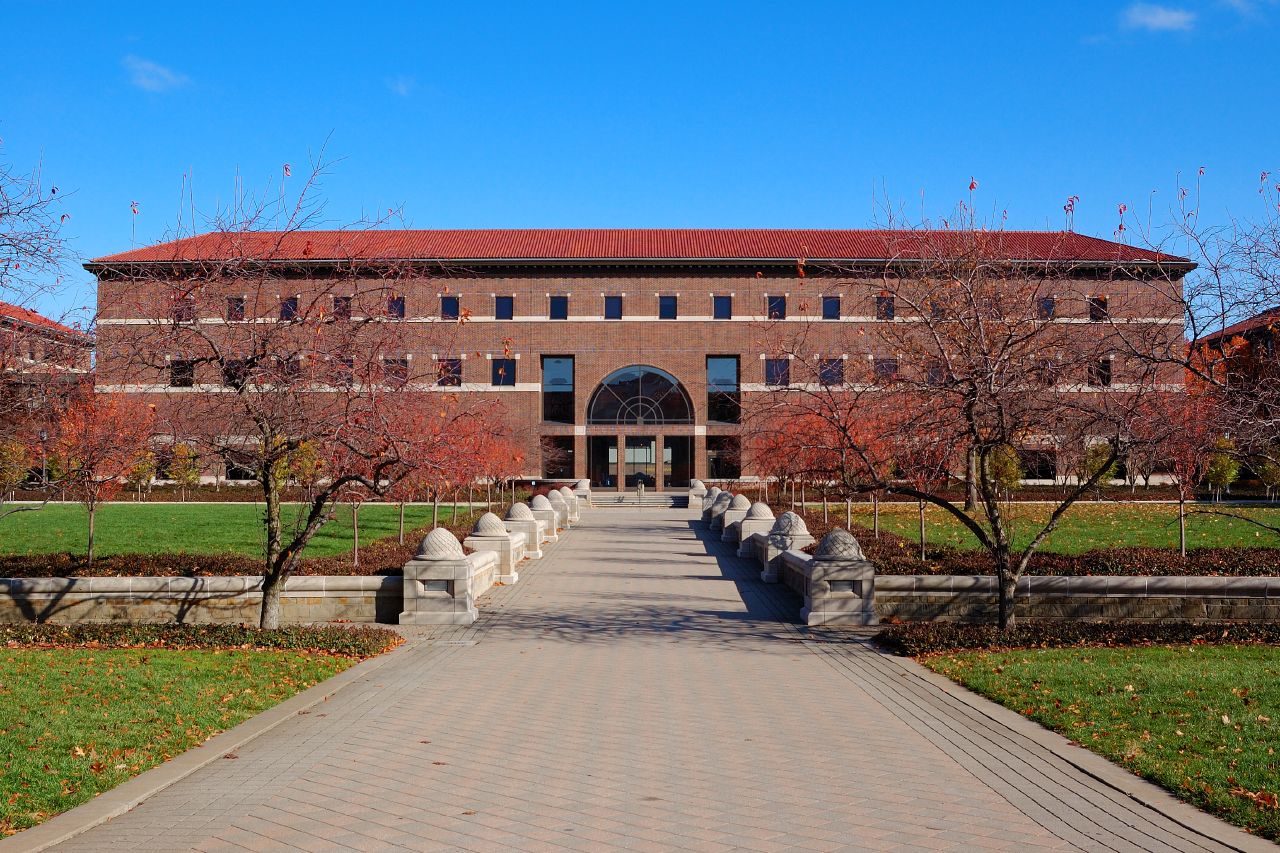
Photograph of Purdue University's Materials Science and Electrical Engineering Building.
Purdue University's Materials Science and Electrical Engineering Building in 2007. Institutional context for Purdue-affiliated authors; this photograph does not show the biphoton experiment or tomography apparatus.Jainrajat11 / Wikimedia Commons / CC BY-SA 3.0 · CC BY-SA 3.0Full image credit

Quantum-state tomography becomes punishing as dimension grows because a generic density matrix contains many parameters. This experiment cuts the acquisition burden by assuming the state is sparse in a suitable representation and solving a compressed reconstruction problem.[1][2]

A 100-dimensional optical state

The team studies a biphoton frequency comb with ten bins per photon, producing a 100-dimensional joint state space. Instead of collecting about 10,000 projective settings for conventional full tomography, the protocol uses 190. That is 1.9% of the conventional set, potentially turning an otherwise unwieldy characterization run into something practical.[1][2]

What the reconstruction recovered

The reconstructed state is compared with a Werner-state reference. The paper reports fidelity of at least 0.844 and logarithmic negativity of 2.70(3) ebits, evidence of substantial high-dimensional . Those figures describe this prepared frequency-bin state and reconstruction, not a universal guarantee for every 100-dimensional system.[1][2]

The sparsity assumption matters

The compression is not free. It depends on sparsity and on the measurement model matching the experiment. Arbitrary dense states may require many more observations, and reconstruction bias can hide features not represented by the assumed basis. The result is a preprint and the advantage is specific to this platform and state family. Because the algorithm uses a structural prior, a compact answer can still be confidently wrong when the prepared state departs from that prior.[1][2]

How to test the shortcut

Useful follow-up work would stress-test the method against drift, loss, calibration errors and deliberately nonsparse states, then compare acquisition time and uncertainty against alternative compressed and adaptive protocols. Independent replication at higher dimension would show how reconstruction cost grows under realistic laboratory conditions.[1][2]

Keep your reading trail

Your Updates →

Evidence & context

2 linked sources

The October 2 preprint reports experimental tomography of a d=10 by d=10 biphoton frequency-bin state. The authors use 190 projections, 1.9% of the roughly 10,000 settings in conventional full tomography, and report Werner-reference fidelity of at least 0.844 and logarithmic negativity of 2.70(3) ebits.

How to read the evidence and dates

An announcement records what an organization stated. An experiment reports an observation. A simulation or resource estimate depends on its assumptions. QubitWire’s analysis connects these sources; the labels are not quality scores.

Published is the article’s first QubitWire publication. Updated marks a substantive content change. Sources checked records a review of the underlying evidence. An older paper can support a new explanation, and another press release about the same work is not independent replication.

QubitWire take

The striking number is 190 measurements, but the real lesson is conditional: a strong structural prior can trade measurement time for reconstruction assumptions.

Sources

  1. Primary paper record
  2. Full paper
READ NEXT

Continue exploring

All Research stories
  1. Explore the related question

    A Better Quantum Measurement Can Start With How You Read the Detector

    A recent homodyne study uses the structure of measurement noise to improve an estimate. It is a reminder that a clearer answer does not always require a different quantum state.

    Published · Source report · Sources checked
  2. Explore the related question

    This Quantum Experiment “Teleported” a 100-Pixel Q

    Researchers transferred an image through 100 separately addressable optical modes, testing how quantum state transfer can operate in parallel.

    Published · Source report · Sources checked
THE QUANTUM BRIEFING

A clearer signal.
Read the latest edition.

A little perspective on a fast-moving field.

Read the on-site briefing →

Read selected quantum coverage in the on-site briefing, or register your interest below.