
Skip to content
RESEARCH · QUANTUM INFORMATION IN MATTER

These Tiny Drums Share a Quantum Beat

An experiment with vibrating aluminum membranes shows how mechanical motion can join the quantum-information toolkit.
Sources checked Published
My reading list
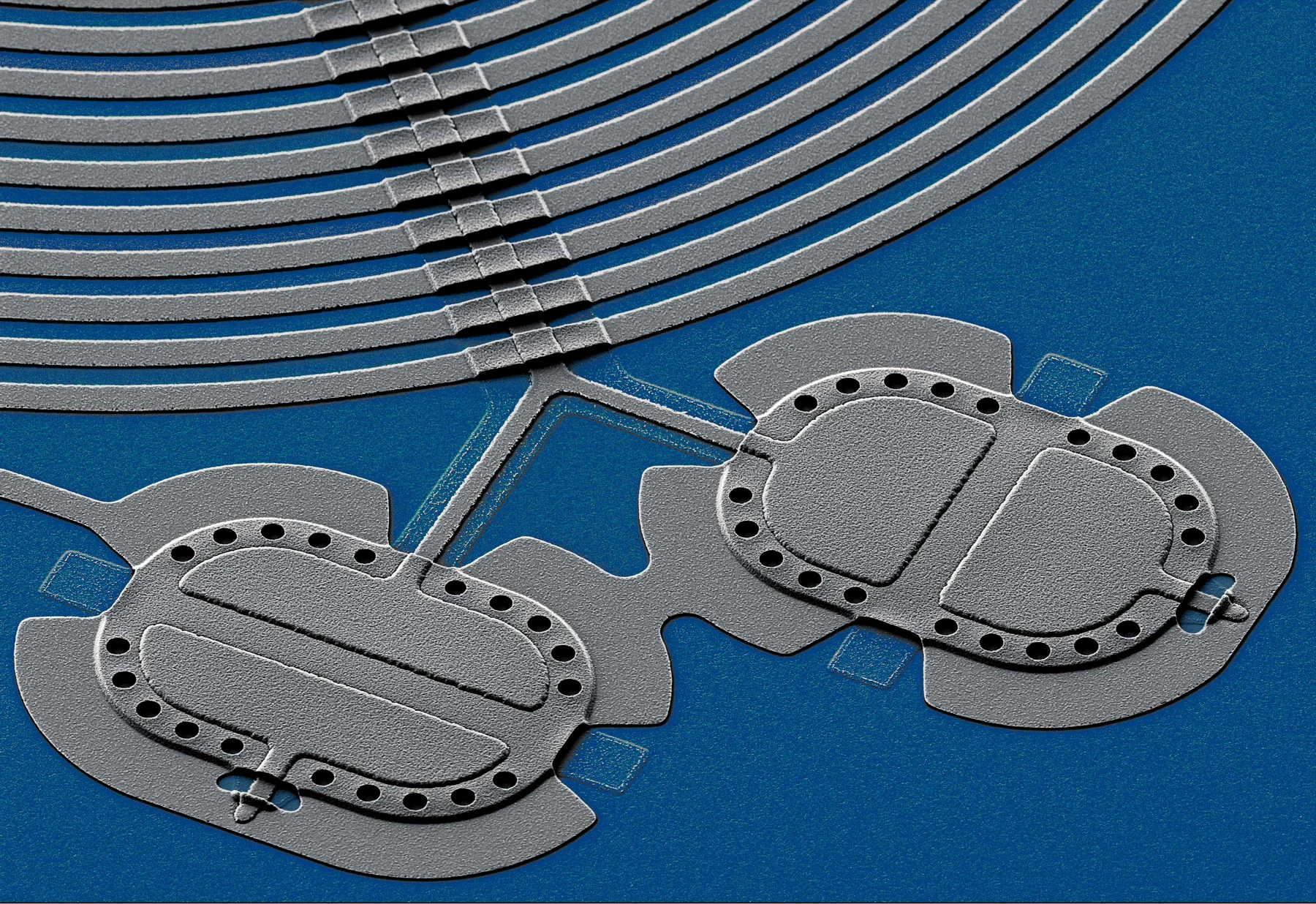
Colorized micrograph showing two oval aluminum drum membranes connected to curved circuit structures on a blue background.
J. Teufel / NIST

Colorized micrograph of the two mechanical drums featured in NIST’s 2021 entanglement experiment. Each aluminum membrane contains approximately a trillion atoms. Colors were added by the source. Image credit“Quantum drum duet” — J. Teufel / NIST. Colorized micrograph reproduced under NIST’s published public-information reuse terms. · https://www.nist.gov/copyrights-disclaimers

A quantum computer’s future parts list might include something surprisingly musical: a drum. In a 2021 NIST experiment, two tiny aluminum membranes shared quantum through their vibrations. Each contained roughly a trillion atoms, putting a familiar-looking mechanical object into deeply unfamiliar territory.

These were microscopic membranes inside a chilled electrical system. Microwave pulses cooled their motion and then linked their quantum states. The important result was not simply that the drums moved together: ordinary objects can do that. Their measured relationships exceeded what classical physics permits.

Researchers repeated the experiment 10,000 times and checked correlations between the drums’ positions and momenta. Looking at either drum alone could make its motion seem unremarkable; the quantum connection emerged when the measurements were analyzed together. NIST reported that these states could survive for approximately a millisecond.
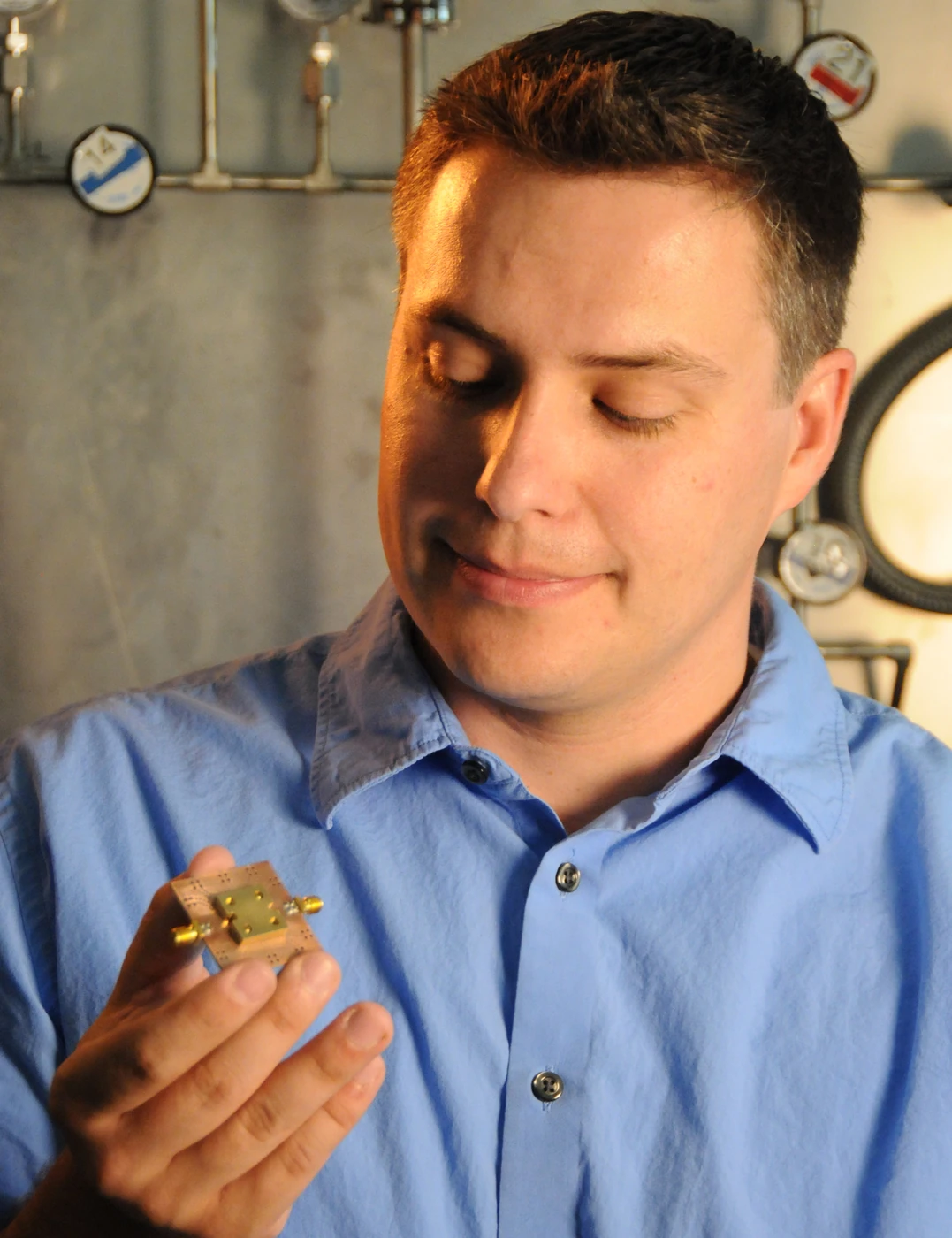
John Teufel stands in a laboratory holding a metal chip holder used for micro-drum experiments.
John Teufel holding a chip holder for micro-drum experiments in a July 2011 NIST photograph. This is an earlier archive image, not the two-drum apparatus reported in 2021. Image credit“John Teufel with his Micro Drum” — Burrus / NIST, July 6, 2011. Reproduced under NIST’s published public-information reuse terms. · https://www.nist.gov/copyrights-disclaimers

The computing connection is information storage and exchange. In a separate 2013 experiment, a NIST and JILA team stored quantum information in a drum’s vibration for at least ten microseconds, then transferred its state into a microwave pulse. Mechanical motion can participate in handling quantum information.

Neither demonstration established a practical drum-based computer. They explored ingredients that might serve as memories or links between quantum devices, with cooling and fragile states still central challenges. The striking idea is already tangible: quantum information can live in the motion of a manufactured object.

READ NEXT

Continue exploring

All Research stories
  1. Explore the related question

    Quantinuum's 55-Qubit Game Makes Non-Classicality Easier to Check

    H2 beat the optimal classical score in an efficiently checked experiment, but this was a device test—not a useful computational speedup.

    Source date
  2. Explore the related question

    Quantinuum H2 Demonstrates Gates by Braiding and Fusing Anyons

    A 54-qubit experiment creates a topologically ordered state and uses its anyonic excitations to demonstrate a universal gate toolkit.

    Source date
THE QUANTUM BRIEFING

A clearer signal.
Straight to your inbox.

A little perspective on a fast-moving field.

Read a briefing preview →

Selected quantum coverage in a weekly briefing. Read the preview or register your interest.