
OptQC separates resource preparation from the online photonic processor
A proposed interface makes the division of work in photonic error correction explicit.
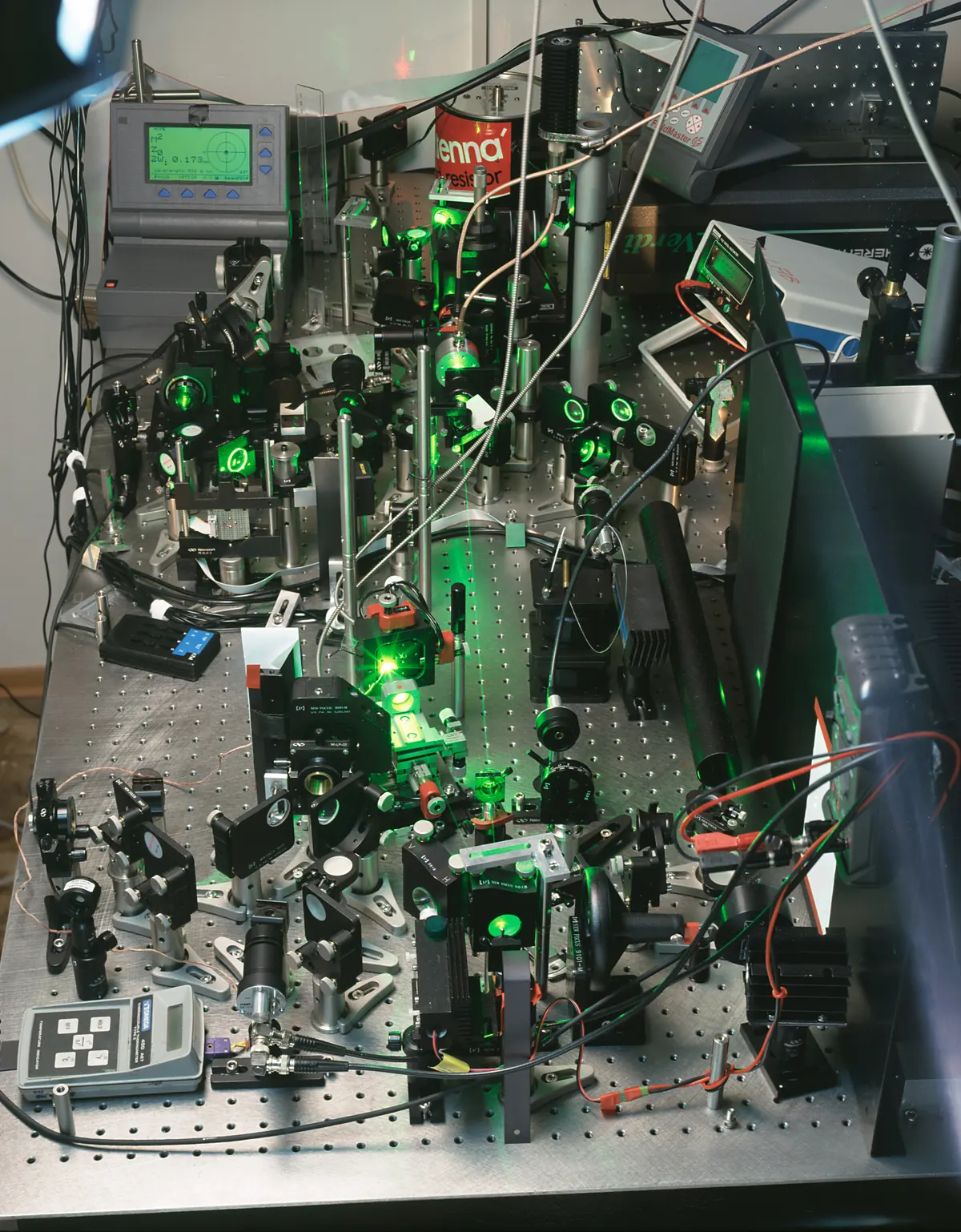

An OptQC research team has proposed a modular architecture that separates preparation of error-corrected optical resources from the processor that consumes them. The preprint was submitted on October 23 and highlighted by the company on October 26.[1][2]
Its factory-processor interface specifies how verified resources, measurements and correction information move between the two parts. The paper combines a concatenated code with Gottesman-Kitaev-Preskill states and a time-domain optical processing scheme.[1]
Simulations under a specified noise model support lower logical error at higher concatenation levels. The shallow online sequence depends on preparing resources in advance and providing enough parallel routing. A deeper level therefore does not imply unchanged total hardware, factory cost or elapsed runtime.[1]
This is a proposal and numerical study, not an operating fault-tolerant computer. Its useful contribution is an explicit interface that makes the division of work easier to examine. The next questions concern loss, routing, successful resource delivery and the total resources required for a complete computation.[1]
Learn: Account for resource preparation outside the processor
A short sequence of operations inside a processor can be an important architectural advantage. It tells us how much work must occur while the computation is actively using that processor. It does not, by itself, tell us how much work was required to prepare the resources the sequence consumes.
The optical architecture described in the linked preprint separates resource preparation from online logical operations. This makes the boundary between the factory and the processor central to interpreting its resource claims.[1]
Worked example
Hypothetical example: a factory can supply 100 usable resources per second, while the processor could consume 200 per second. A buffer initially holding 500 resources lets the processor run at its preferred rate for five seconds before the shortfall empties the buffer. After that, sustained operation is limited by supply unless the factory expands or the consumption pattern changes. The numbers describe an invented production model, not optical hardware in the paper.
That example shows why latency and throughput deserve separate attention. Advance preparation can shorten the wait for an individual operation. Repeated jobs also depend on factory yield, verification time, delivery and storage. More parallel preparation may improve supply while increasing the hardware needed to sustain it.
Identify exactly which quantity stays constant. The protected online sequence length, total elapsed time and total machine size are different quantities. A result about one should retain its stated assumptions when discussed alongside the others.
Readers can ask for a resource ledger with three parts: preparation, delivery and execution. For each, identify error assumptions, discarded attempts, timing and capacity. This does not undermine the value of modularity. It makes modularity assessable by showing where complexity moves and whether the resulting division helps build a system that can operate continuously at the required reliability.