
JION Launch Brings Microwave-Controlled Ions to Jülich
The newly inaugurated quantum computer is operational, with qualification, broader access and supercomputer integration still progressing.
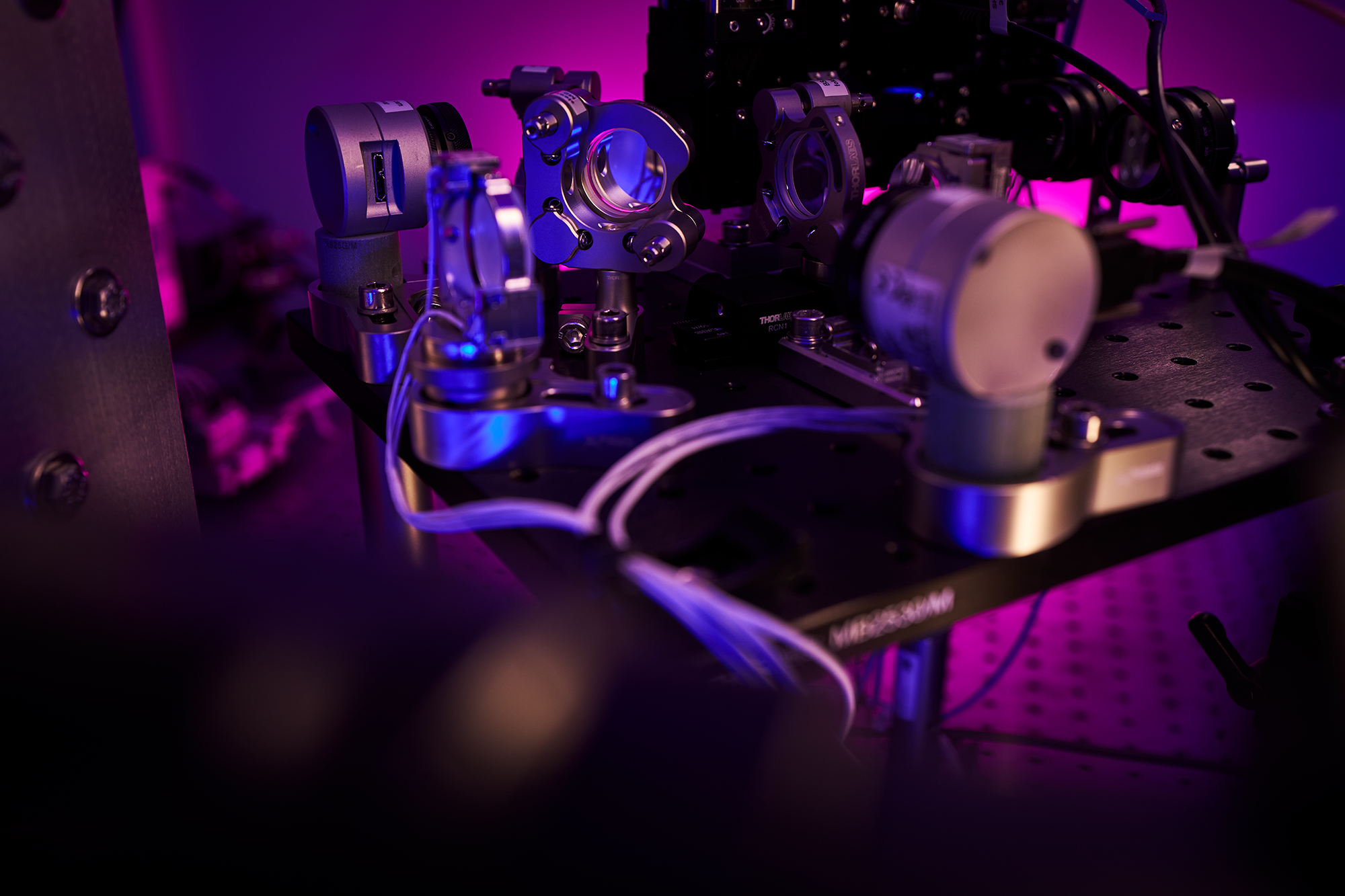

JION, the quantum computer developed with Siegen company eleQtron, was inaugurated at Germany's Forschungszentrum Jülich on September 3. Jülich says the machine is operational, and a quantum computation was performed publicly during the ceremony. It adds another hardware approach to JUNIQ, Jülich's quantum-computing research environment, alongside installed simulators and successive systems. That gives the launch a practical purpose: another machine on which researchers could develop applications and compare hardware in use.
JION stores information in ionized ytterbium atoms held in a vacuum. Its MAGIC approach uses microwaves and magnetic-field gradients to manipulate and couple . Jülich presents this as a potential aid to engineering larger systems. Its current English systems page also describes planned coupling to the JURECA-DC supercomputer, dividing parts of a calculation between classical and quantum resources.
Access is still a separate milestone. The systems page says JION will undergo further development and qualification before becoming accessible through JUNIQ. An operational machine is therefore not the same as unrestricted research access, and the launch report supplies no end-to-end speedup benchmark. For an application team, the unresolved questions are concrete: which circuits run reliably, how long jobs take and whether the combined workflow improves the final result. Published access conditions, operating capabilities and reproducible hybrid experiments would establish what the service can deliver.