
Ytterbium spectroscopy points toward new sensing tests
Laboratory spectra and atomic calculations examine a two-photon ytterbium Rydberg transition. Clocks, electrometers and radiation thermometers remain potential applications.
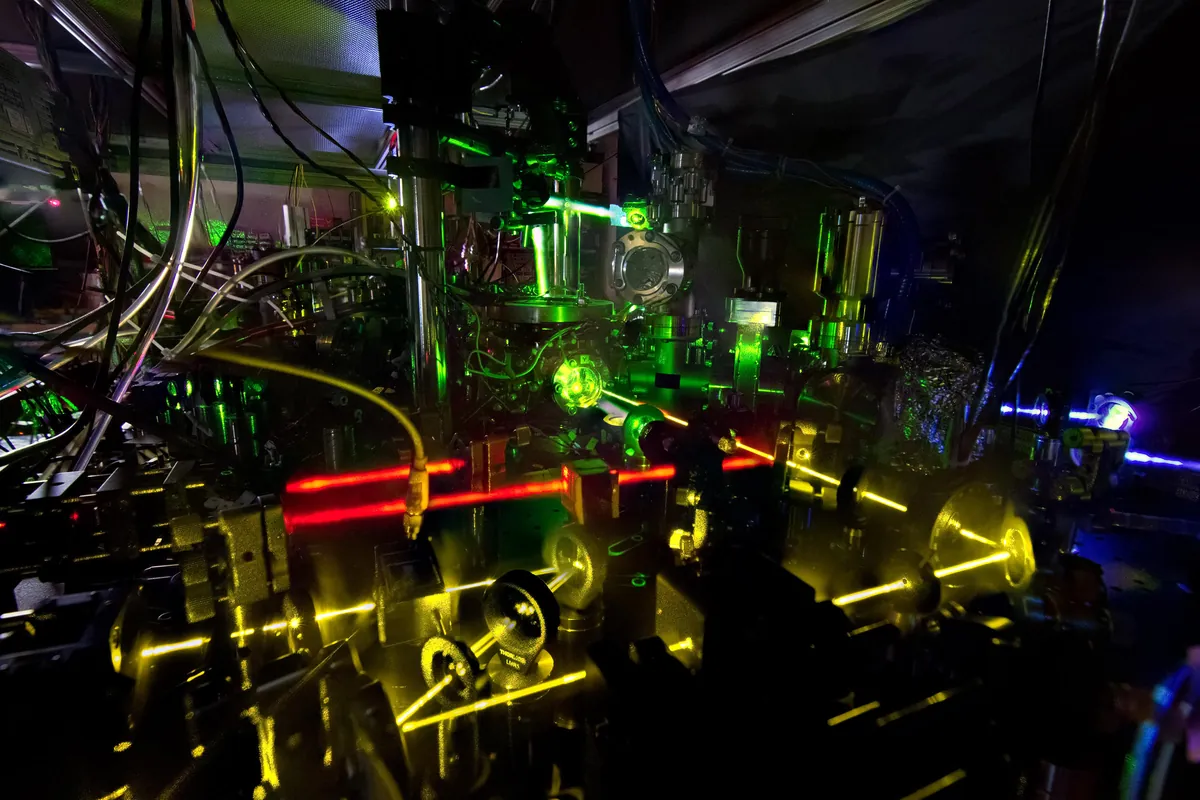

A ytterbium spectroscopy study has reached Physical Review A, offering an experimental starting point for sensing applications that still need to be built and tested.[1][2][3][4]
Published on October 26, the work combines atomic-structure calculations with laboratory observations of a two-photon Rydberg transition. From the measured spectra, the authors estimate a natural linewidth of 90 kHz and a state lifetime of 1.8 microseconds. They identify possible uses in a clock, an electric-field sensor or a blackbody-radiation thermometer. These are prospective applications, rather than demonstrated instrument specifications.[1][2][3][4]
The journal milestone follows an October 15, 2026 preprint and a July conference precursor. It should not be read as the first public disclosure of the underlying work.[1][2][3][4]
Why it matters
The next decision is which measurement task this route could serve. A laboratory reference, a portable sensor and an integrated component would impose different demands on stability, operating conditions and control. One promising spectral parameter cannot decide among those applications by itself.
For an eventual instrument, a useful assessment would connect the observed signal to the quantity being estimated. It would also account for other influences that could produce a similar change. Greater responsiveness would be valuable only if the user could distinguish the intended quantity from those competing effects.
What comes next
A focused follow-up would choose one application and state a measurable target: the uncertainty, repeatability and conditions under which the complete procedure must work. That would turn the current spectroscopy result into a testable sensing proposal without confusing an inferred atomic parameter with finished sensor performance.
The measurement would also need to remain interpretable when the surroundings drift between calibrations.