
Can a quantum computer calm its own chaos?
An IBM experiment steers deliberately scrambling quantum circuits toward order. Resetting a system and keeping its information safe remain different achievements.
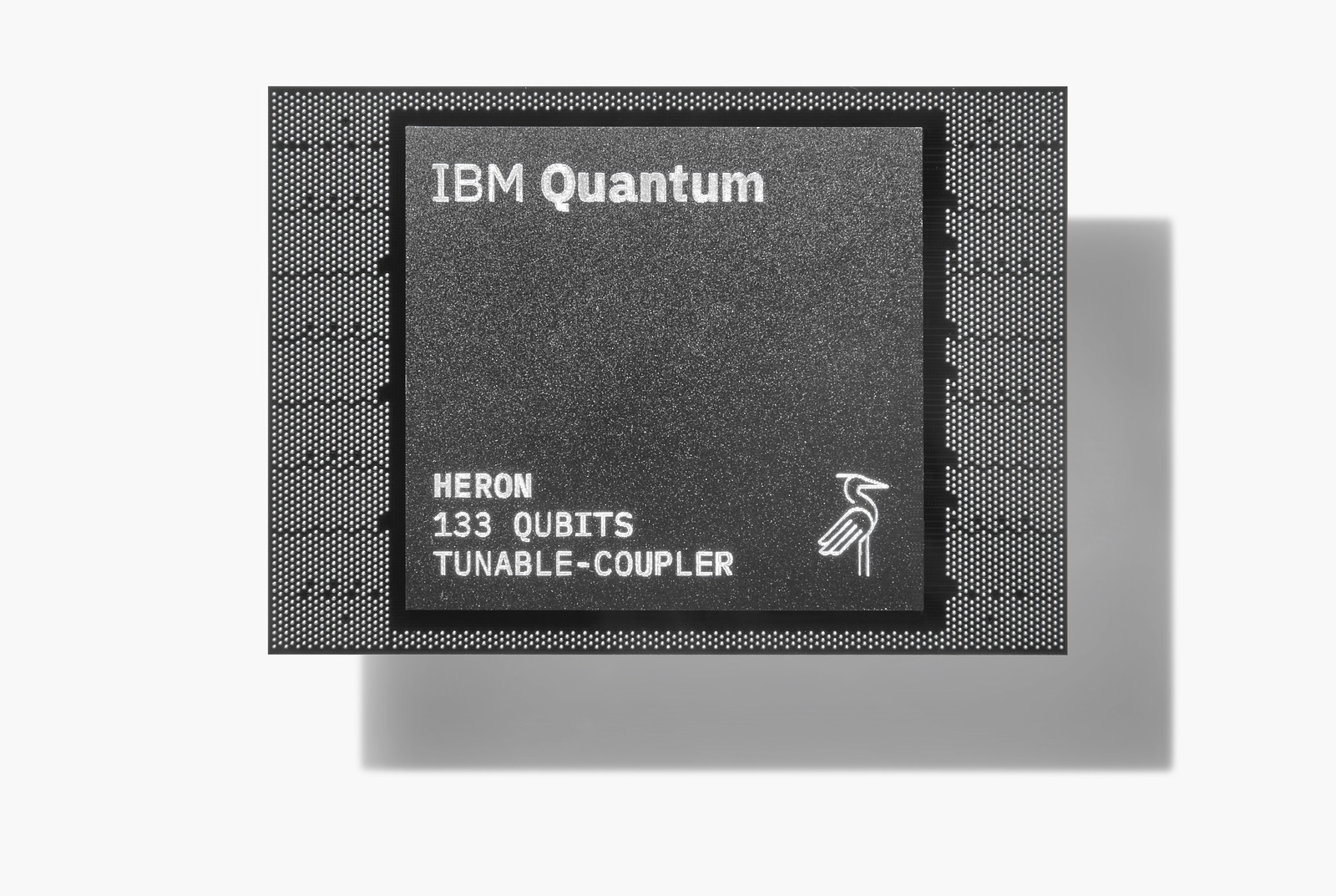
A quantum computer does not have to follow a fixed script from start to finish. It can measure part of a system, use the result and change its next instruction. An experiment on IBM hardware shows how that feedback can compete with deliberately programmed scrambling and steer a quantum circuit toward order.[1][2][3]
The study appeared in Nature Physics, and Rutgers publicised it, on October 9. An earlier manuscript was already public on September 22, 2025. The new date marks journal publication and its institutional report; it does not mean the research was first performed this week.[1][2][3]
The next instruction can depend on the last result
Researchers programmed two competing processes. One spread quantum information through the system. The other measured selected and reset them toward a simple target. Changing how often the processes occurred exposed a transition between scrambling and control. The experiment used connected chains of up to 100 qubits on IBM’s Heron processor.[1][2][3]
A fixed circuit resembles a script; an adaptive circuit resembles a conversation whose next step depends on what happened before. The comparison is about control flow, not understanding or intention. Classical electronics receive a measurement result and issue the next operation. Making that loop work on a physical quantum processor is an engineering capability worth testing.
The crucial question is what the ordered system still contains. Restarting a frozen laptop can make it work again while discarding an unsaved document. Resetting a qubit has a related conceptual limit: forcing it into a chosen state is different from preserving the unknown state it previously held. The underlying physics differs, but the caution is familiar.
Order does not guarantee a safe message
tackles the harder information-preservation problem. It seeks clues about errors while protecting an encoded logical state, rather than simply measuring and replacing the message. Adaptive control and error correction can share ingredients. This demonstration does not establish that an arbitrary quantum computation now repairs all of its own mistakes.[2][3]
It also did not ask the processor to diagnose arbitrary hardware faults. The scrambling was part of the programmed scientific experiment. The useful result is an observed control transition under that protocol. Its balance of interventions should not be presented as a universal threshold that every fault-tolerant quantum computer must satisfy.[1][2]
A thermostat offers another way to think about the distinction. Knowing how much feedback keeps one room comfortable does not tell you how to control a factory furnace. Dynamics, delays and goals differ. Quantum protocols add their own constraints: measurement changes the system, resets take time and the operations used to control it can themselves be imperfect.
A persuasive follow-up would name the information or task being protected before announcing an improvement. Is it preserving a memory, performing a logical operation or completing an algorithm? It should compare the whole task with and without the control strategy and count the time, errors and information lost during intervention.
The achievement here is that present hardware can repeatedly coordinate quantum operations, measurements and resets while researchers investigate collective behaviour. That is a useful control primitive, with a specific purpose. The distinction to carry into the next headline is simple: making a system orderly is not yet proof that its message remains safe.[1][3]
Read the deeper explanation · about 6 min
This estimate covers the explanation below, separate from the overview. Optional depth was added in this reading edition. The article keeps one canonical address and its original chronology. Source review: . The relevant source dates and limitations are recorded below.
A quantum computer is often pictured as a machine that receives a circuit, performs it and then produces a result. That picture leaves out a powerful possibility: the machine can learn something partway through the sequence and change its next step accordingly. Measurement becomes an input to control rather than merely the final act of a computation.
A study appearing in Nature Physics and discussed by Rutgers on October 9 examines what happens when feedback competes with quantum dynamics that spread disorder. The work investigates adaptive circuits on quantum hardware, showing how measurement and reset can steer a system between qualitatively different behaviors. An earlier manuscript was public in September 2025, so the October news concerns publication and interpretation, not proof that all of the experiments were newly performed this week.[1][2][3]
The difference between a script and a conversation
A fixed circuit resembles a script: the next instruction is selected before the performance begins. An adaptive circuit is closer to a conversation. Something happens, information is obtained and the next action depends on it. The comparison is only about control flow. It does not mean the device understands the experiment or develops intentions.
This distinction matters because a quantum processor is connected to classical electronics. A measurement produces information that a controller can use. The complete operation therefore includes the measurement, the decision and the follow-up action. A beautiful abstract protocol is not enough if the physical controller cannot carry out that loop accurately and at the required pace.
The Rutgers-linked experiment uses this idea to study control itself. The deliberately programmed chaotic dynamics spread information through the system; this is not a test of diagnosing arbitrary hardware faults. Interventions pull the system toward a more ordered target. Varying the balance creates a way to investigate a transition between those behaviors. The transition is a feature of the specified protocol, not a universal percentage that every quantum computer must beat.[2][3]
Why resetting is both useful and dangerous
Reset sounds like the obvious cure for a malfunctioning device. When a laptop freezes, restarting it often helps. But restarting also discards work that was not saved. The same conceptual caution applies to a quantum system, although the physics is very different: forcing a qubit into a chosen state is not the same as protecting the unknown state it previously held.
This is the crucial distinction behind the headline. Adaptive control can successfully produce order while removing information. Quantum error correction aims to retain a logical state despite errors. That generally requires extracting information about the errors in a way that does not simply reveal the protected information itself. A reset experiment and an error-corrected computation can share useful ingredients without being equivalent achievements.
A reader should therefore ask what the experiment was trying to preserve. Was the goal to reach a fixed state, maintain a particular observable, protect a memory, perform a logical operation or finish an algorithm? Those targets have different success criteria. Calling all of them self-correction obscures the most interesting question: correction of what, while keeping which information intact?
The practical value of reset should not be dismissed. Reusing resources, preparing states and handling certain unwanted populations can all involve controlled reinitialization. The point is not that reset is unimportant. It is that its value depends on where it sits in a protocol and what the protocol is allowed to forget.
A transition is not a magic engineering threshold
The research explores a transition as the balance of competing processes changes. That is a rich physics result because a system's collective behavior can change sharply even when the rules being adjusted look simple. It gives researchers something more informative than a single successful run: a relationship between control parameters and observed behavior.[2]
It would be a mistake, however, to transplant a numerical transition from this experiment into a general error-correction claim. A threshold belongs to a model, an error definition and a set of assumptions. Different circuits, noise processes and target tasks can behave differently. A number detached from those conditions is not an engineering specification.
An everyday comparison is a thermostat. Knowing the setting at which one room remains comfortable does not tell you how to control a factory furnace. Both systems involve feedback, but the dynamics, delays, disturbances and objectives differ.
Quantum control requires the same discipline about context, plus the unusual constraints imposed by measurement and state evolution.
For QubitWire readers, this is a reusable way to read research. When a paper reports a threshold or a phase transition, look for the axis being varied, the outcome being measured and the conditions under which the change appears. The excitement lies in the relationship, not in turning its location into a universal promise.
Hardware makes the question more demanding
Testing adaptive behavior on a physical processor exposes constraints that an ideal mathematical circuit can hide. Measurements have errors. Resets take time. Control signals have to arrive in the right order. Gates are imperfect. The system used for the experiment is therefore not merely a black box that proves an abstract idea; its imperfections form part of the interpretation.
The Rutgers account describes a substantial IBM Heron implementation, including repeated gates and mid-circuit measurement/reset operations. The preprint provides the experimental and theoretical context for the control transition. This does not establish a general-purpose fault-tolerant processor, but it does make the control problem a hardware question rather than only a thought experiment.[2][3]
That difference matters to visitors who wonder why quantum development appears to advance in small steps. A complete system depends on many steps working together. It is possible to improve feedback capability without simultaneously solving every problem in state protection. Progress is often compositional: a useful control primitive becomes available, then researchers investigate where it improves a larger task.
What would a convincing follow-up show?
The strongest follow-up would state its target before presenting its improvement. A memory-protection experiment would identify what information was encoded and how long it was preserved. A logical-operation experiment would specify the operation and its comparison. A control-system result would quantify the measurement-to-action loop and its failure modes. Each would add evidence of a different kind.
It would also separate the cost of intervention from the benefit. More measurements are not automatically better. A protocol can consume time, introduce errors or erase information while making a selected observable look cleaner. The important comparison is the complete task with and without the relevant control strategy, under appropriately matched conditions.
A useful public timeline could therefore track three stages: the demonstrated control behavior, the quality and speed of the feedback implementation, and a later protected computation that actually uses it. Those stages should not be collapsed into one green tick. Nor should an early-stage result be dismissed because the last stage has not yet arrived.
A more interesting story than a self-healing computer
The phrase self-healing computer is appealing because it suggests an ordinary machine with an extraordinary repair mechanism. The real story is subtler and, in some ways, more interesting. Quantum devices can be actively steered while they are running. The measurements used to steer them also change what can be known and what information survives.
That makes adaptive control a place where physics and engineering meet directly. A controller must make a practical decision, but the information available to it is shaped by the quantum protocol. The experiment asks how much control is enough to change the system's behavior. The next questions ask how that control can be made useful without throwing away the thing we wanted the computer to protect.
A visitor should leave this story with one durable distinction: making a system orderly is not the same as keeping its message safe. Once that is clear, the next feedback or error-correction headline becomes much easier to judge. The reason to return is to see researchers connect those two goals with evidence, rather than with a more dramatic adjective.
Evidence for this explanation
- Order from chaos with adaptive circuits on quantum hardware — Nature Physics
Published October 9, 2026. Publisher-indexed abstract, publication record and peer-review information checked; full journal body requires access. Same study as the September 2025 author preprint.
- Order from chaos with adaptive circuits on quantum hardware — preprint v1
First submitted September 22, 2025, 18:00:05 UTC; accessible author manuscript inspected. Deliberate Bernoulli scrambling competes with measurement-conditioned resets toward a fixed-point target, rather than protecting an arbitrary unknown logical state.
- Scientists Move a Step Toward Quantum Computers That Can Correct Their Own Mistakes — Rutgers
Institutional account dated October 9, 2026; complete public body checked. Describes up to 100 connected qubits on IBM Heron and repeated measurements/resets. Broad future fault-tolerance implications are kept separate from this protocol’s control result.