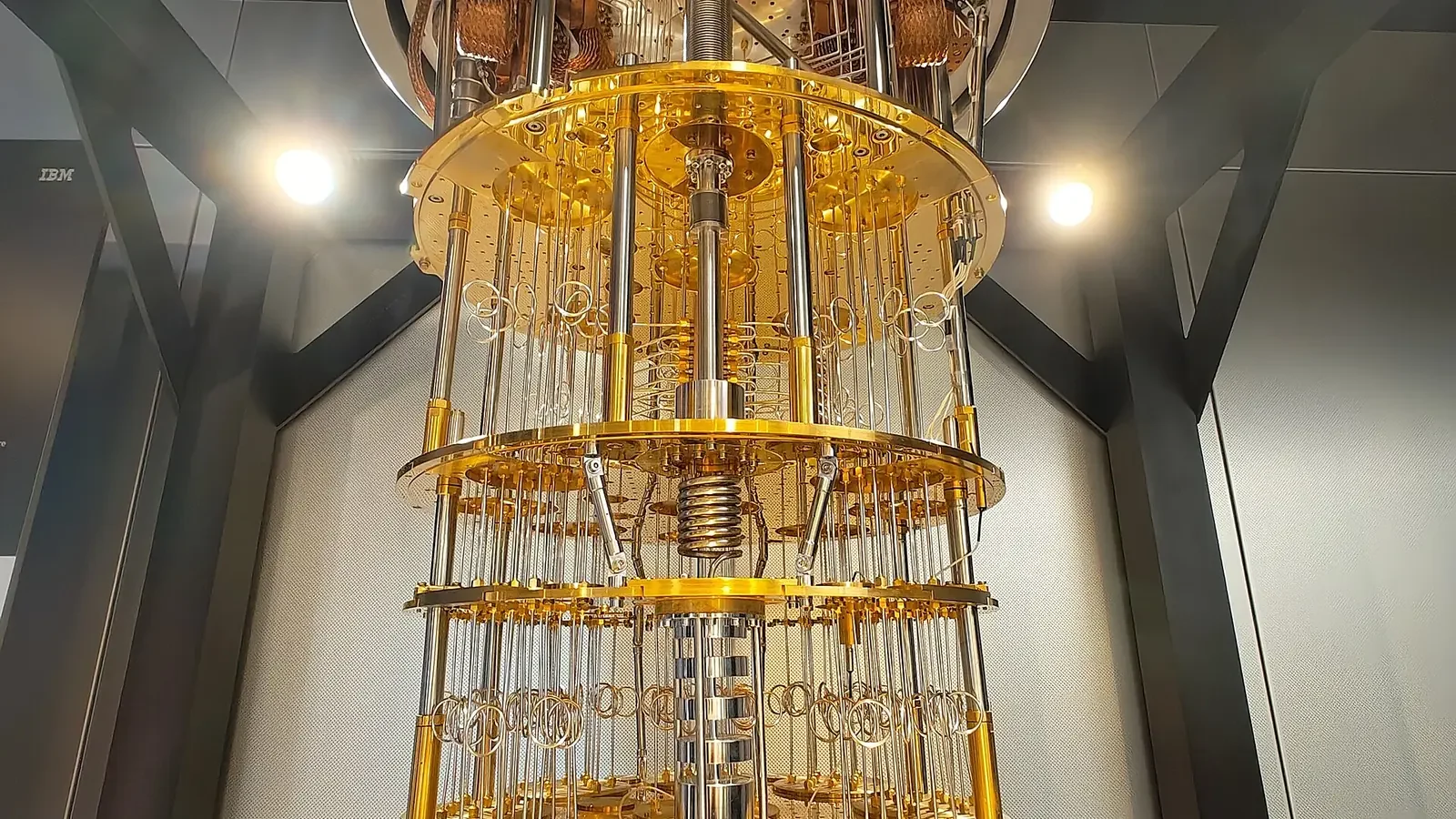
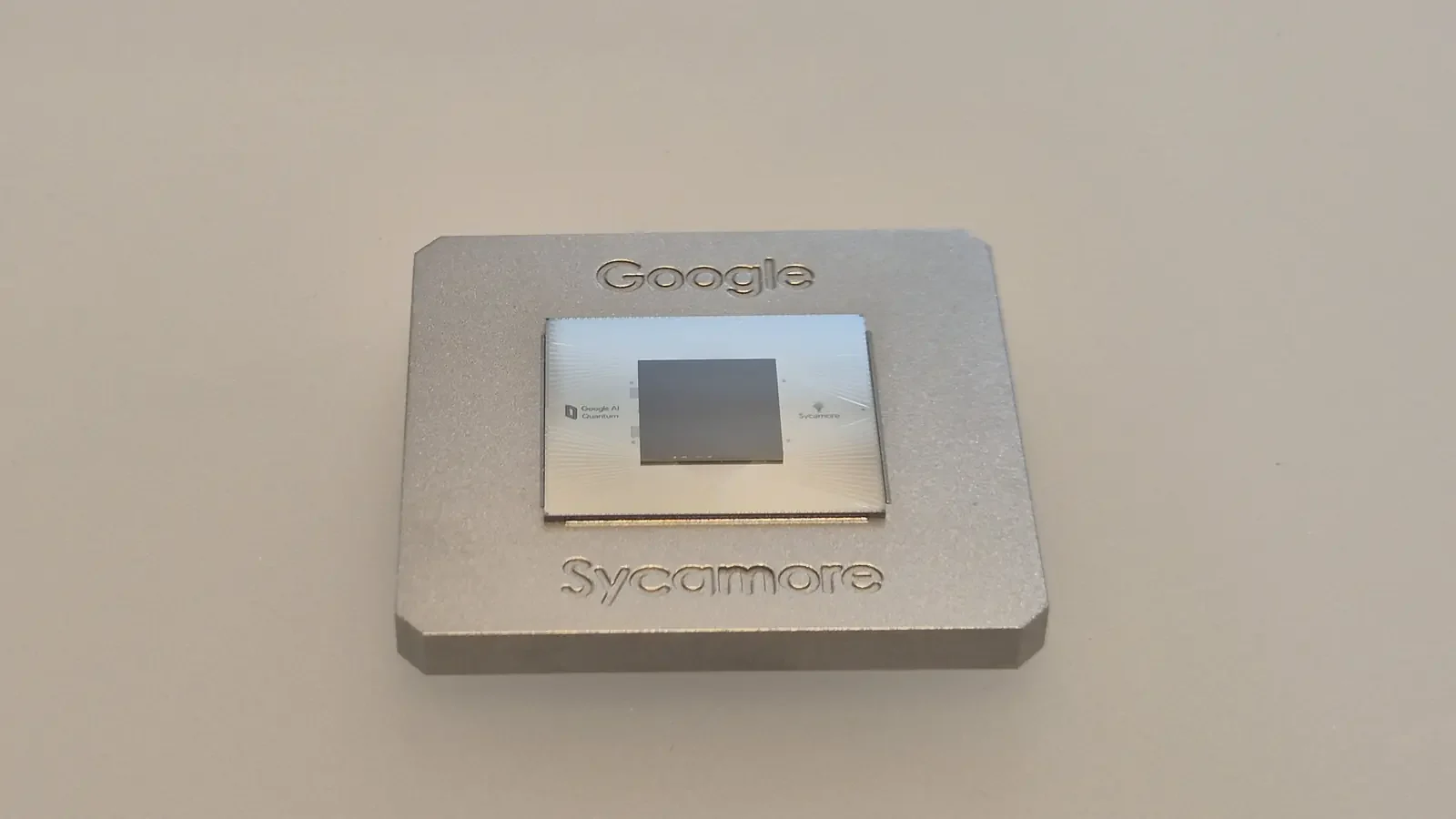
Google’s Sycamore chip on museum display. Historical quantum-processor context, not the device from the 2026 preprint or a physical wormhole. Cropped/resized; no generative edits. Adapted image: CC BY-SA 4.0.Image: Google Sycamore chip on museum display · Coldupnorth · CC BY-SA 4.0Full image credit
A simulated storm does not make you wet. A quantum experiment inspired by a wormhole does not punch a tunnel through the laboratory, either. What it can do is let physicists test how information behaves in a carefully chosen model connected to ideas from gravity.[1]
A 2026 preprint by Moongul Byun, Keun-Young Kim and Hyeonsoo Lee reports an experiment using a small chaotic quantum model on a processor. The researchers investigated a protocol inspired by a traversable wormhole, with information transferred between parts of the model. The manuscript was revised in May.[1]
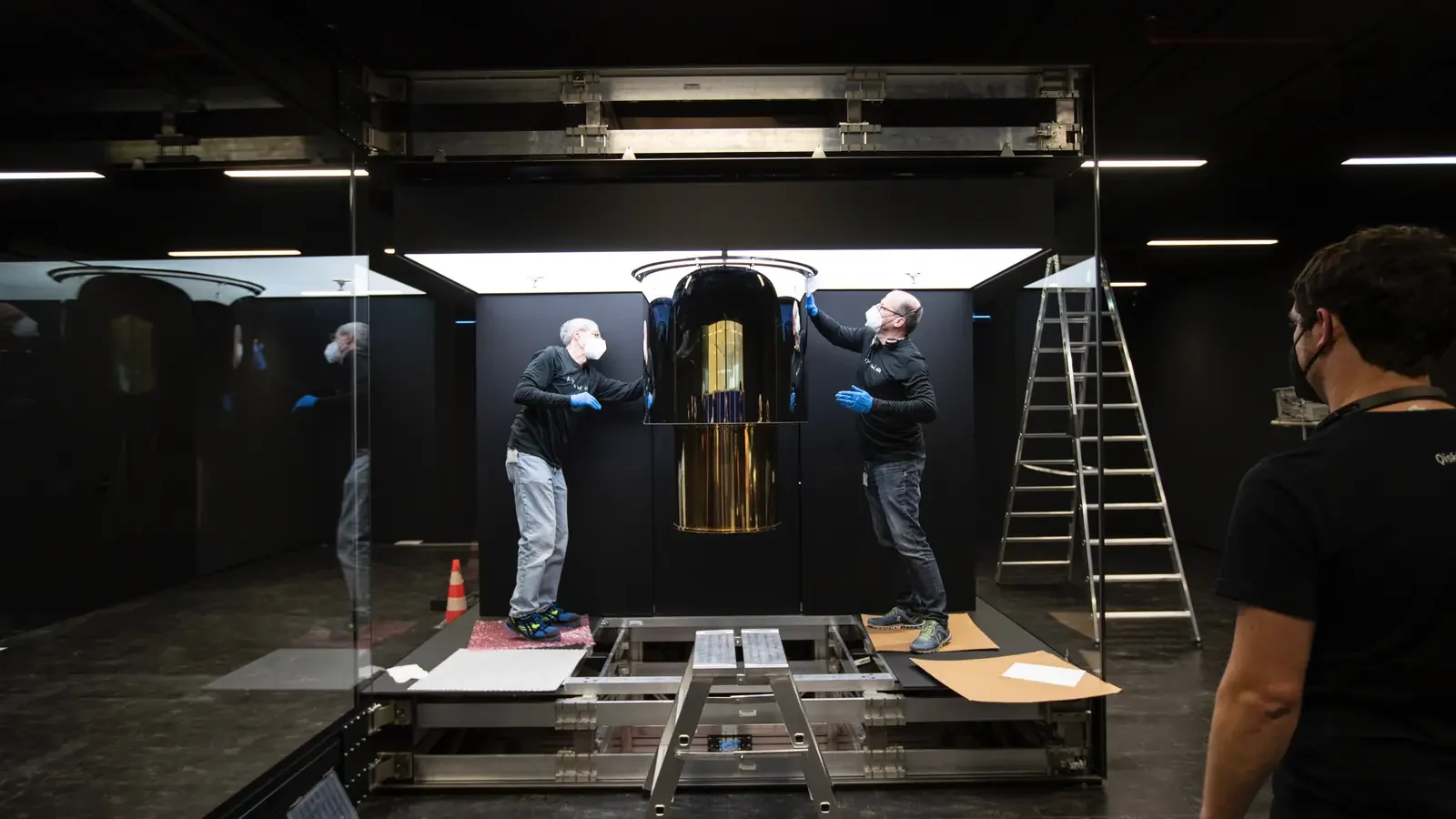
Installation work on an IBM Quantum System One. Real quantum hardware, not the apparatus from the 2026 wormhole-inspired study. Cropped/resized; no generative edits.Image: IBM Q System One (Fraunhofer) installation · Holger Muench / IBM Research · CC BY 2.0Full image credit
Their reported signal changed differently depending on the sign of an interaction in the protocol. That qualitative pattern was the point of the test. Noise prevented perfect numerical agreement between the hardware results and exact simulations, an important limitation that should travel with the headline.[1]
The language has a complicated history. An earlier 2022 wormhole experiment prompted technical objections about how closely its small model reproduced the desired physics, followed by a response from the original team. Those exchanges concern the interpretation of particular models, not whether someone secretly built a doorway across space.[2][3]
IBM Quantum System One hardware in New York. Hardware context only; no photographed object here is a tunnel through space. Cropped/resized; no generative edits.Image: IBM Quantum System One · Onri Jay Benally / OJB Quantum · CC BY 4.0Full image credit
The newer work should also be read as a preprint, not a settled experimental discovery of a real wormhole. Its appeal is more specific: quantum processors may become useful laboratories for testing difficult ideas about information and gravity. The quotation marks around “wormhole” are not there to spoil the story. They help tell the right one.[1]


_installation.jpg)