
This Quantum Processor Works Best in Earth’s Shadow
A small photonic experiment survived a trip to orbit. Its struggle with sunlight may be more revealing than the launch.
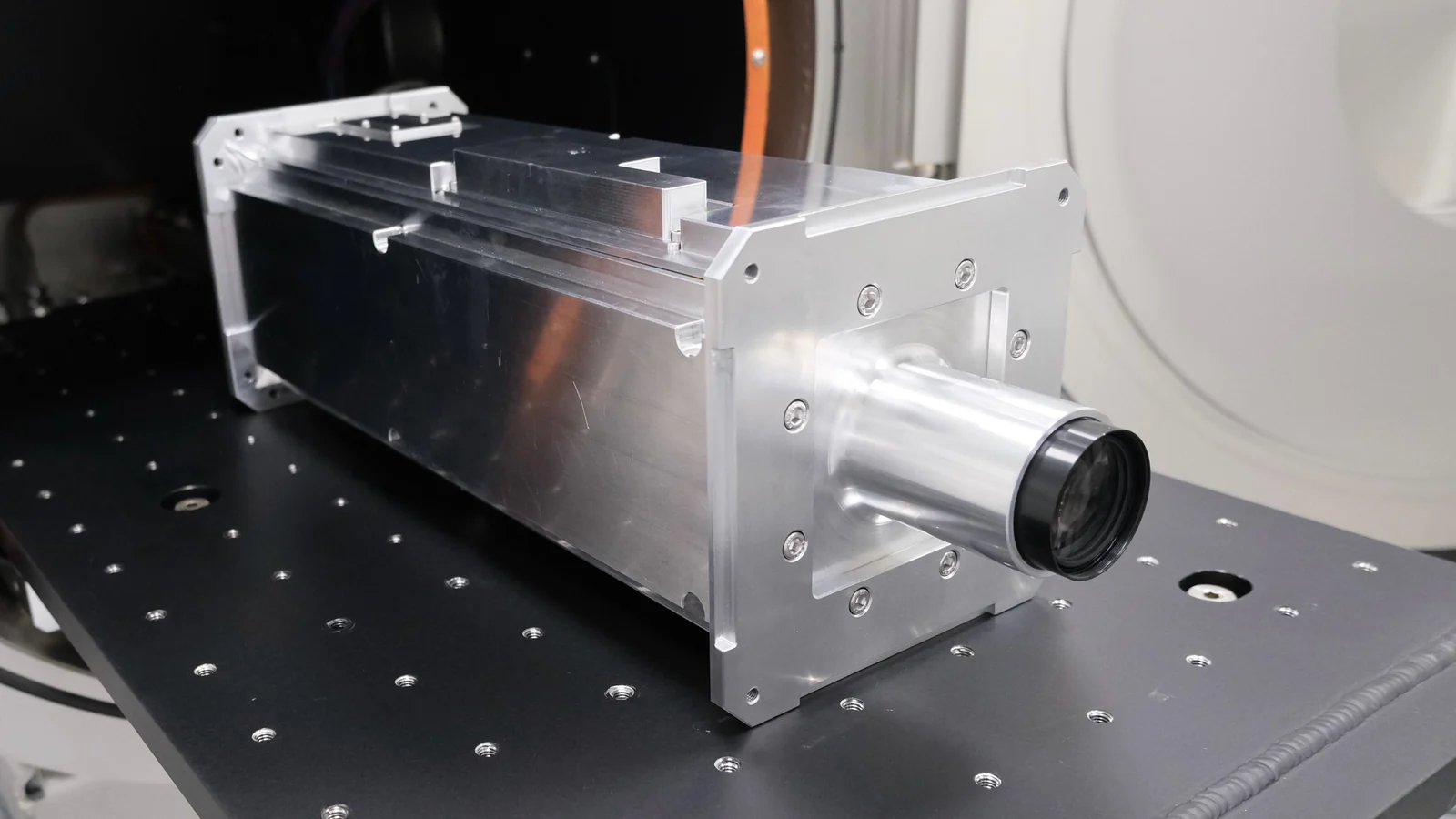
Space is dark. For a quantum experiment circling Earth, it was not dark enough.
A September preprint describes a programmable photonic processor operating in orbit, roughly 510 kilometres above Earth. Its task was modest but demanding: control the paths of light and recover a recognisably quantum interference signal. Stray sunlight kept getting in the way.[1]
The result is an unusually candid view of quantum hardware leaving the laboratory. Instead of an immaculate machine effortlessly conquering space, the researchers describe noise, drifting temperatures and equipment that did not all behave as planned. That makes the experiment more interesting, not less.
Two photons, not a space supercomputer
The payload launched on 23 June 2025. The new manuscript reports on its first eight months in orbit; it is not announcing a launch that happened this week.[3][1]
Inside was a reconfigurable network with six optical modes. The experiment used pairs of photons. Six modes does not mean six , and the paper does not demonstrate a computational speed advantage over a classical computer.[1]
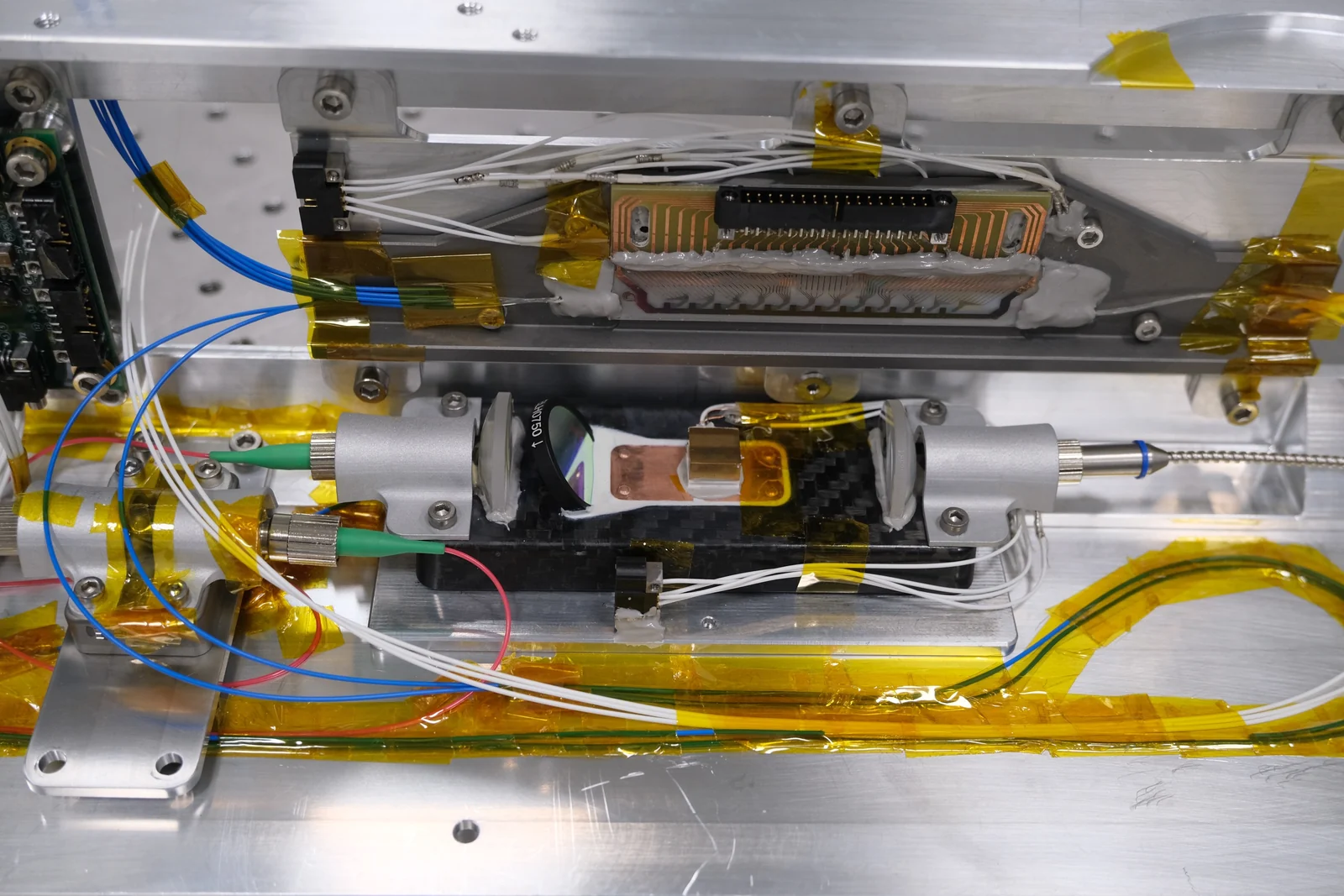
The important capability is control. A programmable optical circuit lets researchers change how light travels through the device rather than launching an instrument that can perform only one fixed arrangement. That flexibility becomes especially valuable when the instrument is too far away for anyone to open the lid.
The useful darkness arrived in windows
Sunlight raised the background seen by the photon detectors. Earth’s shadow offered quieter stretches, about half an hour during an orbit. The researchers could not simply schedule every measurement for darkness: their operations arrangements required continuous runs, with the data separated into orbital conditions afterward.[2]
This is why a quantum experiment can be harder than its central idea sounds. Detecting the desired signal is only part of the job. Researchers also need to establish what the instrument recorded when the environment was unhelpful, and which comparisons still justify the conclusion.
The manuscript reports two-photon interference, a test of how indistinguishable photons behave together. It also describes a constrained detector system and changing operating conditions. Those details are part of the evidence, not background scenery.[2]
The repair is sometimes in the program
On the ground, a problematic detector invites a physical repair. In orbit, the available response may be a different configuration, a revised calibration or a more selective analysis. A convincing space-qualified device therefore needs more than a strong result on its best day. It needs a credible account of what happens on the difficult ones.
That is the broader engineering question this report brings into focus. Can an experiment preserve useful control when the laboratory has been replaced by a spacecraft? Which limits are fixable through packaging and shielding, and which require a different device? The present work informs those questions; it does not settle them.
There is no need to turn a two-photon demonstration into a prediction of orbital quantum data centres. The more immediate achievement is concrete: a small programmable quantum experiment operated somewhere researchers could not reach it, and produced an account detailed enough to inspect.
The most memorable image is not a computer floating above the planet. It is Earth itself becoming part of the experimental apparatus, blocking the light that would otherwise obscure the signal.
Keep your reading trail
Keep up with these topics
Choose the subjects you want to find again in Your Updates.