
These Atoms Stick Together Without Becoming Ordinary Molecules
Researchers have observed bound atomic clusters known as Bethe strings in an ultracold, effectively one-dimensional gas. The name belongs to a many-body model, not to fundamental string theory.
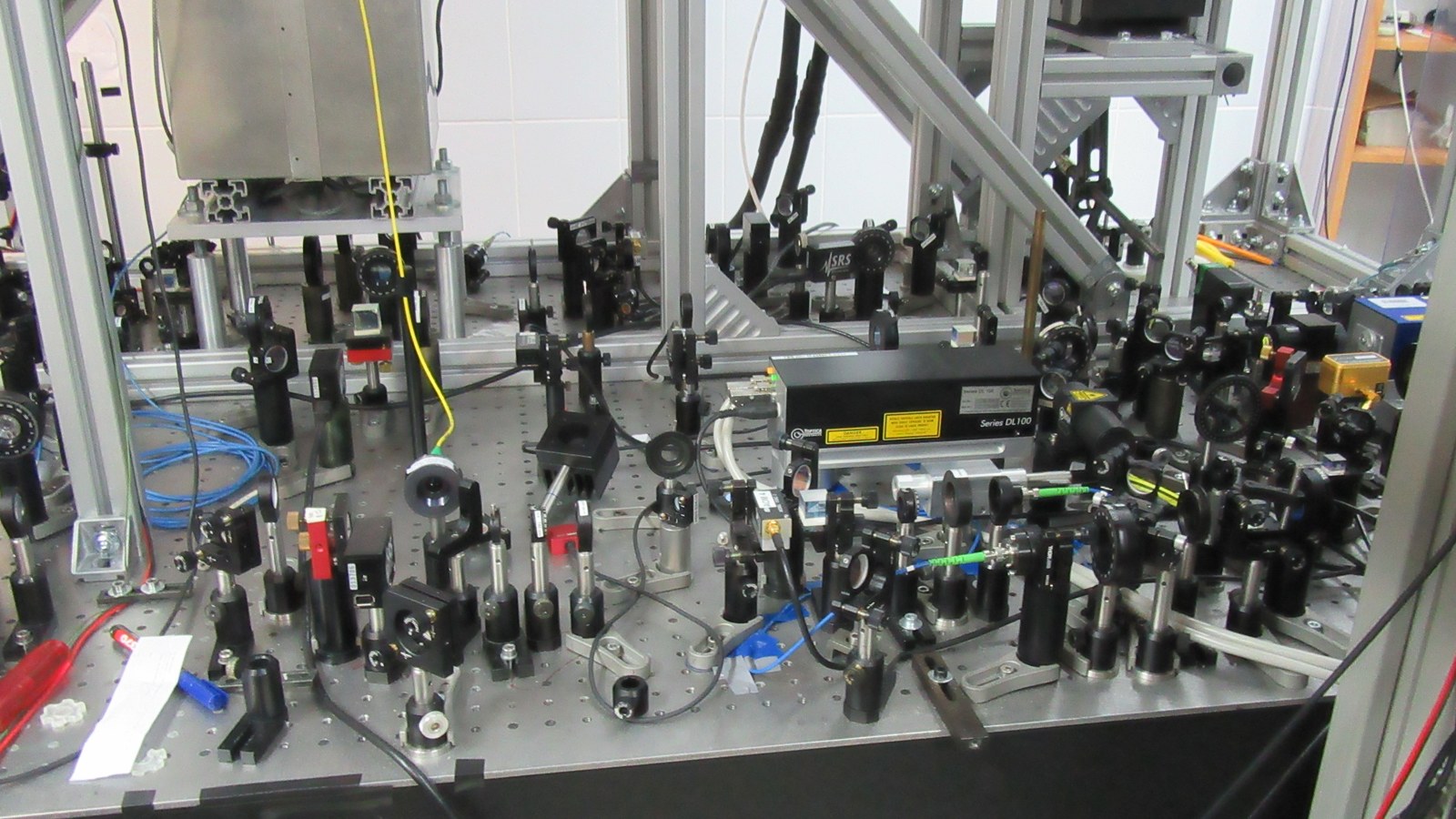

Some physics terms arrive with more baggage than explanation. “Bethe strings” is one of them. The phrase can sound like a claim about the fabric of the universe when the actual story concerns the collective behaviour of atoms in a carefully controlled gas.
A University of Innsbruck account published on 14 September 2026 describes observations of bound atomic clusters in an effectively one-dimensional ultracold gas. The team’s Nature Communications paper brings a phenomenon previously observed in other settings into an atomic platform with controllable geometry and interactions.[1][2]
This is therefore neither a first observation of every phenomenon ever called a Bethe string nor a discovery of the strings imagined in fundamental string theory. It is a particular realization in an atomic platform, with the opportunities and limits of that experiment.
Why one dimension changes the problem
A gas that is effectively one-dimensional is constrained so strongly in two directions that the relevant motion is described along the remaining direction within the experiment’s operating regime. “Effectively” matters: the apparatus still exists in three-dimensional space.
Confinement changes which processes are available and can make the relationships among particles especially important. A familiar everyday intuition about objects moving freely through a room can be a poor guide to such a system.
An analogy is a narrow corridor in which passing and rearranging are much more constrained than in an open hall. The analogy explains the role of restricted motion, not the quantum mechanics of the experiment. The actual behaviour follows from interactions, preparation and the model used to describe them.
A bound cluster is not an ordinary molecule
Atoms can participate in a bound many-body structure without the result being an ordinary molecule in the sense a reader might picture from introductory chemistry.
The term Bethe string comes from the mathematical description of certain interacting many-body systems. In this experiment, it describes bound atomic clusters. Other experiments use related language for different physical platforms, including magnetic systems; those are not interchangeable descriptions of the same apparatus.
How the experiment recognizes a string
A claim that a many-body structure has been observed depends on the measured signatures and the model connecting them to the proposed interpretation. It is not usually a matter of taking a conventional photograph of tiny strings suspended in a gas.
In the university’s account, the team compared expansion while atoms remained confined to one-dimensional tubes with expansion after that confinement was removed. Releasing the confinement caused bound clusters to break apart, converting binding energy into additional motion. That comparison supplied an experimental signature of the strings.[1]
What a new platform can reveal
Observing a phenomenon in a different platform can make new controls available. Researchers may be able to prepare initial conditions, vary interactions or measure responses in ways that complement earlier work.
The value is not automatically that one platform is better. It may be that the platforms expose different aspects of the same theoretical structure. Agreement across distinct realizations can be informative, while differences can reveal where assumptions or experimental conditions matter.
An atomic gas also gives an accessible way to talk about emergence. The collective behaviour is not captured by treating each atom as an isolated object with an independent story. Relationships and constraints shape what the group can do.
Data access and independent replication
A data archive with the paper’s title and authors provides a route to inspect the underlying measurements. The record’s first version dates to May 2025, separately from the September 2026 university account. Data availability supports scrutiny; it does not mean QubitWire has independently replicated the experiment.[3]
A replication would require a defined procedure and evidence that the relevant result was reproduced. A reanalysis of supplied data is a different, also valuable activity. Downloading a dataset without running a documented analysis is neither.
The surprising result is already sufficient: under carefully arranged conditions, interacting atoms exhibit a bound collective structure predicted within the relevant many-body framework. It is a concrete example of how unfamiliar behaviour can emerge from a controlled physical setting.
A useful follow-up would identify which new controls the atomic platform enables and what they reveal about the bound clusters’ dynamics. Another would compare the observations with a different theoretical or experimental regime while preserving the conditions of both.