
Could Decoherence Hold a Quantum Field in Place? A Cosmic Model Tests the Idea
A theoretical study described as “Cosmic Lockdown” examines how decoherence can affect tunnelling in a model. It is not an observation that the real universe has stopped evolving.
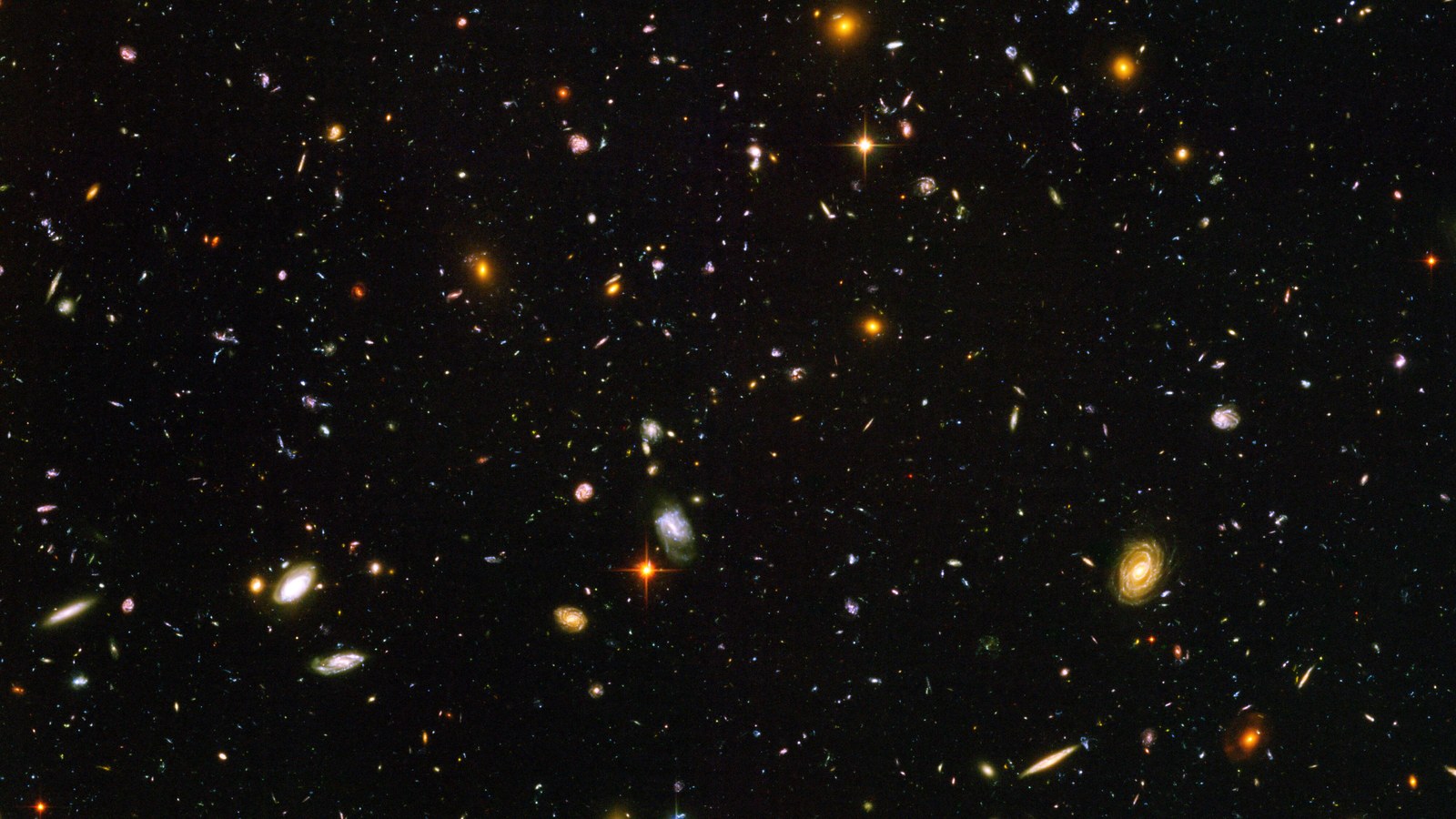
Could interactions with an environment prevent a quantum field from making a transition? A theoretical study called Cosmic Lockdown explores that question in an expanding-universe model. The result concerns a particular process under stated assumptions. It does not show that the real universe has stopped changing or prove that it is permanently stable.
A Syracuse University account published on 5 October 2026 describes work by Gregory Kaplanek and collaborators on decoherence and tunnelling. In their model, environmental interactions can suppress transitions between field configurations. The university described the paper as accepted for the Journal of Cosmology and Astroparticle Physics. This is theory and numerical modeling, not an observation of a cosmic shutdown.[1]
A model is a question with rules
A theoretical model chooses degrees of freedom, interactions and assumptions. Those choices make a problem tractable and allow researchers to ask what follows from the specified rules.
The result can be illuminating even when the model is not a complete account of nature. The scientific task is to understand which conclusions depend on which assumptions, and whether a connection to an observed physical system can be justified.
What tunnelling means here
In quantum mechanics, a system can have behaviour that a simple classical barrier picture would forbid. Tunnelling is a name for certain transitions described by the quantum dynamics.
An introductory image of a ball passing through a hill can be suggestive, but it should not be treated as a literal photograph of the process. A real calculation depends on the system’s state, energy structure and interactions.
In a many-body or cosmological model, the “barrier” may concern a configuration of a field rather than a small object moving through a wall. The model’s variables and interpretation have to remain attached to the discussion.
The environment changes the dynamics
A quantum system is not always isolated. Its interactions with other degrees of freedom can affect the coherence relevant to an experiment or model.
Decoherence describes a loss of the interference structure available in a reduced description when information becomes correlated with an environment. It does not require a conscious observer, and it is not equivalent to a person looking at a photograph.
The effect on a particular transition depends on the dynamics and assumptions. It would be misleading to say that noise always stops tunnelling, or that every environment produces the same result. Different models and regimes can behave differently.
Measurement does not require a human mind
Popular accounts often use the word measurement in a way that invites a leap from physical interaction to consciousness. That leap is not justified by this story.
An apparatus or environment can become correlated with a system without anyone reading a display. A model of decoherence can concern those physical relationships, regardless of whether a person is present.
A suppressed transition is not a frozen universe
Even if a model predicts suppression of a particular tunnelling process, that does not mean every kind of change has stopped. The statement concerns a specified transition under specified conditions.
The distinction is similar to a device in which one channel is blocked while other processes continue. The analogy is about scope, not a proposal that the universe is a machine with an ordinary switch.
This also prevents an unsupported safety conclusion. A theoretical suppression effect is not a guarantee about every possible future state of the real universe.
What would strengthen the result?
There are several possible levels of follow-up, and they should not be conflated. Another theoretical analysis could test whether the effect survives changed assumptions. A numerical study could explore a different parameter regime. A laboratory analogue could investigate a related mechanism in an engineered system.
None of those would automatically be a direct observation of a cosmological transition. Each would establish something about its own model or apparatus.
The strongest account would state what observable consequence, if any, distinguishes the proposal from alternatives. Without that bridge, a compelling mathematical idea remains theory rather than a confirmed description of the universe.
That is not a dismissal of theoretical physics. It is how a reader can understand the kind of contribution being made and the work needed to extend it.