
Google’s Magic-State Result Puts the Next Test on Yield
Google’s Willow magic-state experiment reaches a publication milestone. Error reduction, retained measurements and transfer to a larger code answer different questions.
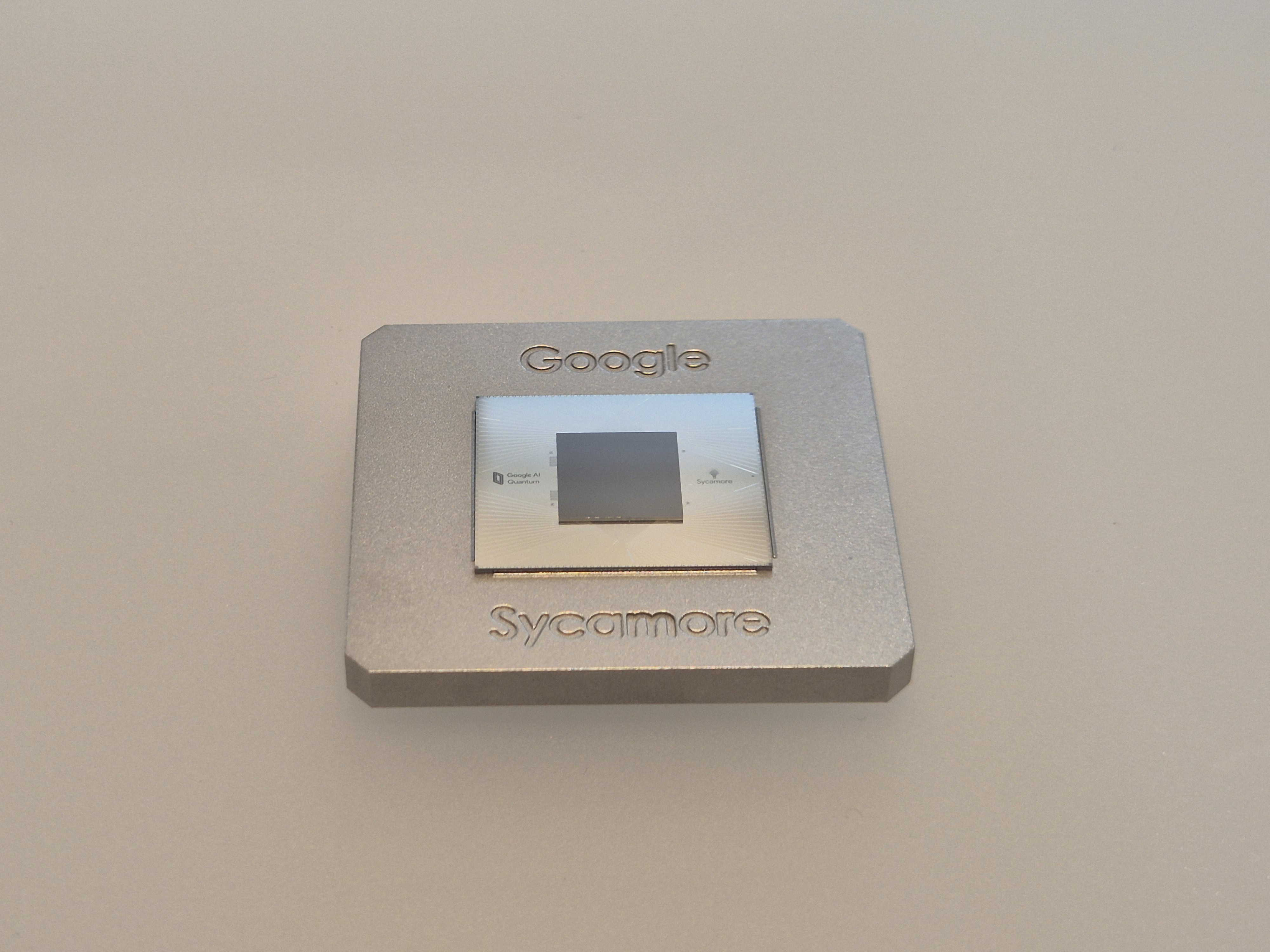

Google announced on October 15 that its Willow magic-state cultivation experiment had been published in Science. The work was already public as a December 15, 2025 preprint; this is a journal-publication milestone. The important question is how a cleaner quantum resource becomes a dependable supply for computation.[1][2]
What cultivation changes
Magic states enable operations needed for universal quantum computing. Cultivation starts with a noisy state, checks it using coordinated measurements and rejects suspect attempts. Google also demonstrated transfer from a small color code into a larger encoding, while acknowledging that practical scale remains ahead.[1]
Three numbers, different tests
The preprint compares injection-only error of 4.4(2) × 10⁻³ with roughly 1–2 × 10⁻⁴ after cultivation in its characterization circuit. That supports an approximately 40-fold error improvement, not a whole-computer cost reduction.[3]
The 8% retained data includes extra characterization rounds and correction cycles. It is not standalone factory yield. Fidelity 0.9999(1) is a bound with uncertainty, not a guarantee for every attempt.[3]
Grafting was tested separately, with output quality limited by idle errors. Headline fidelity was not demonstrated through the entire transfer. Real-time T gates and matching-decodable conversion remain future work.[3]
Why the distinction matters
QubitWire analysis: these tests form a chain rather than competing headlines. Purity describes the accepted resource, acceptance describes how often it is available, and transfer determines whether its quality reaches the next operation. Improving one link can leave the delivered supply unchanged if a different link becomes the bottleneck. That is why this result should not be reduced to a single whole-machine multiplier.[3]
What would make a useful factory?
Our reading is that the next useful benchmark should count accepted, usable states per second alongside their error rate and all the and time consumed. Rejected attempts, storage and delivery belong in that accounting. A reader evaluating the next claim can ask: how many states reach the computation at the promised fidelity, and what did producing them cost?[3]
Keep your reading trail
Keep up with these topics
Choose the subjects you want to find again in Your Updates.