
Skip to content
BUSINESS + POLICY · HARDWARE BENCHMARKING / PUBLIC PROCUREMENT

NQCC’s £30 million testbed report shifts attention from delivery to evaluation

The UK programme’s new Phase 1 report records seven testbeds and outlines the evaluation work due to finish in Q2 2027.
Published Source report Sources checked
My reading list
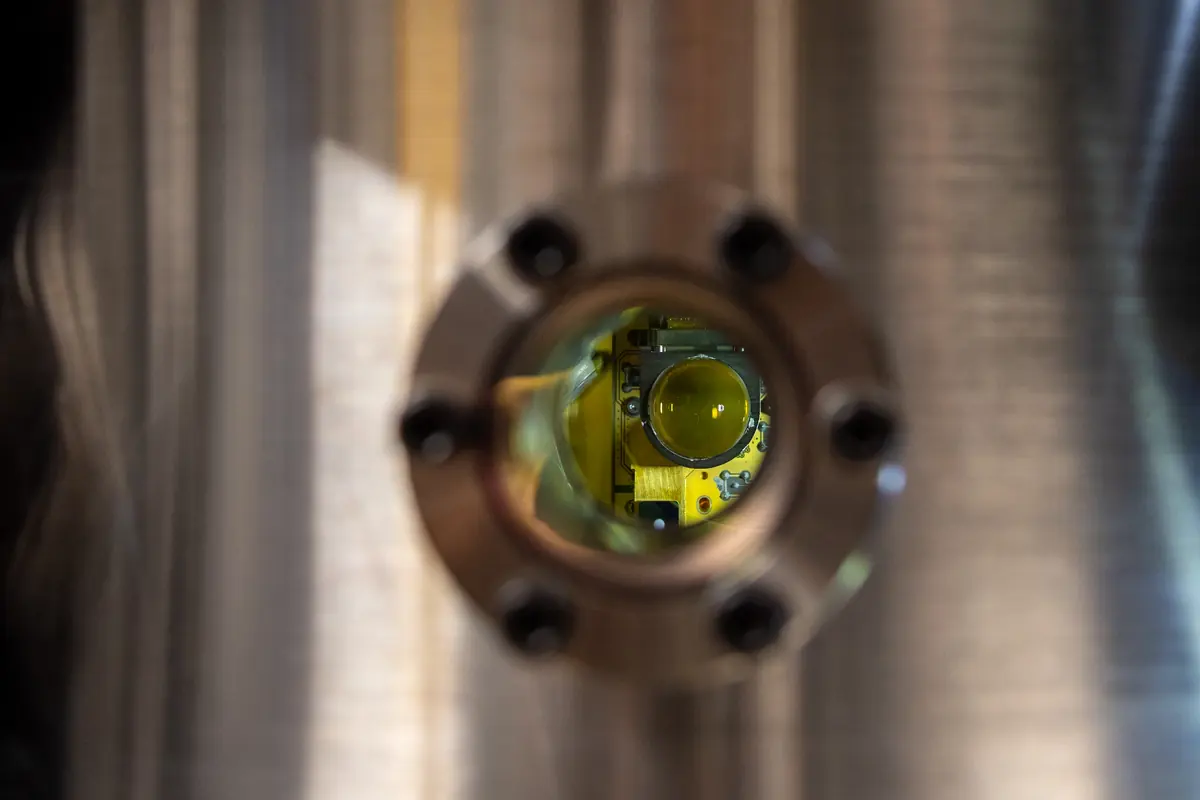
View through a circular opening in metallic laboratory equipment, with yellow-tinted components inside.
Laboratory equipment photographed during the National Quantum Computing Centre opening on 25 October 2024. Archival facility context; this photograph does not identify all seven testbeds or document their 2026 evaluation.Image: NQCC opening laboratory equipment, 25 October 2024, photograph 7 · Zoe-Rose Herbert / Department for Science, Innovation & Technology · CC BY 2.0Full image credit

The UK’s National Quantum Computing Centre published its Quantum Computing Testbed Initiative Phase 1 report on October 21. The £30 million programme supported seven providers, with the development and deployment phase concluding at the end of 2025. The report is a new account of that work, rather than a newly announced £30 million award.[1][2]

Performance evaluation is continuing with the University of Edinburgh’s Quantum Software Lab. The report gives the main Phase 2 programme a completion target of the second quarter of 2027. It also records mixed delivery outcomes: two of three programme measures were exceeded and one was partly met.

The next test is usefulness

Delivery gives a buyer something to investigate. It does not settle which workload a system performs well, how results vary or which alternative would best meet a particular need. The evaluation stage is therefore where the programme could become especially useful to people outside the original procurement.

A researcher seeking a documented learning environment may value different properties from a developer exploring a demanding algorithm. A single overall ranking could hide that difference. Clear measures tied to specific tasks would let each user make a more relevant comparison.

The record should also make change visible. If a provider updates software or replaces a component between runs, the results could still be valuable, provided the configuration explains what changed. Unsuccessful runs and unavailable periods would help prospective users understand ordinary operating conditions.

QubitWire’s assessment is that the programme’s lasting value will depend partly on how much of this evaluation others can examine. Reusable workloads, transparent methods and candid integration lessons could help later buyers ask better questions. Wider economic-impact claims would need their own evidence connecting the programme to the outcome.

Keep your reading trail

Your Updates →

Evidence & context

2 linked sources

Programme report; further evaluation ongoing. Source scope checked October 26, 2026; original analysis is identified in the text.

How to read the evidence and dates

An announcement records what an organization stated. An experiment reports an observation. A simulation or resource estimate depends on its assumptions. QubitWire’s analysis connects these sources; the labels are not quality scores.

Published is the article’s first QubitWire publication. Updated marks a substantive content change. Sources checked records a review of the underlying evidence. An older paper can support a new explanation, and another press release about the same work is not independent replication.

Sources

  1. NQCC testbed Phase 1 report announcement

    Primary evidence checked October 26, 2026. Scope and stage retained in the article.

  2. Quantum Computing Testbed Initiative: Phase 1 report

    Primary evidence checked October 26, 2026. Scope and stage retained in the article.

READ NEXT

Continue exploring

All Business + Policy stories
  1. Explore the related question

    Qilimanjaro’s €19.6 Million First Close Puts Manufacturing Next

    Indra and SETT back the Barcelona company’s Series A first close. The next useful evidence is what the capital changes in chip production and system delivery.

    Published · Source report · Sources checked
  2. Explore the related question

    Delta Gold expands Penn State and Toronto research into quantum sensing

    The programme allocates equipment spending from existing university research budgets. Sensor performance and commercial delivery remain future tests.

    Published · Source report · Sources checked
THE QUANTUM BRIEFING

A clearer signal.
Read the latest edition.

A little perspective on a fast-moving field.

Read the on-site briefing →

Read selected quantum coverage in the on-site briefing, or register your interest below.