
AI’s next job in a quantum lab may be turning the right knobs
PNNL’s AQUA-WOLF project aims to tune amplifiers that reveal extremely faint signals. Hardware tests and any measured speedup are still ahead.
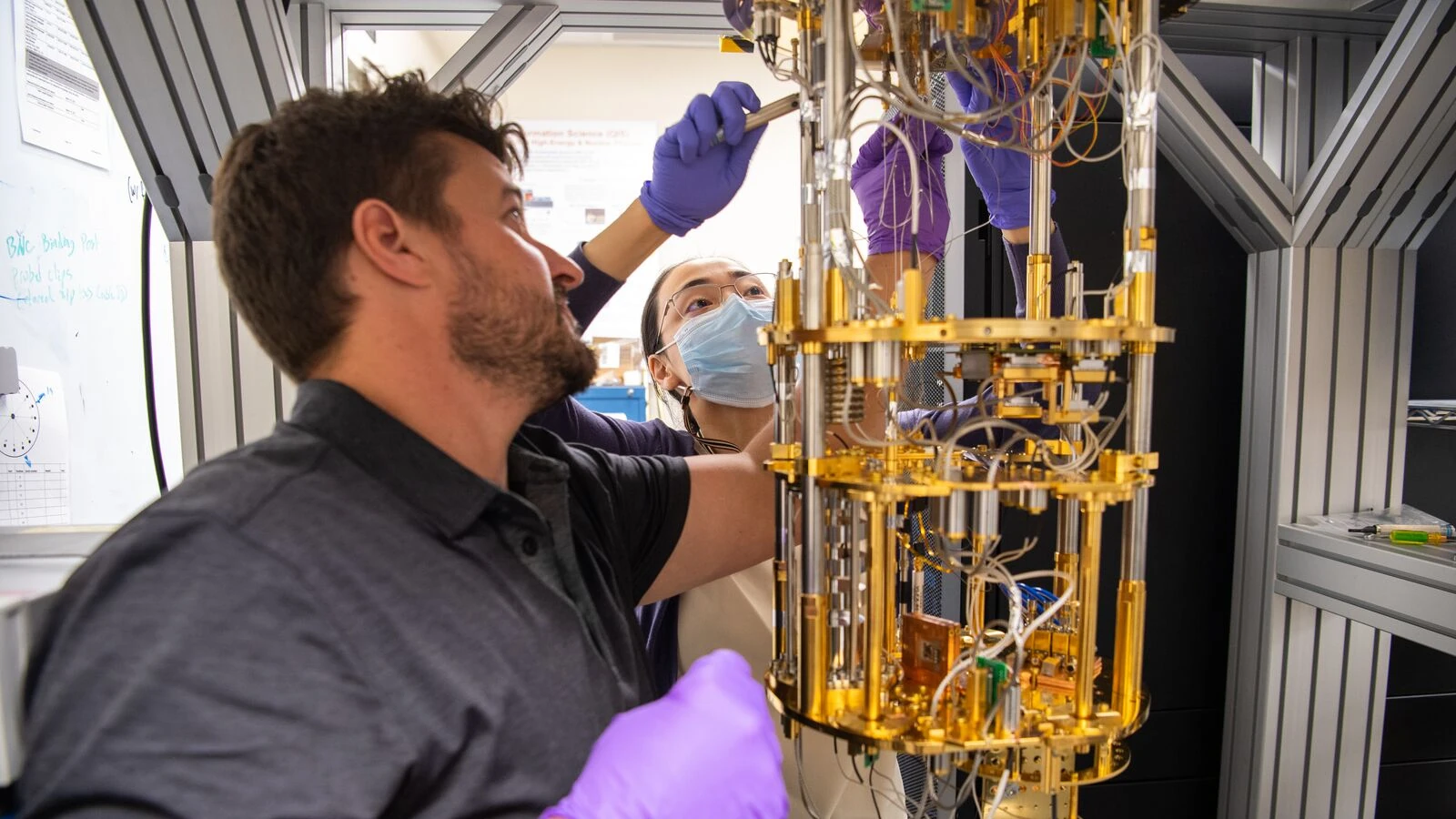
The next useful AI agent in a quantum laboratory may spend less time writing explanations and more time helping turn a stubborn tuning knob. Pacific Northwest National Laboratory has announced AQUA-WOLF, a project aimed at adjusting amplifiers that make extremely faint experimental signals usable. It gives an AI assistant a concrete job whose success scientists can measure.[1]
PNNL described the project on October 5. It aims to use reinforcement learning to tune quantum-noise-limited parametric amplifiers, specialised devices used in quantum computing and dark-matter searches. The announcement is a research plan, with hardware validation and eventual open-source release still ahead. It does not report a delivered autonomous controller or a demonstrated speedup.[1]
A bigger signal is not the whole goal
An amplifier is more than a volume control. Turn up a weak recording and you can make the hiss louder along with the voice. The physics of these laboratory amplifiers is different, but the practical question carries over: has the measurement become more informative, or has the displayed signal merely become bigger?
A useful operating point has to balance objectives. An amplifier can have substantial gain yet add unwanted noise, become unstable or perform poorly over the frequencies an experiment needs. PNNL’s plan begins with gain optimisation and then broadens the objectives to include noise and stability. Those stages are proposed work, rather than completed performance results.[1]
In reinforcement learning, an agent chooses an action, receives feedback about its consequences and learns which actions improve a defined reward. Here, a permissible change in an equipment setting could be the action. A measured response could supply the feedback. The quality of the reward matters because it tells the agent what to pursue.
Suppose, hypothetically, that an agent were rewarded only for increasing a displayed signal. It might favour a setting that also made the background less stable. The headline number could improve while the experiment became worse. A credible tuning method therefore needs objectives and constraints that describe the complete measurement task, with unsuccessful attempts counted too.
The link between quantum computing and dark-matter searches is their need to extract meaning from tiny signals. Better tuning could reduce the time scientists spend preparing the measurement chain. But a proposed tool for that preparation is not itself a discovery of dark matter, and it does not establish a quantum computational advantage.[1]
The experiment that would make this convincing
The strongest first comparison would use the same amplifier, starting conditions and target performance. It could pit the agent against an experienced operator, an established automated routine or both. The evaluation should count calibration, failed attempts and recovery from interruptions, rather than timing only the most flattering successful adjustment.
Then comes the question of transfer. Real equipment drifts, units differ and measurement goals change. Does the method still help on another amplifier, and how much retraining does it need? Gain, noise, stability and total tuning effort belong beside each other. A fast result once is less useful than a method another laboratory can depend on.
AQUA-WOLF offers a grounded version of the AI scientist story: helping experimentalists prepare a difficult instrument. Watch for a released method, measured hardware results and a complete baseline comparison. If those show better measurements with less wasted effort, the agent will have done something valuable well before it invents a new theory.
Read the deeper explanation · about 6 min
This estimate covers the explanation below, separate from the overview. Optional depth was added in this reading edition. The article keeps one canonical address and its original chronology. Source review: . The relevant source dates and limitations are recorded below.
The glamorous picture of an AI scientist involves a machine producing a new theory. A more immediately testable picture involves a machine helping an experimentalist adjust a stubborn piece of equipment. The task may be repetitive, highly technical and essential to every measurement that follows. That makes it a serious scientific problem, even if it does not resemble a science-fiction laboratory.
On October 5, Pacific Northwest National Laboratory described AQUA-WOLF, a project that aims to use reinforcement learning to tune quantum-noise-limited parametric amplifiers. The proposed workflow connects a concrete set of controls to measured experimental performance. PNNL links the work to quantum computing and dark-matter searches, two areas in which making a very weak signal usable is central. The announcement describes planned work, not a completed general-purpose AI scientist.[1]
The signal has to survive before anyone can interpret it
A measurement is not finished when a physical system responds. That response must travel through equipment, be amplified, be recorded and be interpreted. Every stage can affect what the experimenter ultimately sees. A weak but meaningful signal may be difficult to distinguish from fluctuations or imperfections elsewhere in the chain.
An amplifier is therefore not simply a volume control. Turning up a weak recording can make the hiss louder along with the voice. In a precision experiment, the useful question is whether the measurement becomes more informative, not merely whether the displayed amplitude grows. The exact physics of a parametric amplifier is more specialized than an audio device, but the distinction between gain and useful information is a good starting point.
This makes tuning an appealing target for automation. An agent can, in principle, propose a setting, observe a response and choose another setting. The crucial phrase is in principle. The scientific value depends on the measurement objective, the cost of each attempt, the constraints imposed on the hardware and the quality of the comparison with existing methods.
A narrower job can be a better test
A broad claim that AI accelerates science is difficult to evaluate without a specific task. Amplifier tuning offers one. The controls can be identified. The response can be measured. The outcome can be compared with a baseline. A failed attempt can be counted instead of disappearing from a polished demonstration.
That does not make the problem trivial. Real equipment drifts. Measurements are noisy. Settings can interact. A good operating point under one condition may be poor under another. An agent that memorizes a familiar device may look impressive until it encounters a different unit, a changed environment or a new measurement requirement.
PNNL's plan recognizes the need for staged objectives and validation. The project description moves from gain optimization toward a broader set of goals involving noise and stability, with testing across hardware and eventual release of tools. Those steps are important because a single objective can reward the wrong behavior. An impressive gain value is not a satisfactory outcome if the resulting measurement is less reliable.[1]
What reinforcement learning adds—and what it cannot excuse
In reinforcement learning, actions are evaluated through their consequences under a defined reward structure. For a laboratory task, the action might be a permissible change in a setting, and the feedback might summarize the resulting measurement. The choice of reward becomes part of the scientific method, because the agent will pursue the objective it is actually given rather than the one an observer casually assumes.
A useful thought experiment makes the problem clear. Suppose an agent is rewarded only for making a displayed signal larger. It might favor a setting that also makes the background less stable. The headline metric improves while the experiment becomes worse. The solution is not to distrust every automated method. It is to define success in terms of the complete measurement task and explicitly account for undesirable outcomes.
Constraints also belong inside the experimental design. A deployed controller must operate within authorized hardware limits and handle unexpected observations conservatively. This article does not provide operating settings or instructions for a physical amplifier. It asks what evidence would justify trusting an automated tuning workflow within a properly supervised laboratory.
Why this connects quantum computers with dark-matter searches
Quantum computing and dark-matter detection sound like separate worlds. One aims to manipulate information; the other seeks evidence about the contents of the universe. Yet both can involve extracting meaning from extremely small signals. PNNL's announcement points to amplifier technology as a shared practical concern.[1]
That connection should not be exaggerated. A tool useful for preparing a measurement chain is not itself a discovery of dark matter. Nor does improved tuning prove a quantum computational advantage. The relevant benefit would be better use of experimental resources, more dependable operation or improved measurement performance under a defined comparison.
The distinction is valuable because it shifts attention from a miraculous end result to the work needed before an end result is even credible. Scientific instruments spend time being configured, checked and recalibrated. Reducing that burden responsibly could matter across many experiments. But the burden must actually be measured rather than inferred from the presence of the letters AI in the project name.
The comparison that would make this convincing
A strong evaluation would start with a baseline: an experienced operator, an established automated routine or both. It would specify the device, the initial conditions, the target performance and the permitted actions. It would count the whole process, including unsuccessful attempts, calibration overhead and recovery from interruptions.
Then it would ask whether the improvement survives outside the development setting. Does the workflow transfer to another amplifier? How much retraining is required? Does performance remain acceptable when the device drifts? Can a scientist understand why a setting was chosen well enough to diagnose a problem? A method that is fast once but difficult to audit may not save time in actual use.
The evaluation should also make tradeoffs visible. A faster tuning procedure might produce slightly different noise performance. A more stable operating point might require longer preparation. There is no reason to assume one number will summarize every laboratory's priorities. Reporting a family of outcomes can be more useful than selecting the most flattering point.
A record of actions is part of the result
For an automated experiment, the sequence of decisions is not disposable background. It can help explain how the final setting was reached and whether the process can be repeated. A useful record would connect authorized actions, observations, versions and constraints. That is a proposed standard for evaluation, not a claim that every project currently provides such a record.
The same idea helps ordinary visitors understand the difference between a convincing AI demonstration and a compelling promotional video. Ask what the agent was allowed to do, what counted as success, which attempts were included and whether someone else could reproduce the comparison. Those questions are concrete enough to survive a change in model names or marketing language.
The story to keep following
AQUA-WOLF is interesting because it gives the idea of an AI laboratory assistant a bounded job. There is an instrument, an objective and a proposed route to hardware validation. That is more useful than a vague promise that scientific discovery will become automatic. The project may succeed, fail or reveal tradeoffs that change the plan; all three outcomes can teach something if they are documented well.
For QubitWire, the follow-up should be equally bounded. Track a released method, a real-hardware evaluation, the complete baseline comparison and evidence of transfer to a new setting. Do not refresh the story merely because the project is mentioned again. A new capability or a more informative result is the reason to bring the reader back.
The appeal is not that scientists will stop thinking. It is that some of their most demanding equipment might become easier to prepare and trust. An AI agent that can help produce a better measurement, with all the awkward details counted, would have done something more valuable than simply sounding like a scientist.
Evidence for this explanation
- An AI Agent for Physics Could Speed Up Quantum Computing and Dark Matter Searches — PNNL
National-laboratory project announcement dated October 5, 2026. Primary public text inspected, including staged reinforcement-learning objectives and planned hardware validation, transfer and open-source release. No completed tuning speedup or dark-matter discovery is established.