
The fast feedback loop inside a hybrid quantum experiment
Quantum Machines describes a September CUDA-Q demonstration linking live qubits, control electronics and GPU computing. Its timing claim measures a specific exchange.
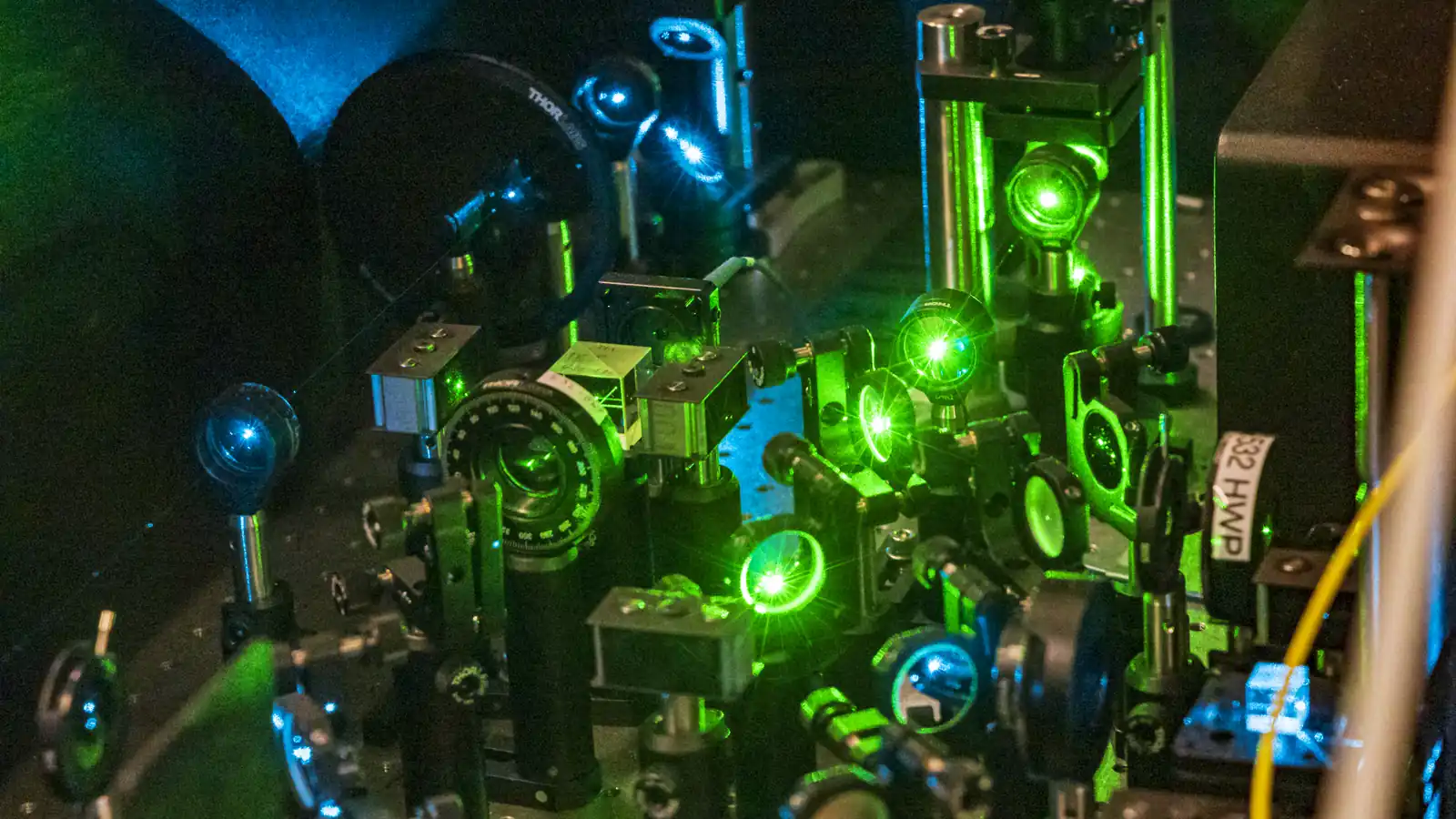

A hybrid quantum experiment may need to act on a measurement while the experiment is still running. Quantum Machines describes such a connection in an October blog about a September demonstration at IEEE Quantum Week in Toronto. The account says CUDA-Q coordinated work across live , classical control and GPU computing.[1]
The company identifies NVQLink and its OPNIC connection between an OPX1000 controller and CPU/GPU servers as parts of the setup. It reports an exchange of roughly one microsecond. That is the vendor’s account of the demonstrated control path, rather than an independently reproduced measurement of a complete application.[1]
A simplified loop has three jobs: receive a measurement, compute a response and send instructions back to the controller. The controller then has to deliver the physical signals required by the experiment. Following those steps helps locate a timing claim without assuming that it includes every operation performed before or after the exchange.
For example, a hypothetical experiment might choose its next pulse after examining an earlier measurement. The useful timing would start and stop at clearly named points in that sequence. A remote user submitting a job would face a different measurement, potentially including preparation, queuing and result delivery. The two timings answer different practical questions.
The missing detail for a fair comparison is a reproducible timing boundary: what data entered the path, which computation ran, which return signal completed it and how timing varied across repetitions. A fast connection can enable a demanding workflow, but the workflow still needs to show that it produces the intended scientific result.
Quantum Machines itself describes further engineering ahead. The supported development is integration between programming software and live control infrastructure; large-scale and application advantage remain separate demonstrations. This article uses an October 24 source-check date because the blog supplies only an October publication month. The reported demonstration occurred in September.[1]