
QCi’s 9,980-Variable Optimizer: What the Number Really Means
Dirac-3S targets larger photonic optimization problems. The useful comparison starts with what its variables represent and how an answer is evaluated.

Nearly 10,000 variables makes an arresting headline. The useful question is what those variables describe. QCi’s October 1 announcement presents Dirac-3S as a photonic optimization machine, with a company-reported configuration handling up to 9,980 variables when an expansion module is attached.[1][2]
What the number counts
The technical reference describes a specialized system that encodes mathematical objective functions in the evolution of a physical photonic system. The variable count describes the optimization problem being represented. Readers should avoid treating that headline number as a count of , or arbitrary quantum-circuit capacity.[2]
That distinction changes the buying question. A large model can still be a poor match for a particular machine if its constraints, variable types or objective require expensive reformulation. Before comparing headline sizes, ask for the exact mathematical problem accepted by the interface and the transformation applied to your original task.[2]
Delivery and performance remain separate questions
QCi says the first customer shipment is expected in November 2026. That is a delivery forecast. The announcement also links company benchmarking material, but this article does not establish an independently reproduced performance advantage. A hardware capacity statement and a useful end-to-end result answer different questions.[1][2]
For a practical evaluation, keep the workload and comparison budget fixed. Record time spent preparing inputs, running the machine, recovering an answer and checking constraint satisfaction. Compare against a well-tuned classical method on the same instances, including unsuccessful runs. A fast device call can leave a slow overall workflow.[2]
A more useful test than a bigger headline
Ask how success is defined: finding any feasible answer, reaching a target objective value, or certifying the best answer. Then ask whether the reported setting includes the optional expansion hardware and whether repeated runs give comparable results. These are QubitWire’s evaluation questions, not results demonstrated by the announcement.[1][2]
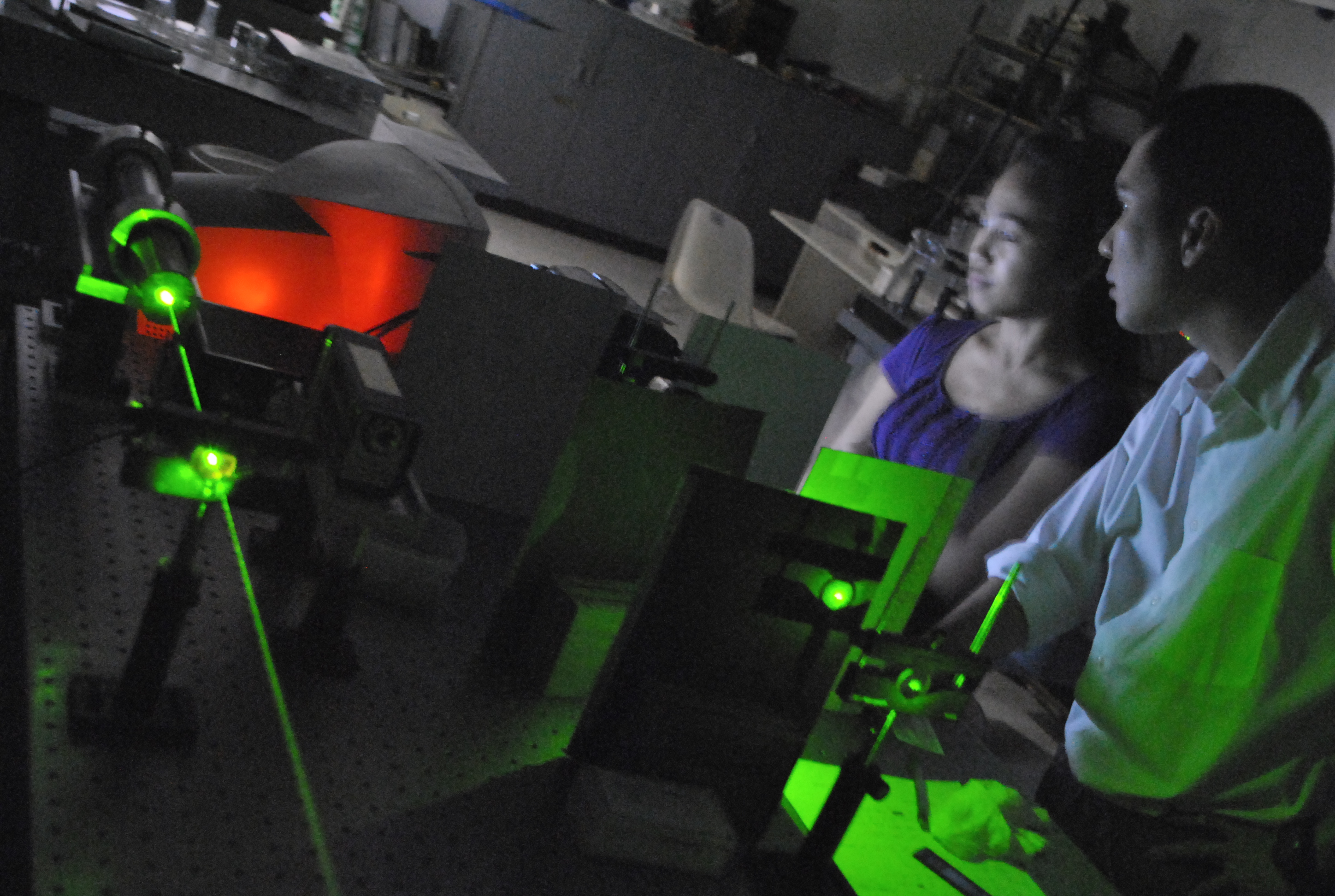
The lead photograph shows a laser experiment at Ateneo de Manila University in 2011. It gives historical context for optical laboratory work. The caption identifies the institution and date so the pictured equipment is not mistaken for the newly announced QCi apparatus.
The next useful evidence would be a delivered system accompanied by reproducible workloads, disclosed settings and matched comparisons. Until then, Dirac-3S is a specific product announcement worth following, with a clear distinction between the reported problem size and a demonstrated benefit for an actual customer task.[1][2]