
Skip to content
RESEARCH · APPLICATIONS

A satellite quantum network needs a memory budget as well as an orbit

QNETSIM asks whether moving links, stored states and classical messages line up to deliver a usable service.
Published Source report Sources checked
My reading list
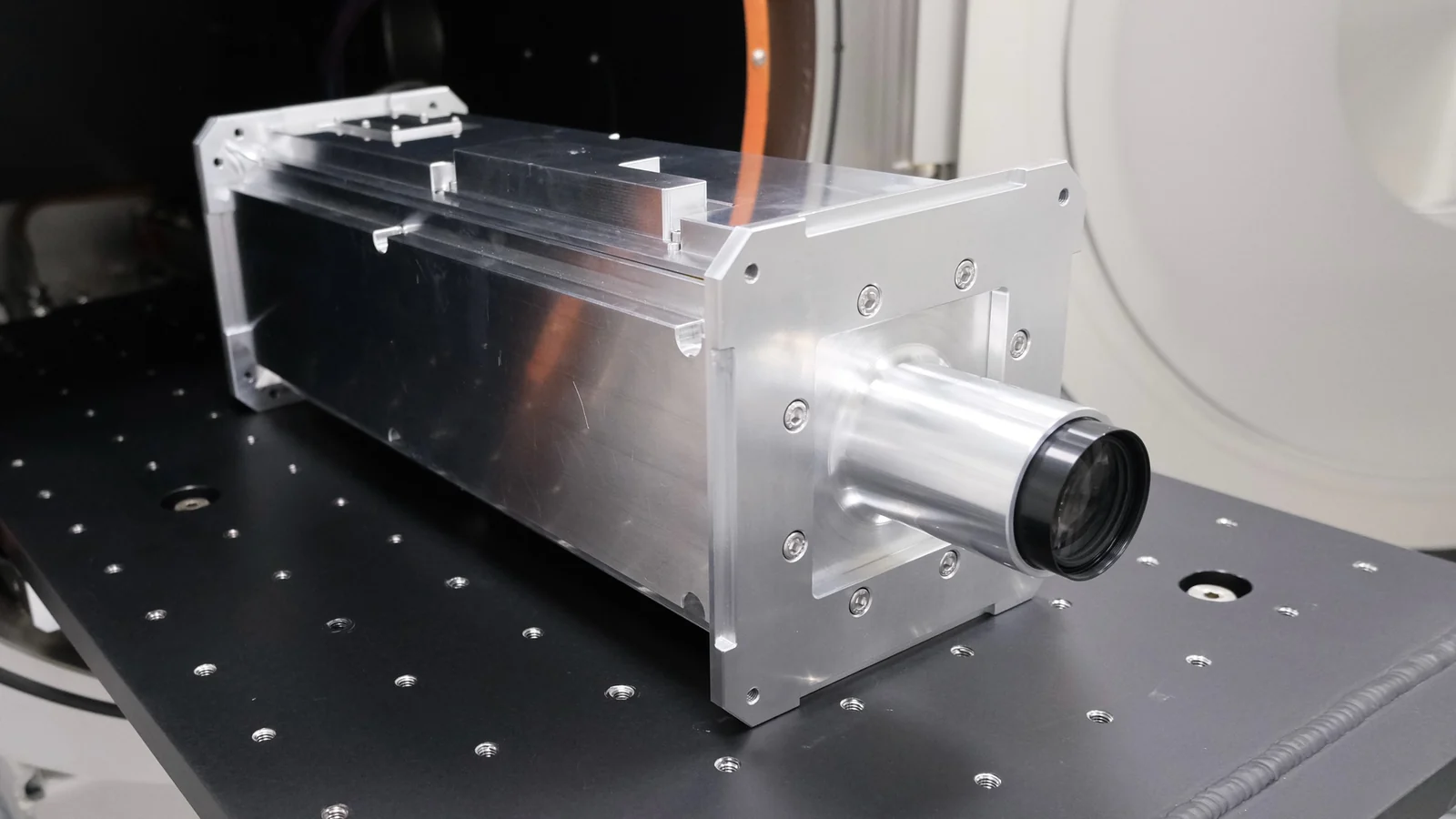
The assembled silver quantum-photonic payload enclosure on a laboratory optical table before launch.
An orbital quantum-photonic payload documented in a September 2026 experiment manuscript. Space-hardware context; this is not the memory-enabled satellite network modeled in the new study.Image: Assembled orbital quantum-photonic payload · Simon Steiner and collaborators · CC BY 4.0Full image credit

A satellite passing within reach of two ground stations does not by itself establish a usable quantum-network service. QNETSIM, described in an October 27 preprint, models orbital motion alongside optical links, quantum memories and the classical coordination needed to complete network operations.[1]

The framework distinguishes geometric contact from delivered service. It tracks storage ages and resource availability, separates raw delivery from fidelity-qualified delivery, and distinguishes a physically ready resource from one whose required classical information is available. Its results describe simulated network designs, not a deployed constellation.[1]

Consider a deliberately simplified example, not a QNETSIM result. One link supplies a resource at 20 milliseconds, but the second arrives at 140 milliseconds. If the first resource remains usable for only 100 milliseconds after arrival, the overlap has been lost. Counting two successful links would hide that failure to complete the combined operation.

A queue introduces another distinction. A request might be served quickly because the system already holds a suitable resource; starting with empty memories could take much longer. The paper therefore separates stocked-service latency from a cold start.[1]

Those distinctions give a network planner more informative questions than how many links exist on a map. When does a request enter the system? What is waiting in memory? Which stored resource is consumed next? Can the receiving application use the result by its deadline? A reported delivery rate needs that operational context before it becomes useful for a service decision.

A public repository contains QNETSIM code and application launchers, including ground and satellite configurations. The repository was inspected for this report but not executed, and a software license was not verified. Public visibility should therefore not be described here as a verified open-source release.[2]

The most useful next comparison would keep the application request and its quality threshold fixed, then change the orbit, memory lifetime or scheduling policy one at a time. That would show which investment actually improves completed service, rather than merely producing a busier simulation.

Keep your reading trail

Your Updates →

Evidence & context

2 linked sources

Software and simulation framework. New simulator-description preprint.

How to read the evidence and dates

An announcement records what an organization stated. An experiment reports an observation. A simulation or resource estimate depends on its assumptions. QubitWire’s analysis connects these sources; the labels are not quality scores.

Published is the article’s first QubitWire publication. Updated marks a substantive content change. Sources checked records a review of the underlying evidence. An older paper can support a new explanation, and another press release about the same work is not independent replication.

Sources

  1. QNETSIM for memory assisted design of satellite and hybrid quantum networks

    preprint_fulltext; source date 2026-10-27. Read service definitions, resource and event architecture, representative scenarios, and data/software statement. No simulator execution or independent benchmark.

  2. QNETSIM — public software repository

    author_repository; source date None. Read repository landing page and README; observed code, launchers, tests and bundle manifest. Did not verify a software license or execute the code.

READ NEXT

Continue exploring

All Research stories
  1. Related reading

    A quantum-network controller needs a forecast of the state it can actually deliver

    A framework compares analytical, simulated and learned fidelity estimates. Fast predictions still need validation against the network they describe.

    Published · Source report · Sources checked
  2. Related reading

    QQLink coordinates quantum workflows, with networked hardware still ahead

    A programming study tests workflow dependencies and states its hardware boundaries.

    Published · Source report · Sources checked
THE QUANTUM BRIEFING

A clearer signal.
Read the latest edition.

A little perspective on a fast-moving field.

Read the on-site briefing →

Read selected quantum coverage in the on-site briefing, or register your interest below.