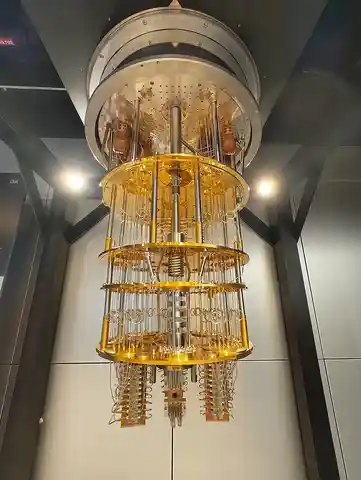
Systems
Quantum System One at ThinkLab
IBM
Onri Jay Benally (OJB Quantum)CC BY 4.0

Inside quantum / Real photographs
Real machines. Remarkable detail. Explore the hardware behind quantum computing.
IBM
Onri Jay Benally (OJB Quantum)CC BY 4.0
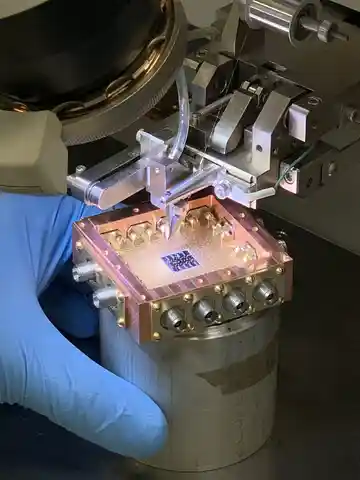
Berkeley Lab
Advanced Quantum Testbed/Berkeley LabNQI gallery reuse permission
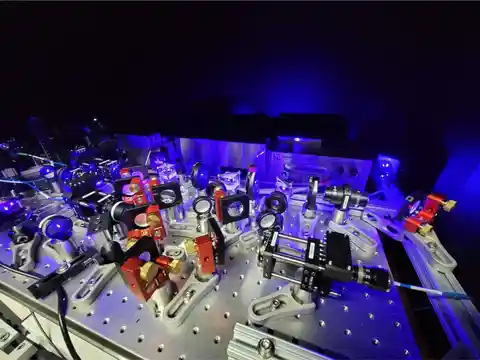
QuEra
QuEra Computing, Inc.CC BY 4.0
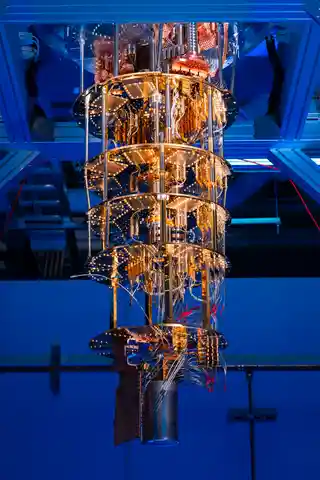
Fermilab / SQMS
Ryan Postel / FermilabNQI gallery reuse permission
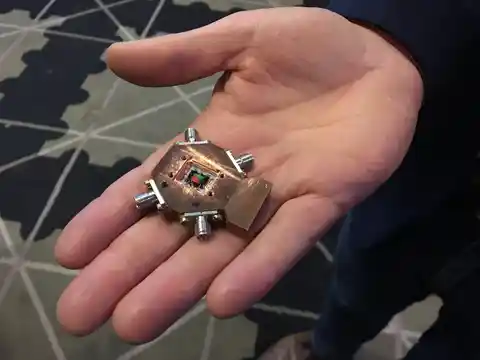
Chalmers University of Technology
Anita Fors (Chalmers)CC BY-SA 4.0
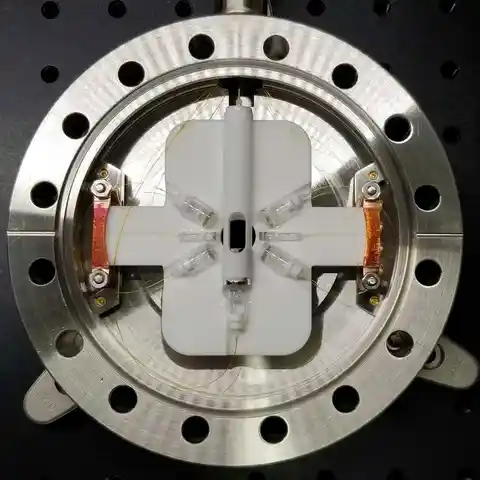
University of Wisconsin–Madison / HQAN
Mark Saffman (University of Wisconsin Madison)NQI gallery reuse permission
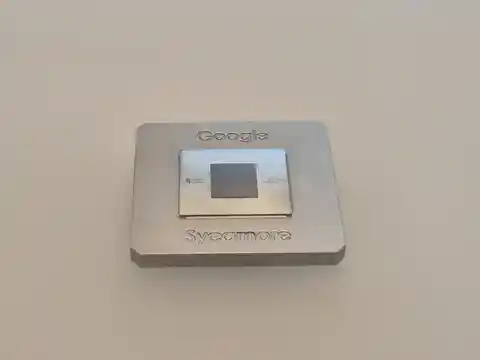
ColdupnorthCC BY-SA 4.0
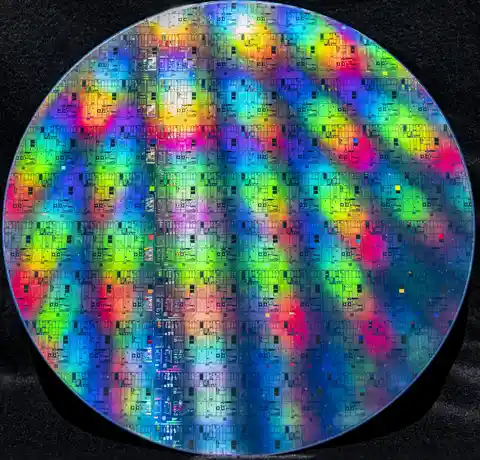
Air Force Research Laboratory
AFRL Information DirectorateNQI gallery reuse permission
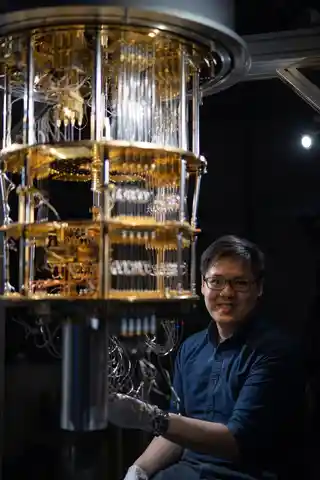
IQM
RagsxlCC BY-SA 4.0
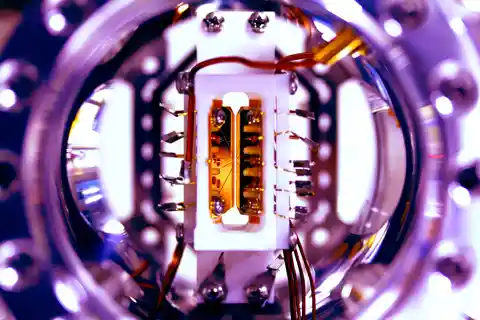
Joint Quantum Institute
S. Debnath and E. Edwards/JQINQI gallery reuse permission
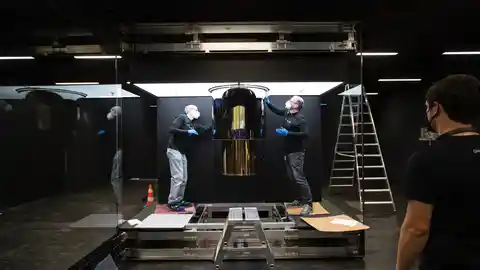
IBM
Holger Muench / IBM ResearchCC BY 2.0
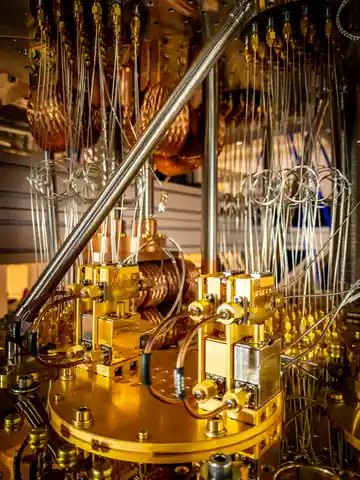
Berkeley Lab
Advanced Quantum Testbed/Berkeley LabNQI gallery reuse permission
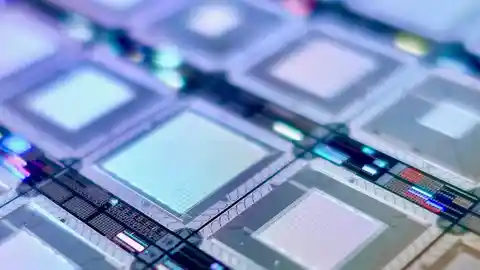
D-Wave
Steve JurvetsonCC BY 2.0
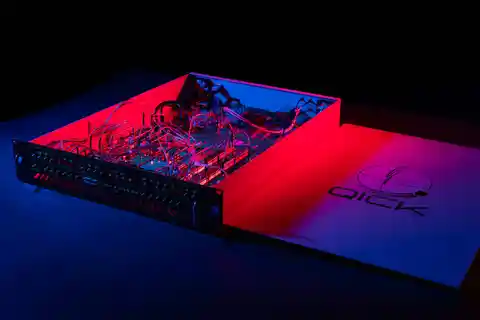
Fermilab
Ryan Postel / FermilabNQI gallery reuse permission
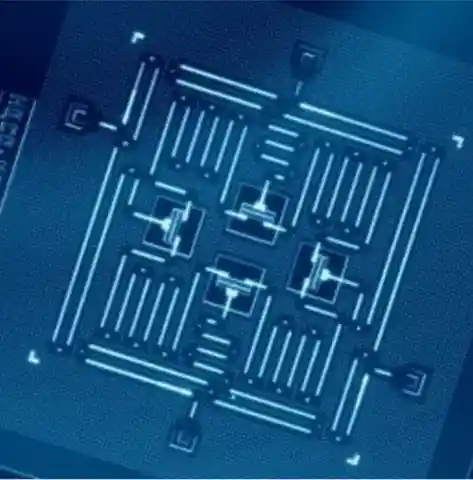
IBM
Jay M. Gambetta, Jerry M. Chow and Matthias SteffenCC BY 4.0
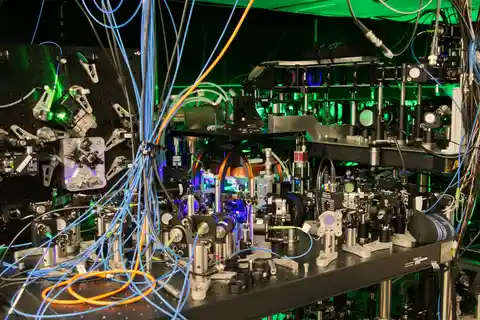
University of Colorado Boulder / QSA
Kaufman group, University of Colorado Boulder/Quantum Systems AcceleratorNQI gallery reuse permission
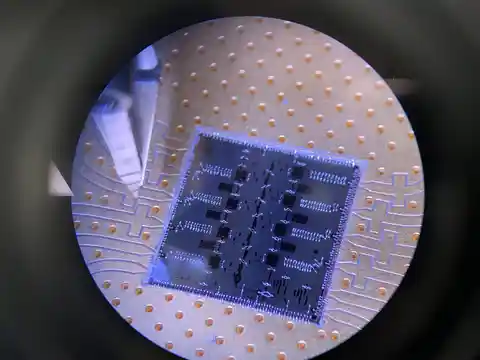
Berkeley Lab
Advanced Quantum Testbed/Berkeley LabNQI gallery reuse permission
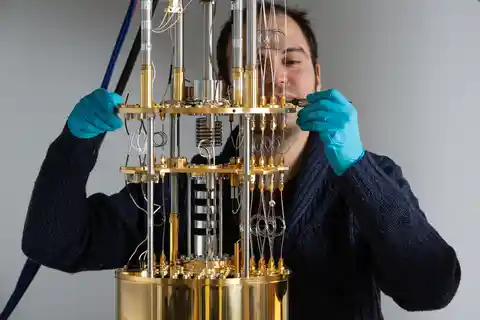
École Polytechnique
Collections École Polytechnique / J. BarandeCC BY-SA 2.0
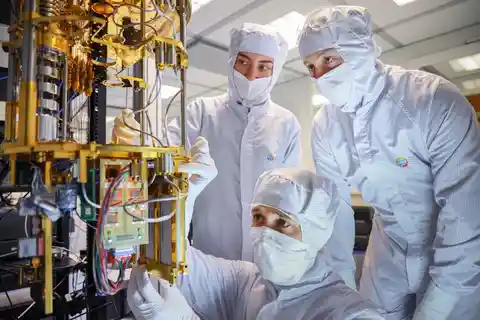
FMN Laboratory
Sergey Kushlevich / FMNLabCC BY 4.0
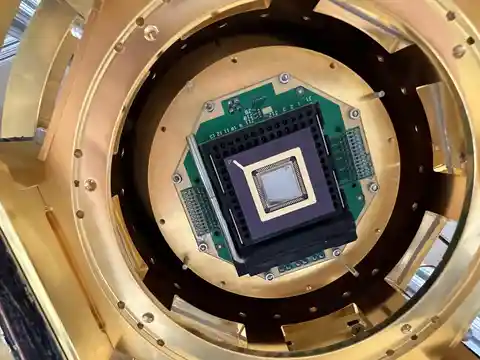
University of Illinois Urbana-Champaign / HQAN
Brian DeMarco, University of Illinois Urbana-ChampaignNQI gallery reuse permission
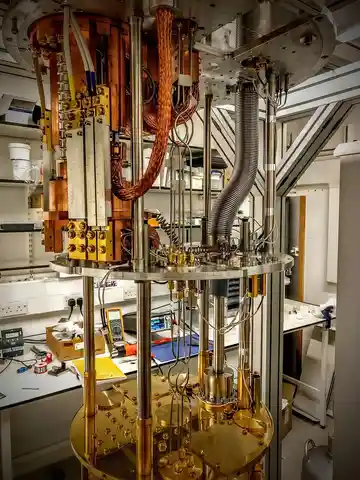
University College London
Pavlos Apostolidis / UCL Mathematical & Physical SciencesCC BY 2.0
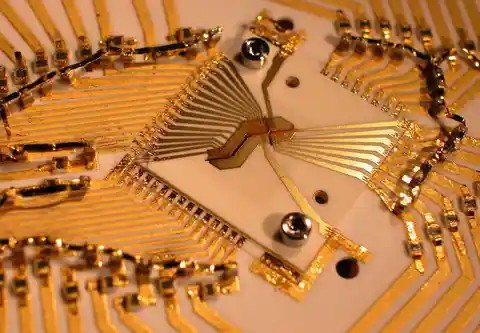
NIST
Blakestad/NISTNQI gallery reuse permission
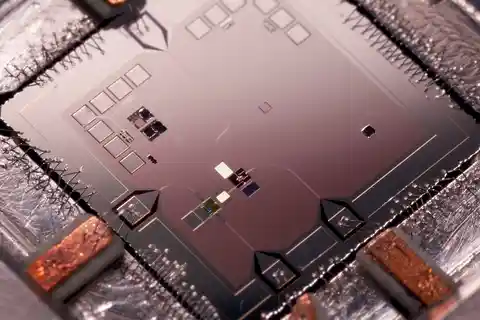
UC Santa Barbara
Erik Lucero, Martinis Group, University of California, Santa BarbaraCC BY-SA 3.0
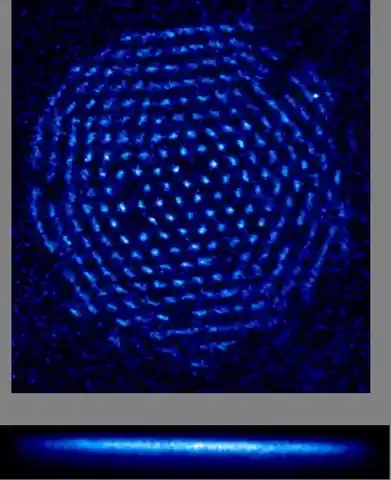
NIST
National Institute of Standards and TechnologyPublic domain (U.S. Government)
Showing 24 of 84 photographs
Documentary essays connect sensors, optics, cryogenics and voltage standards to the evidence they can provide. Source essays without an admitted image remain text and links.
View the reviewed photograph and its full attribution →
The source identifies this miniature atom-based magnetic-sensor photograph as Knappe/NIST, December 16, 2011. NIST’s research announcement followed in April 2012. The historical instrument context does not establish a current clinical product or service.
The most useful feature of the picture is the contrast between the visible package and the measurement principle it contains. The atomic medium is not directly visible in the frame. The surrounding optics and electrical connections make the small internal interaction usable as an instrument. This is a good starting point for readers who associate quantum technology only with large computers. A quantum effect can also supply a sensitive reference within a compact measurement device, while ordinary engineering determines how light, heat, signals and the environment are managed.
Read the frame as a set of interfaces. The fibre carries an optical connection; electrical leads support the package’s operation; the exposed central region gives a limited view of the micro-optics. The source description supplies those identities. The image alone cannot establish sensitivity, bandwidth, magnetic shielding requirements or the accuracy of a complete inference pipeline. Those properties require the measurement record and its conditions. A caption that turns the photograph into a universal performance claim would discard the distinction between seeing an instrument and evaluating it.
The historical research story can support a careful explanation of what a sensor result means. First identify the physical quantity the instrument responds to. Then ask how the response is converted into an estimate and compared with another reference. Finally, separate a laboratory observation from the additional work needed for a particular application. This essay offers no medical recommendation and does not infer current diagnostic suitability from an archival experiment. Its purpose is to show how quantum sensing becomes an engineered measurement chain that can be documented and questioned.
No. The source identifies an internal atomic medium; the photograph shows its engineered package and some surrounding optical and electrical components.
It supplies informal visual scale. It is not a calibrated dimensional measurement, evidence of clinical use or a reason to infer the sensor works without the conditions described in its research source.
This essay discusses the source and its scientific context. Only an image with an admitted local asset is displayed; an external source link does not certify a new acquisition.
Exact photograph, Knappe/NIST credit and U.S. federal public-domain record
No clinical or current-product claim follows from the image.
Historical instrument context and identification of optics, fibre and electrical connections
Archive research report; not current clinical guidance.
U.S. public-domain employee-work basis and worldwide royalty-free reuse with acknowledgement
Preserve Knappe/NIST credit; no endorsement implied.
View the reviewed photograph and its full attribution →
The MAGSCA flight-model source is dated November 21, 2020 and credited to the MAGSCA Team and A. Pollinger. The Austrian Academy of Sciences connects the instrument to the JUICE mission’s magnetic-field measurements. The source date and instrument identity are distinct from later mission events.
A useful question for this image is why a measurement described by one scalar value requires several physical parts. The answer is that the reported quantity is the endpoint of a chain. Light must be generated and delivered, an interaction must occur in the sensor, a response must be detected and electronics must turn that response into a usable record. The photograph helps separate the sensing element from the support system without implying that every internal component or connection is visible or fully explained by the frame.
The word scalar also deserves care. It identifies a kind of reported quantity, not a guarantee that all environmental or calibration questions have disappeared. A complete scientific instrument still needs an account of operating conditions, uncertainty and how its measurements relate to other instruments. The photo can introduce those questions, but it cannot answer them numerically. Readers should consult the instrument’s technical documentation for the precise measurement method and the mission record for the context in which its data is used.
This archive is especially useful for discussing the difference between hardware identity and mission chronology. A flight-model photograph documents a particular stage and arrangement. It does not by itself establish launch status, current health, a spacecraft’s present location or the date of a future encounter. Those are separate, time-sensitive claims. The caption should therefore retain the 2020 capture date and the source’s instrument identification while avoiding an old predicted arrival date or a present-tense operational claim that was not checked for this record.
No. It documents MAGSCA instrument components. Their relationship to a spacecraft and its mission requires the separate official mission and instrument sources.
A 2020 flight-model photograph cannot establish present health or location. Keeping the capture date visible prevents an archival hardware image from being mistaken for a current mission update.
This essay discusses the source and its scientific context. Only an image with an admitted local asset is displayed; an external source link does not certify a new acquisition.
Exact photograph, attribution and CC BY 4.0 license
Capture date is not mission-status evidence.
Instrument identity and JUICE context
Do not reuse historical mission forecasts as current schedule claims.
The CSES-1 coupled-dark-state magnetometer source identifies a flight-model photograph dated March 3, 2017, credited to the CDSM Team and A. Pollinger. Its file history records an exposure adjustment. The record provides a starting point for understanding the instrument; this essay does not display a newly acquired original.
The documentary subject is valuable because it connects atomic measurement principles with the practical constraints of an instrument intended for a space mission. A flight model is a physical implementation with interfaces, packaging and integration requirements. The label does not supply a complete calibration report or establish the quality of data obtained after deployment. The distinction can be understood from the source description without treating a photograph as a calibration record.
The technical reading route begins with the instrument’s official description and its measurement paper. Identify what the sensor estimates, how the optical and atomic response is converted into that estimate and what uncertainty contributions are relevant. Then ask how the instrument’s output is compared with another reference or used alongside other measurements. These questions turn the acronym into a measurement task. They also prevent the common shortcut of describing every device that uses atomic physics as though it performs quantum computation.
A useful comparison with the MAGSCA photograph should keep the systems separate. Both can illustrate the engineering surrounding a sensitive measurement, but their mission roles, implementation and evidence records must retain their own identities. Do not transfer a sensitivity figure, environmental qualification or operational statement from one instrument to the other. The same caution applies to dates: capture, publication, launch and data-release dates describe different events. A precise caption should state the date it actually knows rather than choosing whichever date makes the image appear most recent.
Rights and visual identity are separate checks. The source license is documented, but the exact asset was not obtained and inspected after the host rate limit.
No. The two instrument records need their own measurement definitions, configurations and evidence. A thematic comparison does not make their specifications interchangeable.
This essay discusses the source and its scientific context. Only an image with an admitted local asset is displayed; an external source link does not certify a new acquisition.
Source essay only: no new photograph is admitted for this record.
Photo identity, author credit, CC BY 3.0 and file-history change
Original unavailable after HTTP 429; visual inspection incomplete.
Official CSES-1 instrument context
Current mission status is not inferred from an archive photo.
Technical instrument source linked from photograph provenance
Consult exact paper conditions before adding quantitative performance.
NIST’s archived New Quantum Key System Combines Speed, Distance source identifies a detector-stage photograph dated February 3, 2004. Its description concerns optical conversion and photon detection hardware. Read it as historical context for the interface between optical signals and a classical measurement record.
The subject offers a useful way to explain why a quantum-key-distribution result depends on more than a transmitter and a length of fibre. Detection is an interface between an optical event and a classical record. The chosen wavelength, conversion process and detector behaviour all belong to the experimental system. A photograph can make the existence of those stages tangible, while the paper or technical report supplies the conditions under which they were tested. The image should never become a substitute for a complete security or performance analysis.
The reading question is what happens between an arriving optical signal and a usable key. A detected event is not automatically a secure key bit. A complete protocol must define how records are selected, reconciled and assessed under its security assumptions. This essay does not assign a key rate, distance limit or security level to the pictured prototype. It instead gives readers a way to locate the detector stage inside the larger chain and ask which reported number belongs to which stage of processing.
The historical date is central to the caption. An early detector arrangement can illustrate the development of optical interfaces, but it cannot establish the capabilities of a current product or deployment. Nor should the image be used to represent post-quantum cryptography software, which addresses a different technical problem. If it accompanies a modern story, the article must explain the specific historical connection and label the image as archival context. A visually striking apparatus can otherwise encourage readers to assume that the pictured hardware is the newly reported system.
No. The protocol’s selection, reconciliation and security analysis determine what can be treated as key material under stated assumptions.
Only with a specific explanatory reason and an explicit archival QKD caption. The pictured optical detector stage should not be misidentified as a software cryptography implementation.
This essay discusses the source and its scientific context. Only an image with an admitted local asset is displayed; an external source link does not certify a new acquisition.
Source essay only: no new photograph is admitted for this record.
Historical prototype detector-stage subject and U.S. federal public-domain record
Exact original unavailable after HTTP 429; no local visual inspection or current performance claim.
The SQUID source by Zureks identifies a sensing element and provides the year 2008, without a verified exact capture day. Its selected reuse basis is Creative Commons Attribution-ShareAlike 3.0. The scientific question is how an individual sensing element fits into a complete magnetic-measurement system.
The first question is what a scale reference can establish. A ruler in a photograph can help a reader understand the approximate dimensions of the object if the geometry and markings are clear. It does not measure the device’s sensitivity, noise, bandwidth or operating temperature. Those quantities belong to an experimental characterization. A good Gallery caption should therefore connect the visible object to its documented identity while keeping the performance discussion tied to a separate technical source and its conditions.
The acronym refers to a superconducting quantum interference device, a class of sensitive magnetic measurement technology. For a general reader, the most useful explanation is functional: a physical response is converted into an electrical signal that can be calibrated and interpreted. The image shows an element of that process rather than every part of the measurement environment. Cooling, shielding, coupling and readout can matter to a complete instrument even when they lie outside the frame. An apparently small sensor should not be mistaken for a complete portable measurement system.
A productive comparison is with the miniature atomic-sensor photograph in this volume. The two sources illustrate different physical approaches to magnetic measurement. Their appearance does not tell the reader which is better for a particular task. A fair comparison would first state the required quantity, environment, bandwidth, uncertainty and practical constraints. This essay deliberately avoids a universal ranking and does not transfer a performance claim from NIST’s historical research account to the particular SQUID element shown in a separately credited photograph.
No. It supplies visual scale, subject to photographic geometry. Sensitivity and related instrument properties require a measurement and its stated conditions.
This dossier selects CC BY-SA 3.0 from the source’s recorded options. Preserve its attribution and share-alike conditions for any adaptation, and do not silently substitute a different version.
This essay discusses the source and its scientific context. Only an image with an admitted local asset is displayed; an external source link does not certify a new acquisition.
Source essay only: no new photograph is admitted for this record.
Creator, sensing-element subject, scale reference and CC BY-SA 3.0 option
Original unavailable after HTTP 429; local visual details not certified.
Historical discussion distinguishes SQUID and atomic magnetic sensing
Do not transfer that study’s performance to this separately pictured device.
Quantum lab belongs to Oak Ridge National Laboratory. The source identifies a January 17, 2020 capture date and a Creative Commons Attribution 2.0 license. The existing gallery photograph documents the internal assembly of a dilution refrigerator for optical and scanning-probe measurements; it is archival apparatus context.
A quantum laboratory can contain instruments built to study materials, optical responses or magnetic behaviour without containing a general-purpose quantum computer. The distinction matters to a reader trying to understand what work happens inside a laboratory. A microscopy setup is organized around preparing a sample, controlling its environment and measuring a response. A computing system is organized around executing a defined information-processing task. Some components or techniques may overlap, but the shared word quantum does not make the two apparatus roles interchangeable.
The source’s cryogenic and magnetic-field context provides a way to ask useful questions. Which environmental variable is controlled? Which observable is measured? How is the sample positioned and how is a change in its response distinguished from a change in the instrument? The photograph can help introduce the physical setting, while the exact experiment and its measurement record must supply the answers. The essay should not assign a sample material, a temperature, a field strength or a computational capacity that the verified source does not provide.
The capture date should remain visible even if the archive uploaded or redistributed the image later. An upload date records publication activity, not a new experiment. The same care applies to organization names: Oak Ridge and Argonne are separate institutions, and an image associated with one should not be used as a generic stand-in for the other. This is more than an attribution detail. Correct institutional context allows the reader to follow the right source trail and avoids implying that a laboratory performed an experiment it did not document.
Oak Ridge and Argonne are different institutions. Correct provenance prevents an image from being used to imply an experiment or facility belongs to the wrong organization.
No. Its documented purpose is a measurement environment. A computing claim requires a separate task, processor and execution record.
This essay discusses the source and its scientific context. Only an image with an admitted local asset is displayed; an external source link does not certify a new acquisition.
ORNL attribution, cryogenic microscopy subject, capture date and CC BY 2.0
Not Argonne; original unavailable after HTTP 429.
Original institutional photograph provenance
Upload or redistribution date is not the experiment date.
View the reviewed photograph and its full attribution →
Attocube table GWMorley is credited to Gavin Morley and dated October 28, 2016 under Creative Commons Attribution-ShareAlike 4.0. Its source identifies an optical table used for nitrogen-vacancy-centre experiments in diamond. The existing local image provides historical optical-laboratory context, with its original attribution and adaptation notice retained.
An optical table is a useful visual entry point because it makes the support system around a small quantum object visible. Light must be prepared, directed and collected; the sample must be positioned; detectors and electronics must turn a response into data. The diamond defect that gives the experiment its quantum interest may occupy only a tiny part of the apparatus. A wide laboratory photograph can therefore explain the scale of the surrounding engineering without pretending to resolve the microscopic system itself.
The reading question is what each stage does to information. Some components prepare or control the experiment, while others collect a signal or reject unwanted light. Their roles should be identified from a verified source or a knowledgeable technical caption, not guessed from the appearance of a mount. Similar-looking optical elements can serve different functions. A responsible Gallery note can describe visible arrangement and documented purpose while leaving an unidentified component unnamed. That restraint makes the explanation more precise, not less useful.
The image also offers a way to discuss the gap between a prepared sample and a reproducible result. Alignment, environmental control, measurement timing and analysis can all affect an experiment’s interpretation. A photograph can show that a physical setup exists, but it cannot establish that a particular state was prepared, that a readout achieved a quoted fidelity or that a network link operated. Those claims need their own data and conditions. The archival date should stay visible if the image accompanies a later story about diamond-based sensing, memory or communication.
Often not reliably. The caption should use documented identities and visible arrangement, leaving uncertain components unnamed until a suitable source resolves them.
No. It documents an apparatus context. A specific state, storage interval or link result requires the experiment’s own measurement evidence.
This essay discusses the source and its scientific context. Only an image with an admitted local asset is displayed; an external source link does not certify a new acquisition.
Diamond NV-centre optical-table subject, creator and CC BY-SA 4.0
Original held after HTTP 429; no local visual inspection or component-by-component identification.
View the reviewed photograph and its full attribution →
NIST Special Publication 958 includes the historical essay A Practical Josephson Voltage Standard at One Volt. Its chip micrograph depicts a one-volt standard with 3,020 Josephson junctions, designed and built by NBS staff in Boulder. These are junctions in a metrology device, not a count of computing qubits.
The distinction is useful because similar fabrication vocabulary can describe very different quantum technologies. A Josephson junction can participate in an electrical reference whose output is related to an applied frequency. The source explains the role of microwave input and a cooled array in the voltage-standard system. That purpose differs from preparing and manipulating a register of computational qubits. A count of junctions in this image should therefore never be republished as a qubit count, even though both kinds of apparatus can involve superconducting circuits.
The micrograph provides an unusually direct view of the engineered pattern. It invites the reader to follow how an input is distributed across repeated structures and how the design supports the intended measurement task. The source caption identifies four chains and their microwave-feed context. The image alone does not provide a current calibration uncertainty, a temperature measurement or evidence that this particular archived chip is operating today. Its strength is documentary identity and historical design context, with quantitative performance left to the appropriate measurement record.
The broader lesson is that a physical relationship still needs a practical realization. A voltage reference requires a complete chain involving the chip, excitation, cooling, readout and comparison procedure. Environmental effects and implementation details can contribute to the uncertainty of a real measurement. This gives Gallery readers a way to understand why a quantum standard is not simply a formula printed on a chip. The useful scientific question is how the physical relationship is realized and checked in an instrument that other laboratories can compare.
No. The source identifies a voltage-standard array. A device-element count is meaningful only within the apparatus’s documented function.
The embedded JPEG bytes are preserved. A 90-degree counterclockwise page placement restores the source figure’s orientation without changing its pixels; this display transformation is recorded.
This essay discusses the source and its scientific context. Only an image with an admitted local asset is displayed; an external source link does not certify a new acquisition.
Figure 1 identifies NBS-built one-volt array with 3,020 junctions and four chains
Historical micrograph; not a current operating chip or qubit count.
U.S. public-domain basis and worldwide royalty-free technical-publication reuse with acknowledgement
Third-party works require separate rights; this source identifies NBS/NIST staff work.
The source identifies the Newton Building at UNSW and the associated ARC Centre of Excellence for Quantum Computation and Communication Technology. It dates the exterior photograph to January 5, 2025 and credits FlyingKoala under Creative Commons Attribution 4.0. A campus exterior supplies place context, not evidence of a particular installed processor.
A building image answers a question about place. It can help readers connect a research programme to a physical campus and recognize that scientific work needs institutional space. It does not identify every laboratory inside, establish which equipment was installed on a particular date or prove that an announced device has been delivered. The distinction becomes especially important when a story involves a planned facility, a new collaboration or a result produced by several institutions. The location pictured must match the claim being illustrated.
The reading route asks what kind of evidence belongs to each level of the story. A campus source can establish an address or building identity. A laboratory announcement can identify a programme or installation. A technical paper can establish a measured result under stated conditions. These sources may be related, but one should not stand in for all the others. A Gallery caption can make the relationship explicit in a few sentences and link readers to the source that answers their next question.
The January 2025 capture date also needs to remain separate from any later news date. A recently published article does not make its context photograph recent. If the picture accompanies an organization profile, the caption should explain that it supplies campus context and should avoid implying a specific company owns or occupies every visible space. The exact present-day institutional arrangement is a separate factual question. No current tenancy, partnership status or hardware specification is inferred from this photograph’s filename.
Only as clearly labelled campus context with a relevant connection. It is not a photograph of the machine or proof of installation.
A research-site identity and a company’s current occupancy or partnership are different claims. The latter needs a dated organizational source.
This essay discusses the source and its scientific context. Only an image with an admitted local asset is displayed; an external source link does not certify a new acquisition.
Source essay only: no new photograph is admitted for this record.
Named campus exterior, creator, date and CC BY 4.0
Original held after HTTP 429; no current tenancy, laboratory equipment or company ownership inferred.
View the reviewed photograph and its full attribution →
NIST’s official history identifies a chip associated with its 1997 programmable one-volt-standard milestone and an array of 32,768 junctions, credited to Benz/NIST. The supplied official display derivative is 220 by 191 pixels, suitable for a modest inset. The milestone year does not establish the photograph’s capture date.
The historical distinction is programmability. A measurement reference becomes more useful when its output can be selected and used within an automated comparison process. The source describes the role of stable quantized voltage steps in this development. For a general reader, the important connection is between a physical effect and the ability to use it repeatedly in a controlled instrument workflow. The chip photograph supplies a tangible artifact around which that explanation can be organized, while the technical source establishes what was demonstrated.
The visible array pattern should not be interpreted as a register of computational qubits. Its repeated structures serve a voltage-standard function. This is a second opportunity in the Gallery to show why a large component count needs a noun and a task attached to it. Junction count, chip area, output voltage and computational capacity are not interchangeable descriptions. The essay deliberately supplies no modern processor comparison, current product availability or market claim based on the appearance of this historical device.
A useful reading exercise compares this record with the earlier NBS one-volt micrograph in the same volume. Ask which capability the historical account says changed and which supporting systems remained necessary. Do not infer a complete performance trend merely from two photographs or two junction counts. Their designs, operating conditions and measurement purposes need their own records. The comparison can still be informative when it focuses on the documented transition in how the reference was controlled and used, rather than inventing a numerical progress chart.
No. It is the official NIST 220-by-191-pixel display derivative, downloaded unchanged. The manifest records that resolution and source honestly.
The source associates the device with a 1997 milestone. It does not establish the exact photo capture date, so the caption keeps those facts separate.
This essay discusses the source and its scientific context. Only an image with an admitted local asset is displayed; an external source link does not certify a new acquisition.
First programmable one-volt standard; 32,768 junctions; Benz/NIST photo credit
Page explicitly archival; capture date unverified; not current product information.
U.S. public-domain basis and worldwide royalty-free reuse with acknowledgement
Credit and change notices retained; no institutional endorsement implied.
Way Cool is credited to Steve Jurvetson and dated February 9, 2007 under Creative Commons Attribution 2.0. Its archive context concerns cryogenic computer-core apparatus. The source offers a historical reading route; a more specific hardware claim requires an exact apparatus identification.
Cryogenic equipment can make quantum hardware visually memorable, yet its appearance is a weak guide to computational capability. A photograph may show the environment around a device more clearly than the device itself. Refrigeration, mechanical support, shielding and signal connections can occupy much of the frame. Their presence can explain why low-temperature experiments require substantial infrastructure, but it does not establish a processor’s qubit count, error rate, workload or commercial availability. Those claims belong to a separate, dated technical record.
The 2007 date gives the image its strongest documentary role. It can support a historical discussion of the equipment surrounding early quantum-computing efforts, provided the exact apparatus identity is confirmed from the source before making a specific apparatus claim. It should not be placed beside a current result with a caption that implies the photograph shows the modern system. An archive can remain valuable without being repackaged as a new laboratory visit. The distinction lets readers understand both the historical continuity of engineering problems and the limits of a particular visual record.
A useful reading exercise asks what would need to be added to turn the image into evidence about an operational system. The answer includes a clear processor identity, operating configuration, task definition, measurement record and source date. A hardware photograph supplies only part of that chain. The same logic applies when comparing two refrigerator images: visual size or complexity does not provide a fair performance metric. A comparison should begin with the task and measured output, then use the photographs to explain the supporting environment.
No. Size and appearance do not define a computational task or its result. Performance needs a documented system configuration and measurement.
Its date and identity can provide historical context. That value depends on retaining the archive label and avoiding an implication that it depicts a newly reported system.
This essay discusses the source and its scientific context. Only an image with an admitted local asset is displayed; an external source link does not certify a new acquisition.
Source essay only: no new photograph is admitted for this record.
Archive cryogenic apparatus identity, creator and CC BY 2.0
Original held after HTTP 429; exact apparatus detail and display remain to be inspected.
NV center in solid immersion lens is associated with the 2018 article by David A. Hopper, Henry J. Shulevitz and Lee C. Bassett. The existing local file is an annotated two-panel scientific composite, with a structure image and a photoluminescence map. It is not admitted here as a documentary photograph; the original figure caption and panel-level rights still require review.
The distinction between visual types is scientifically useful. A photograph, microscope image, rendered model and annotated composite can all explain a device, but each carries a different relationship to the physical object. A micrograph can document a fabricated structure at a particular scale. A diagram can show a principle or idealized geometry. A composite may combine those roles. Calling all of them photos erases information the reader needs to interpret the image. A precise Gallery label should say what kind of visual it is and which part is observational.
The subject provides a route into the problem of collecting light from a small emitter inside a material. The useful questions concern geometry, optical interfaces and the connection between a local emitter and a detectable signal. The source article should supply the exact explanation and figure context. This essay does not infer a measured collection efficiency, fabrication yield or current device specification from the filename. The annotated panels require their original caption to explain what is imaged and what each colour or contrast represents.
A good source review would first locate the figure in the article and read its complete caption. Then identify the origin of each panel, the scale bars, any arrows and the meaning of colour or contrast. Check whether the article attributes a panel to an earlier source with separate rights. An open license on the surrounding article should not be assumed to cover material explicitly credited to a third party. These checks determine whether the visual can be used as a documentary asset, a scientific-figure reproduction or only a linked source.
The exact visual has not been inspected. It may be a micrograph, diagram or composite, and that classification changes how it should be presented.
Not automatically. A figure can contain separately credited material. The complete caption and any exceptions must be checked before reproducing the specific panel.
This essay discusses the source and its scientific context. Only an image with an admitted local asset is displayed; an external source link does not certify a new acquisition.
Source essay only: no new photograph is admitted for this record.
The exact local composite was inspected. Publisher retrieval returned HTTP 429; the figure caption and any separately credited panel rights remain unresolved.
Figure identity, author attribution and CC BY 4.0 record
Original unavailable; photo versus micrograph versus composite classification unresolved.
Scientific context and figure-provenance route
Direct publisher retrieval was rate-limited; inspect full caption and third-party credit before reuse; no efficiency value asserted.
Retrieval limitation described in the review noteVerified title, author list and DOI 10.3390/mi9090437
Bibliographic metadata only; does not resolve figure-specific rights.