
Quantum scheduling simulation shows why finding the best answer is not enough
A small factory simulation reused quantum settings successfully. Counting the guesses reveals a tougher test for practical advantage.
Reading tools for text size, copying, printing and your reading list
A quantum scheduling simulation found the best batch of parts in all 24 held-out batch-selection tests in a new study. But a simple random-sampling comparison shows why that result alone cannot establish a better way to schedule factory work.[1]
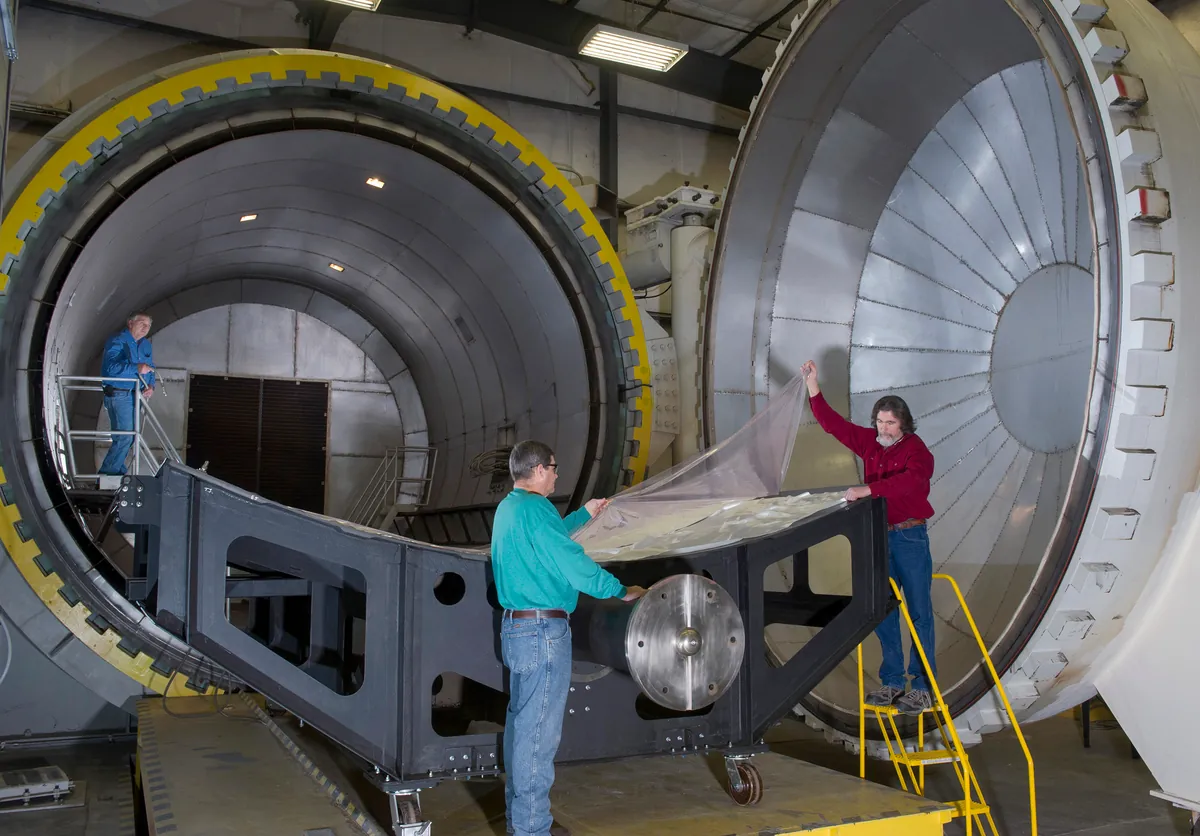
Published November 12 in Scientific Reports, the study used synthetic data to choose which composite parts should share an autoclave: a heated pressure chamber that cures materials. Ordinary software handled the wider schedule. The quantum routine considered small batches, using simulated circuits with 8–14 , not a physical quantum processor.[1]
The useful engineering result was reuse. Researchers trained circuit settings separately for each problem size, then froze them rather than retuning every new problem. Taking 4,096 samples per test found the best batch each time.[1]
Consider the largest test: ten candidate jobs give 1,024 possible subsets, including combinations that break the constraints. With one best subset, 4,096 independent uniform random draws, allowing repeats, have about a 98.2% chance of finding it at least once. QubitWire checked this probability as one minus the probability of missing that subset on every draw.[1]
This comparison concerns raw subsets, not a complete factory schedule. The simulated quantum algorithm assigned higher average probability to the best subset than uniform sampling only at the largest tested size, not consistently across all four sizes.[1]
Reusing settings could reduce repeated tuning work. It does not establish a practical quantum advantage: this was neither quantum hardware nor a real factory trial. The next meaningful test is to compare complete schedules against random sampling under matched sampling budgets, including total computing time and cost.[1]