
Beijing quantum institute picks a ¥9.98 million refrigerator and cabling package
Three November notices from the same buyer name the same refrigerator model. They show how much the lab is spending on cooling equipment, not how many qubits it has.
Reading tools for text size, copying, printing and your reading list
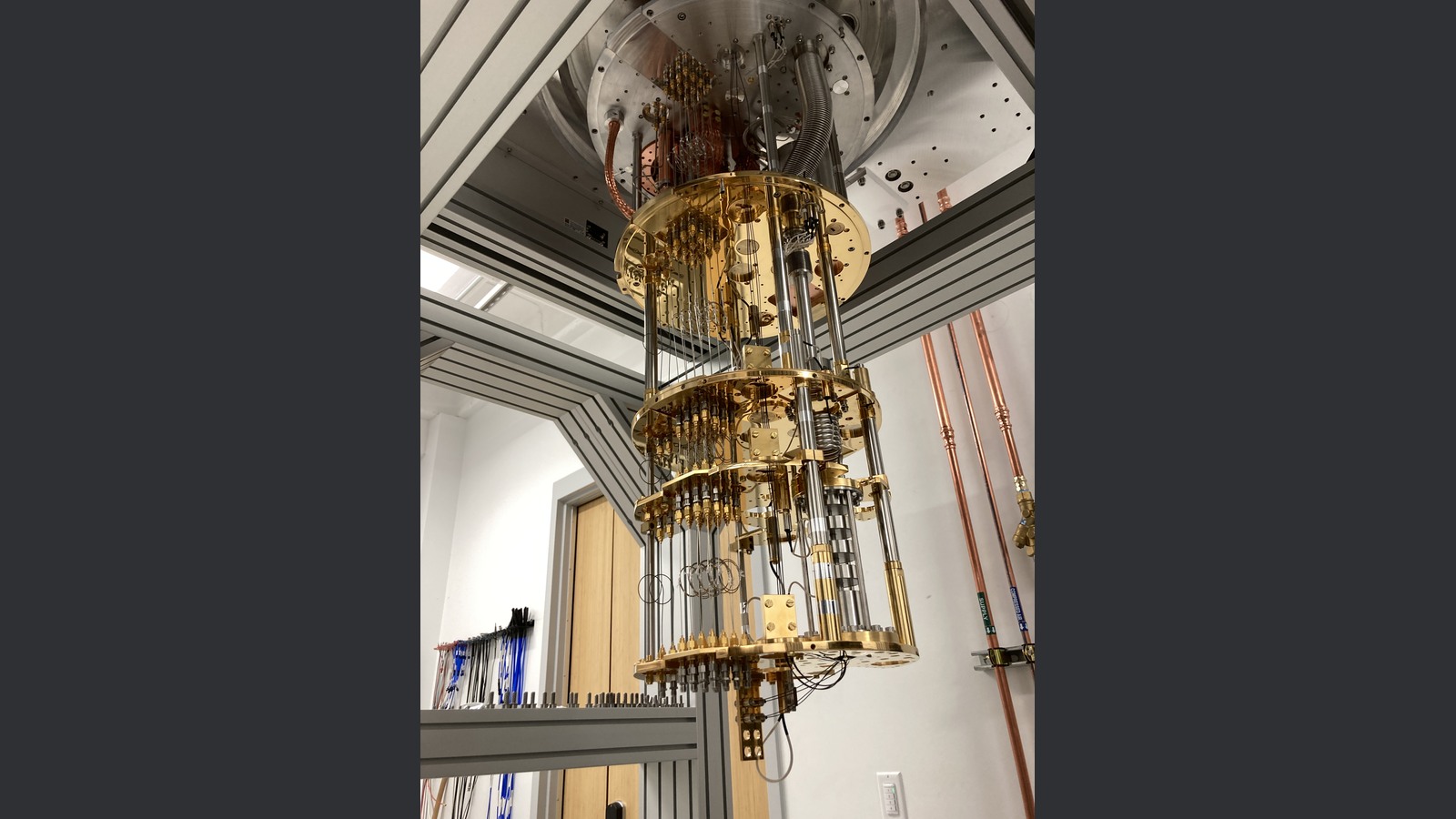
The Beijing Academy of Quantum Information Sciences selected Shanghai Liangxi Technology for a 9.98 million yuan package consisting of one Q-One Q-1000 dilution refrigerator and matching cables, according to an award notice published November 26. It is a purchase of equipment that makes very cold experiments possible, not an order for a quantum computer. The notice names the winning supplier but does not establish that the hardware has been delivered or installed.[1][8]
The academy’s November 2 tender budgeted 10.05 million yuan, putting the award 70,000 yuan below that figure. The tender called for the equipment to be supplied within six months of contract signing. That clock starts with a signed contract, not the publication of a winning bid. The price listed in the award is for the refrigerator and cabling together; it does not establish a standalone price for the refrigerator or for the wires.[1][2]
Three purchases, three stages to track
The latest notice is one of three separate November procurement records that name the Q-1000. On November 10 it announced a 9.386 million yuan award for a dilution refrigeration system and then published the signed contract on November 18. In another procurement it announced a 6.15 million yuan award for one Q-1000 on November 17. Each has a different procurement number. The announced amounts add up to 25.516 million yuan across the three packages, not three installments on the same order.[1][3][4][5]
The different prices aren’t evidence that the refrigerator itself got more expensive. The public notices describe packages with different labels, and the latest explicitly covers matching cables. Without a like-for-like specification and price breakdown, the notices are more useful as a record of purchases than as a price list. They also don’t establish how much has been paid, how many refrigerators are running, or what experiments the academy will run with each one.[1][2][3][4][5]
Why a lab buys the cold hardware separately
A dilution refrigerator creates an environment cold enough for experiments that would be swamped by heat at ordinary temperatures. For superconducting quantum circuits, the cold can keep unwanted thermal energy from exciting the circuit. Researchers still need a way to get signals in and out, which is why the cables matter: wires that connect room-temperature controls to cold hardware can also carry heat, and the refrigeration system has to manage both.[6][7]
The tender describes a refrigerator that does not require a liquid-helium bath. That doesn’t mean it runs without helium. In a typical dry dilution refrigerator, a mechanical cooler handles the first stage of cooling and a circulating mixture of two forms of helium handles the coldest stage. The next thing to look for in Beijing is a signed contract for the November 26 award, followed by evidence of delivery and use. A procurement notice tells you what the lab plans to buy. Only an operating system can tell you what experiments it can actually run.[1][2][6]