
Skip to content
BUSINESS + POLICY

Beijing quantum lab awards ¥73 million for the wiring behind quantum chips

Five awards reveal the cost of carrying signals between room-temperature electronics and chips that run near absolute zero.

Published Source report Sources checked
Reading tools for text size, copying, printing and your reading list
My reading list
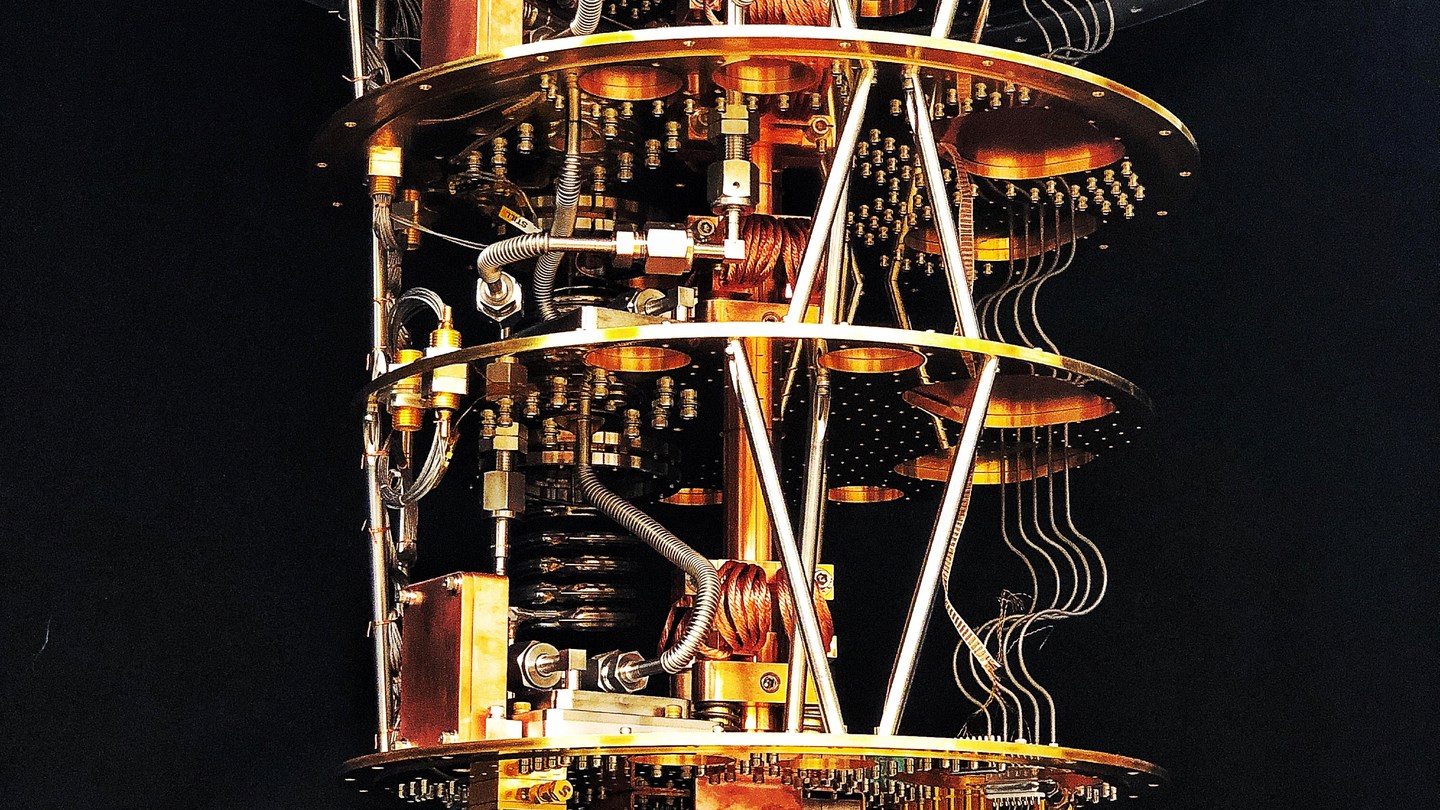
Copper-colored plates and tightly routed wires inside a dilution refrigerator at NIST’s Boulder quantum testbed.
Wiring between cold stages of a dilution refrigerator at NIST’s Boulder Cryogenic Quantum Testbed.NIST

Beijing’s quantum research academy disclosed two awards worth a combined ¥28.95 million on November 23 for the equipment that carries signals in and out of superconducting quantum computers. Added to three notices published on November 20, the five awards total ¥72.87 million. The figures give a rare itemized look at one expense that a quantum chip’s count doesn’t capture: connecting the chip to the electronics that tell it what to do.[1][2][3][4][5][6]

The Beijing Academy of Quantum Information Sciences selected Shanghai Liangxi Technology for system C and Anhui Xinshiqi Materials for system D. Monday’s notices identify the suppliers and awarded amounts. They do not establish a signed contract, payment or delivery, identify the processors the equipment will serve, or say that the five systems will be installed on one machine.[1][2][3][4][5]

What costs so much about the wiring?

In a superconducting quantum computer, most of the electronics that generate instructions and record answers sit at room temperature. The chip sits deep in a refrigerator. The connections between them have to deliver precisely timed signals and bring faint signals back without carrying in too much heat. It’s a little like running an instrument cable through several freezer doors, except that heat leaking in along the cable itself is part of the engineering problem.[6][9]

The two Monday notices show where most of the money goes. Each lists a high-density control system at roughly ¥10.4 million. Together those two items account for about 72% of the value of Monday’s awards. The rest includes separate control and readout connections and lines that supply or drive amplifiers. That percentage is a share of the awarded price, not a count of cables or a measure of how much computing power the hardware adds.[1][2][7][8]

As more signals have to pass between a room and the inside of a refrigerator, packing more connections into the same space can help. It doesn’t make the heat problem go away. In separate work, NIST researchers tried putting some ordinary control electronics closer to a cold device so a smaller number of wires could do more work. That illustrates why the design of the connections matters as much as their count; it is not a description of the equipment Beijing selected.[6][9]

The next evidence to look for is delivery and testing with the equipment connected: how many usable signals it can route while keeping the processor cold and the measurements reliable. Until then, the notices show a research buyer selecting suppliers for the infrastructure around quantum chips, not a faster chip or a new operating computer.[1][2][6][9]

Keep your reading trail

Evidence & context

9 linked sources

Five procurement awards from the Beijing Academy of Quantum Information Sciences, November 20 and 23; the notices do not confirm delivery or name a processor.

How to read the evidence and dates

An announcement records what an organization stated. An experiment reports an observation. A simulation or resource estimate depends on its assumptions. QubitWire’s analysis connects these sources; the labels are not quality scores.

Published is the article’s first QubitWire publication. Updated marks a substantive content change. Sources checked records a review of the underlying evidence. An older paper can support a new explanation, and another press release about the same work is not independent replication.

Sources

  1. BAQIS award notice, control and measurement system C

    November 23 award for ¥14,790,900, with prices by item. Official procurement project ID: HCZB2026-082.

  2. BAQIS award notice, control and measurement system D

    November 23 award for ¥14,163,208.28, with prices by item. Official procurement project ID: HCZB2026-083.

  3. BAQIS award notice, system A

    November 20 notice for ¥24,678,344. Official procurement project ID: CMEETC-267XK119DD113.

  4. BAQIS award notice, system B

    November 20 notice for ¥11,771,800. Official procurement project ID: CMEETC-267XK119DD114.

  5. BAQIS award notice, system E

    November 20 notice for ¥7,470,158. Official procurement project ID: BMCC-ZC26-1443.

  6. BAQIS October tender for system C

    Explains that the systems carry signals between an extremely cold quantum chip and room-temperature control equipment.

  7. BAQIS system C notice, republished copy

    Backup copy of the Nov. 23 notice, including prices by item.

  8. BAQIS system D notice, republished copy

    Backup copy of the Nov. 23 notice, including prices by item.

  9. NIST, Coming Out from the Cold

    Independent experimental context on why control wires must balance signal access with heat load.

READ NEXT

Continue exploring

All Business + Policy stories
  1. Business + Policy

    U.S. signs CHIPS award of up to $38 million for Diraq

    The signed CHIPS award moves beyond May’s letter of intent. It funds research into making, testing and controlling silicon quantum chips.

    Published · Source report · Sources checked · About 3 min read
  2. Workforce / Education

    California puts $5.7 million behind quantum and fusion career pathways

    Five workforce awards support routes through schools, colleges and shorter credentials. Funding is confirmed; course availability and employment outcomes still need to be established.

    Published · Source report · Sources checked · About 4 min read