
Canada joins EuroHPC. Machine time still starts with an application.
Canada’s October 30 membership expands computing cooperation with Europe. The quantum pilot offers a concrete route for testing proposals, subject to assessment.
Reading tools for text size, copying, printing and your reading list
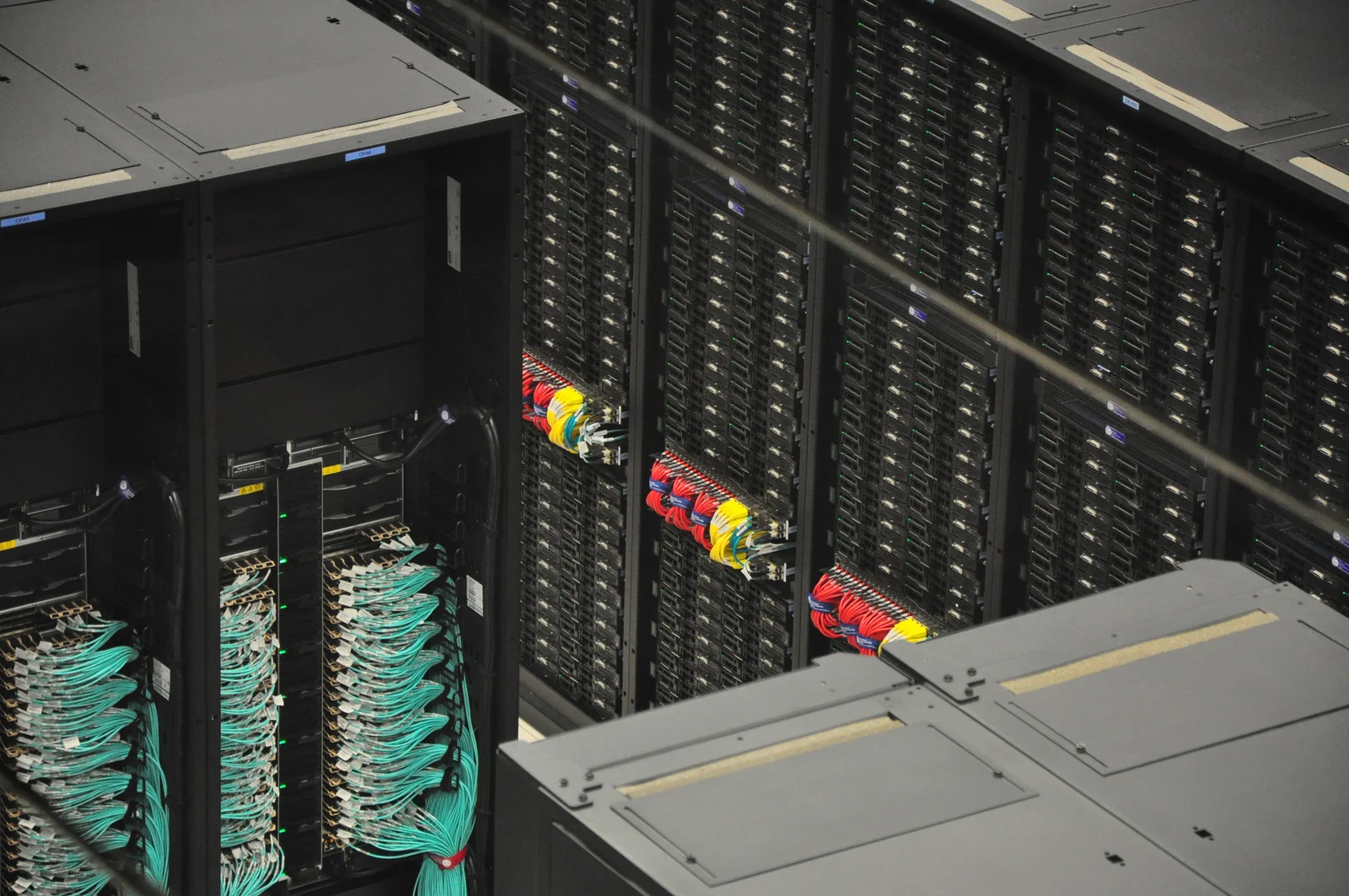

A new membership, not an automatic allocation
Canada became the 39th participating state of the EuroHPC Joint Undertaking at the EU–Canada Summit in Montréal on October 30. The membership brings Canada into a public infrastructure partnership covering high-performance computing, artificial intelligence and quantum computing. It is a change in institutional cooperation, not a delivery announcement for a new Canadian quantum machine. A researcher still needs to follow the relevant access process. Joining a network and receiving a defined share of time on a particular system are separate events.[1]
Why shared infrastructure matters
The European Commission says Canadian scientists will be able to collaborate with European counterparts and access EuroHPC resources alongside other participating states. The partnership builds on earlier research cooperation and Canada’s association with Horizon Europe since 2024. This matters because useful computing research involves more than a processor: projects also depend on software, specialist support and a way to test a workload. The announcement establishes a broader cooperation framework.[2]
Membership opens a framework. A project needs an allocation.
Cooperation framework
Canada joins EuroHPC as a participating state.
Eligible technical proposal
A team applies to an appropriate call for a target system.
Assessed project allocation
Approved access has defined resources, duration and reporting requirements.
Three terms to know
- Participating state
- A country that is a member of the EuroHPC Joint Undertaking.
- QPU time
- Allocated time on a quantum processing system.
- Technical assessment
- A check of a proposal’s relevance and feasibility on the requested system.
It does not establish that every Canadian organization qualifies for every call or that every system is immediately available.[2]
There is already a quantum pilot route
As checked on November 2, EuroHPC’s Quantum Access Pilot call is open for preliminary testing and development. The call covers work such as collecting performance data, testing a method, developing code or workflows and quantum-computing training. Projects can last three or six months. Applicants request a defined amount of QPU time from the systems offered in the relevant round. This is a practical research-access mechanism, not a promise of a production service or an unrestricted subscription to all the network’s machines.[3]
The assessment is part of the access
The linked access policy ties quantum-pilot eligibility to users residing, established or located in an EU member state or a third country associated with the Digital Europe Programme or Horizon Europe. Requests undergo an eligibility check and a technical assessment of relevance and feasibility on the target system. The policy describes allocation after passing that assessment, subject to the pilot’s resource process. Membership alone should therefore not be used to tell an individual applicant they are approved.[4]
Their institution, proposal and chosen call still need to satisfy the operative conditions.[4]
Put the date and the system in the plan
The pilot uses monthly cutoffs. On the current call page, November 1 has passed and the next listed cutoff is December 1, 2026 at 10:00 CET. The page describes access within up to two weeks after a cutoff and warns that EuroQCS-Spain is scheduled for maintenance from late November to late December, pausing affected onboarded projects for approximately a month. Applicants should recheck dates and target-system conditions before submitting. A national partnership announcement does not override a machine’s maintenance calendar.[3]
Analysis: start with the experiment you need
A productive first question is what the proposed access would let a team learn. A small feasibility test may need a different machine, workflow or support arrangement from a large scientific run. Writing that learning objective first makes the application easier to evaluate and the eventual results easier to interpret. It also avoids treating access as an outcome by itself. The consequential result is a useful measurement, tested method or working piece of research software that the allocation enables.
What to check before committing a project
A team considering the pilot should read the current call, confirm its institutional eligibility and match the requested system to its technical requirements. The policy says pilot conditions can be adapted and asks applicants to consult updates; successful users also owe an outcome report. Those requirements make the membership story concrete without overselling it. Canada’s entry expands the cooperation framework, while the next meaningful milestone for a particular research group is a suitable application, an approved allocation and a clearly documented result.[4]
Keep exploring
Continue with Learn quantum computing or Explore the quantum computer model.