
Light takes coherent control of one donor-bound electron spin
The ZnSe experiment demonstrates optical control at 3.6 K, with several lifetimes that should not be conflated.
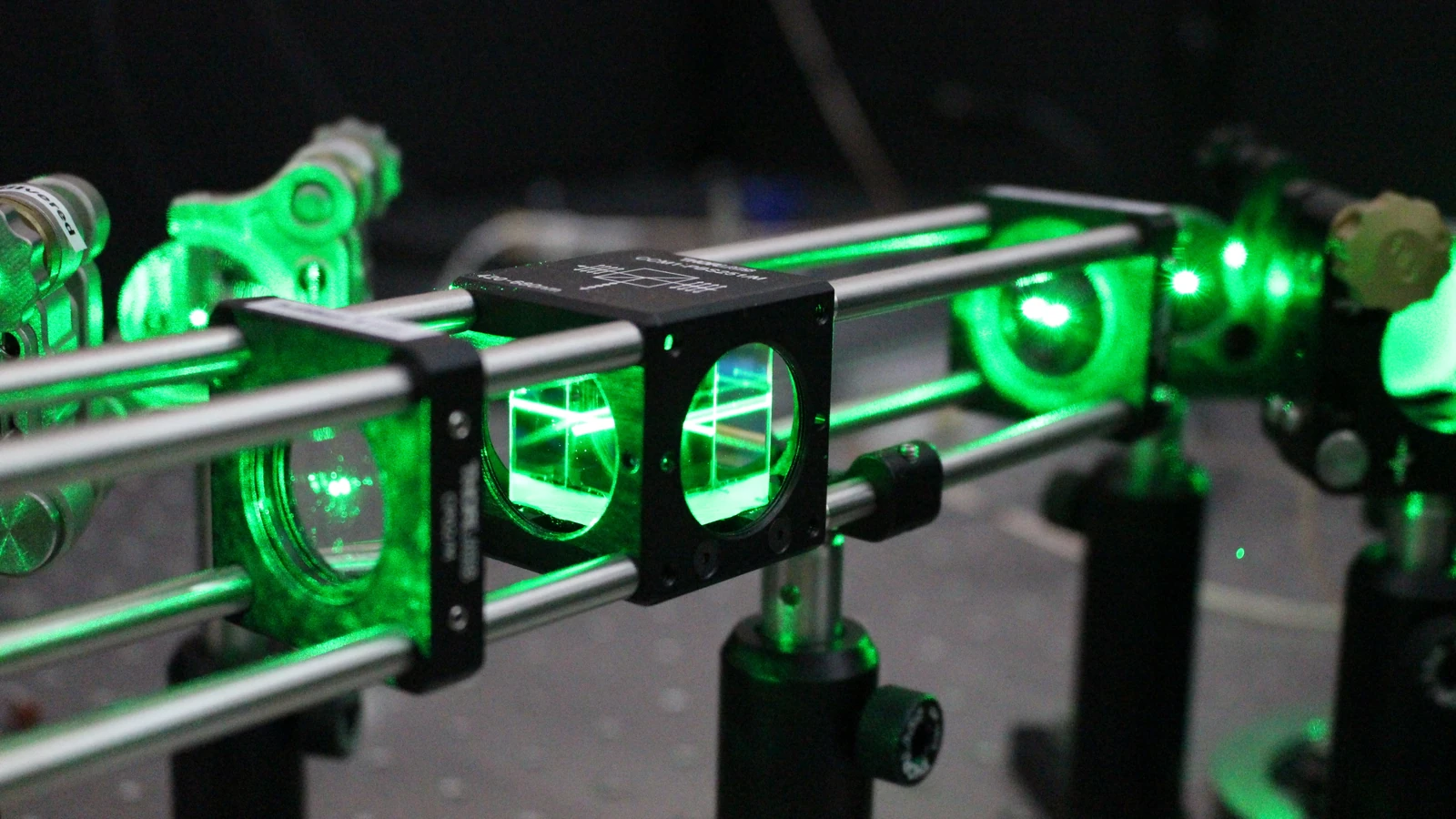

Researchers report optical initialization, coherent control and readout of an individual chlorine-donor electron spin in zinc selenide. The experiment operates at 3.6 kelvin and uses detuned picosecond pulses to reveal Rabi oscillations and Ramsey interference, according to an October 27 preprint.[1]
A University of Maryland dissertation-defense announcement had already described related coherent-control work in August. The October release therefore supplies the detailed preprint, rather than the first public mention. Its first author is Yuxi Jiang.[2][3]
The lifetime numbers need separate labels. The reported relaxation time is 18.5 ± 3.8 microseconds and is limited by charge tunneling. A distinct analysis gives a 90-percent-confidence lower bound of 0.51 milliseconds for the intrinsic spin-flip lifetime. The longer number is not the directly measured relaxation time.[1]
Likewise, a 21.9-nanosecond dephasing estimate is inferred from coherent population trapping. The Ramsey scan extends only to 1.2 nanoseconds because of the optical delay available, and it shows no resolvable decay over that window. It does not directly measure a 21.9-nanosecond Ramsey decay.[1]
These distinctions tell a reader what kind of next experiment would be informative. A control demonstration asks whether the state can be deliberately changed. A memory test asks how long useful information survives. A network test would ask whether that information can be transferred or connected to another node. Success in the first category does not automatically supply the measurements for the others.
For an accessible analogy, imagine testing a musical instrument: producing a chosen note, measuring how long it rings and demonstrating a synchronized duet are separate achievements. This is only an explanatory comparison, but it helps show why coherent control is a concrete result even before a complete communication operation exists.
The present paper supplies an experimentally grounded step toward an optical spin interface. A subsequent networking story should be built around the actual demonstrated connection and its fidelity, efficiency and timing. The current result does not report remote or an operating quantum network.[1]