
Skip to content
RESEARCH

One cooling setup prepares seven magnetic-atom mixtures

Changing the laser settings let researchers compare different forms of dysprosium in the same atom trap.

Published Source report Sources checked
Reading tools for text size, copying, printing and your reading list
My reading list
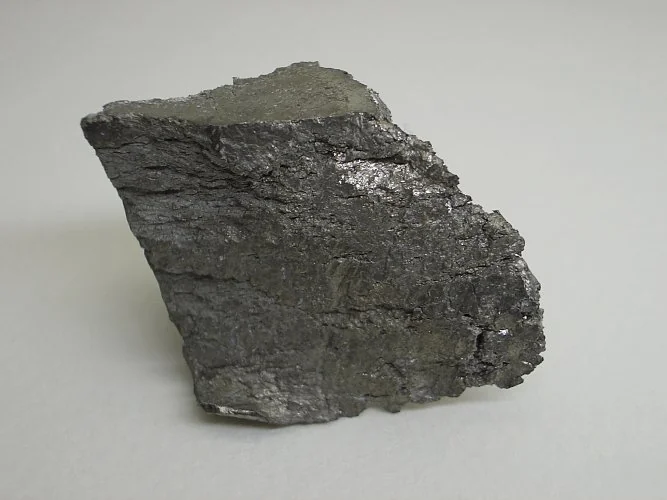
A dark, silvery fragment of dysprosium metal on a pale surface.
This solid sample shows the element whose isotopes the researchers selected with lasers. Their measurements used trapped atomic clouds.Illustrative photoW. Oelen

Atoms of dysprosium all have the same number of protons, but different forms of the element, called isotopes, have different numbers of neutrons. A team in Shenzhen used one set of lasers to cool and trap seven different pairs of these magnetic atoms.[1]

The choice of isotopes changes which quantum rules the mixture follows. Some isotopes are bosons, which can share a quantum state. Others are fermions, which cannot occupy the same state as an identical fermion. The team could mix two bosonic isotopes, two fermionic ones or one of each. Adjusting the laser timing changed the balance between them.[1]

The team tested loading, compression and transfer into an optical trap against matched single-isotope controls. Most combinations performed similarly, but some suffered additional losses or sensitivity to the cooling light.[1]

The experiment shows how to prepare the ingredients for studying interactions between different kinds of magnetic atoms. Measuring how those mixtures behave at still lower temperatures is a separate experiment.[1]

Keep your reading trail

Evidence & context

1 linked source

Experimental preparation platform; new quantum phases not demonstrated.

How to read the evidence and dates

An announcement records what an organization stated. An experiment reports an observation. A simulation or resource estimate depends on its assumptions. QubitWire’s analysis connects these sources; the labels are not quality scores.

Published is the article’s first QubitWire publication. Updated marks a substantive content change. Sources checked records a review of the underlying evidence. An older paper can support a new explanation, and another press release about the same work is not independent replication.

Sources

  1. Jiang et al., arXiv:2611.21028v1

    Preprint submitted November 16, 2026.

READ NEXT

Continue exploring

All Research stories
  1. Research / Atom-photon interfaces

    A cooling change helps tiny fibre traps hold thousands of atoms

    The experiment improves loading and storage in one apparatus. The atom count and the different cooling tests should not be confused with a processor performance claim.

    Published · Source report · Sources checked · About 3 min read
  2. Research

    Microscope distinguishes ten atomic spin states

    Ten images from one experiment reveal which spin state each strontium atom occupied. The colors in the combined picture label the states.

    Published · Source report · Sources checked · About 1 min read