
Graphene’s electrons tracked within a light cycle
A Nature experiment resolves graphene’s electronic response within a light cycle. Its images map momentum, not individual particle paths.
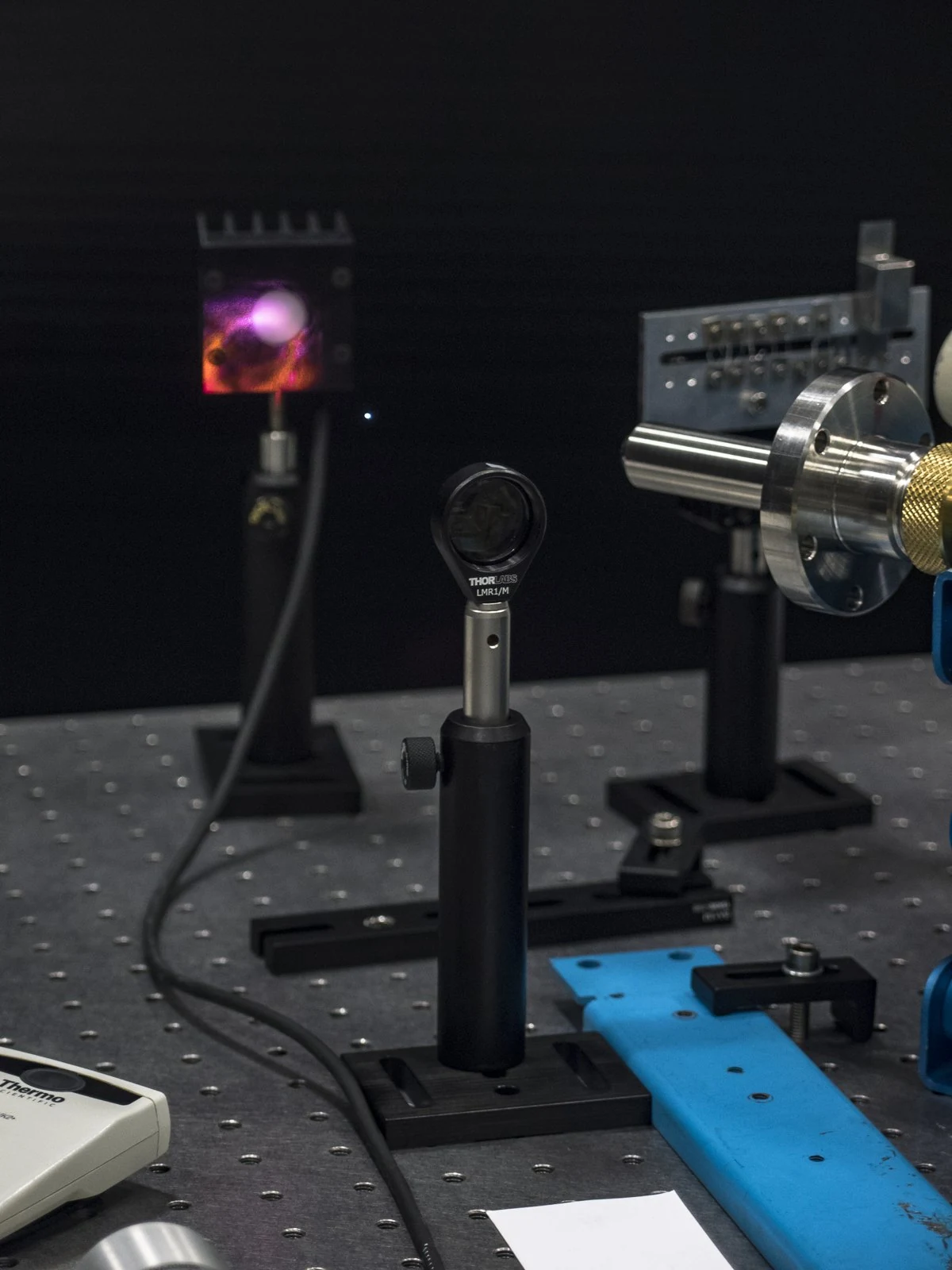

Researchers report subcycle measurements of graphene’s electron distribution across its first Brillouin zone. The Nature paper, published October 28, follows a February preprint. Its result concerns momentum-resolved electronic motion under a strong light field, not a camera following individual particles through the material.[1][2]
The experiment combines a mid-infrared drive with delayed extreme-ultraviolet photoemission measurements. The reconstructed sequence resolves Landau–Zener–Majorana transitions alongside motion within electronic bands and scattering. These measurements connect the applied field to how the electronic distribution changes.[1]
The distinction between position and momentum is central to understanding the pictures. A momentum map describes the distribution of electronic motion. A bright patch in such a map should not be read as a bright patch on the physical sample. Confusing the two makes an impressive measurement seem to show something it does not.
Timing matters for a different reason. An average over a whole drive cycle can combine changes that occur at different phases of the field. Resolving the cycle makes it possible to ask when a response appears, rather than only how large the response becomes after averaging.
A useful analogy is sampling a repeating event with a controllable delay. Moving the delay builds a time sequence from repeated observations. The resulting sequence is a reconstruction, and its interpretation depends on what the probe measures. That is why the axes and timing labels are part of the result, not decoration.
The engineering question is how such observations can improve models of driven materials. That is an interpretation of the measurement’s potential value, not a claim that this study has already delivered a faster commercial transistor. The result is strongest when readers can distinguish the new view of electronic dynamics from any later device application.