
Quantum computers need tuning. Horizon and OQC are bringing the controls closer.
A new software integration reaches beneath quantum instructions to the pulses that drive them. Whether that produces better calculations remains to be measured.
Reading tools for text size, copying, printing and your reading list
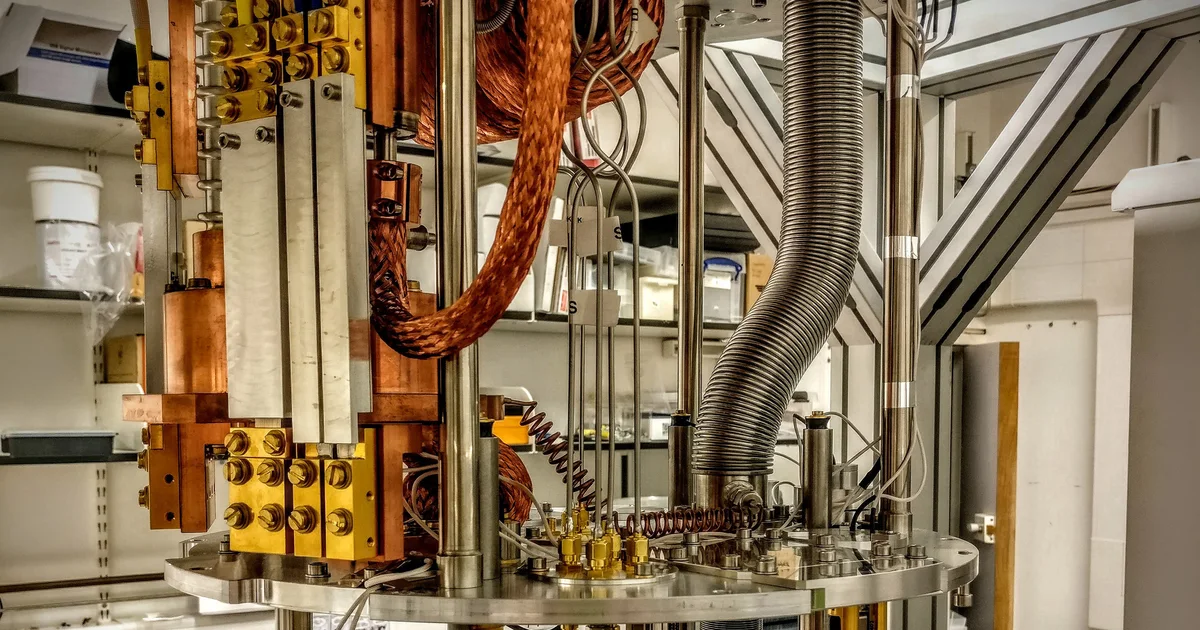

A quantum program can be correct while the machine carrying it out needs adjustment. Horizon Quantum and Oxford Quantum Circuits announced November 9 that they have connected Horizon’s Triple Alpha programming environment to the pulse controls of OQC’s 32- Toshiko processor.[1]
The companies say their team used the integration to measure qubit behavior and perform gate calibration. The practical idea is to bring hardware tuning into the environment where developers already write applications.[1]
That is a change in access and workflow, not evidence of a faster quantum computer. The announcement provides no numerical comparison showing reduced errors, shorter calibration time or improved application results.[1]
The instructions beneath the instructions
A quantum gate is an operation in a program. On superconducting hardware, electrical signals make that operation happen. Their timing and shape are part of the physical machinery behind the software.[2]
The difference resembles asking a musical instrument to play a note versus adjusting the instrument. The analogy has limits: quantum control is not simply tuning a frequency, and a successful adjustment does not establish that an entire calculation is reliable. But it helps explain why programming access and hardware access are different things.
Horizon describes the new connection as a way to work across that boundary. Researchers could investigate the machine’s behavior without moving every step into a separate programming framework.[1]
Its team reports measuring T1 and T2, indicators of relaxation and phase coherence. In plain language, these concern how quantum information deteriorates. They are useful diagnostic quantities, not a complete score for a quantum computer.[1]
Three jobs that should not be confused
IBM’s documentation offers a useful comparison, separate from the OQC announcement. IBM distinguishes monitoring a processor, recalibrating it and benchmarking its performance.[2]
Monitoring asks whether its behavior has drifted. Calibration adjusts settings. Benchmarking measures how well the resulting machine performs. IBM says brief monitoring jobs run approximately hourly across its service, with calibration triggered when needed and benchmarking conducted daily. Those are IBM’s practices, not a reported schedule for Toshiko.[2]
The distinction matters when assessing announcements like this one. Measuring a problem, gaining a means to adjust it and demonstrating a better result are separate accomplishments. A software connection can enable the first two without supplying evidence of the third.
Consider an illustrative experiment, not a reported result from either company: a developer tries two ways of controlling the same operation. To claim improvement, the developer would need an appropriate comparison, repeated measurements and a clear definition of what improved. More control provides an opportunity to conduct that test. It does not determine its answer.
The useful question is what changes for the developer
For a researcher studying hardware behavior, bringing experiments and application code closer together could reduce the work of moving between tools. For someone purchasing computing capacity, however, the relevant questions remain more demanding: does the arrangement improve reliability, shorten development or make a useful task easier to complete?
These are different audiences with different measures of success. A meaningful advance for experimental access need not immediately improve a business application. That does not make it unimportant; it tells readers where its value must first be demonstrated.
The strongest follow-up would therefore be a reproducible comparison rather than a larger headline. How much effort does the integrated workflow remove? What calibration procedure was used? Does a benchmark improve, and under which conditions? Can another team repeat the result?
For now, the development offers a window into a less visible part of quantum computing: the work between writing instructions and obtaining trustworthy results. The new integration brings programmers nearer to those controls. The next milestone is evidence of what they accomplish with them.
Read next
The same quantum program can become a different physical experiment when its instructions reach different hardware. Our earlier explanation follows that gap between a program and the machine that runs it.