
A compact quantum model predicted vibrations better than bearing failures
In a simulation of industrial bearings, a small model competed on vibration forecasts. It took longer to train and fell behind at predicting when a bearing would fail.
Reading tools for text size, copying, printing and your reading list
Predicting how much a machine will vibrate is not the same as predicting when it will break. A peer-reviewed study published November 27 in Frontiers in Physics tested both jobs on simulated rotating machinery. Researcher Yuke Wang of UNSW Sydney found that a model built around a simulated quantum circuit could forecast vibration with far fewer adjustable settings than one of the conventional models it was tested against. The smaller model did not train faster or give the best estimate of remaining bearing life. No quantum computer or physical test rig was used.[1]
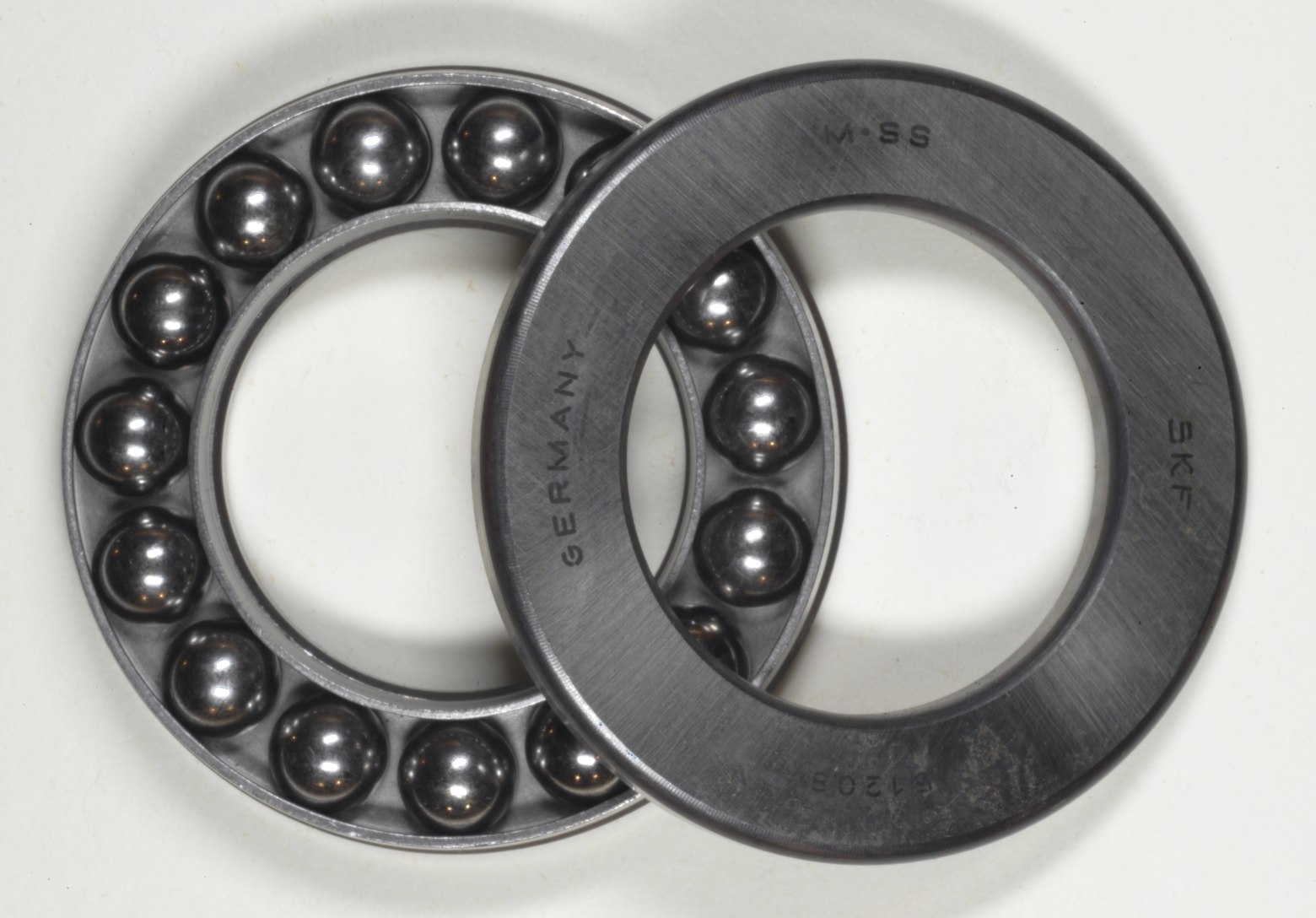
The model represents a spinning shaft supported by rolling-element bearings, the components that let it turn while carrying a load. A bearing can become less stiff as it wears, changing how the shaft moves at different speeds. The study’s model learned to predict that motion across combinations of speed, load and bearing condition. It was trained not only to fit simulated readings but also to respect the equations that describe the shaft’s motion.[1]
Fewer settings, longer training
After 2,400 training steps, the quantum-circuit model had 24.82% normalized vibration prediction error in operating conditions represented in training, against 42.07% for a similarly sized conventional model. The comparison matched 178 adjustable settings against 182. A larger conventional model with 8,770 settings scored 23.30%, a difference from the quantum-circuit model that the study did not find statistically significant on those conditions. On conditions withheld from training, that larger conventional model did better: 35.18% error versus 40.46%. Lower is better in both cases.[1]
The clock told a different story from the parameter count. On one conventional CPU core, training the simulated quantum model took about 642 seconds, compared with 49 seconds for the larger conventional model and 25 seconds for the similarly sized one. Those times include simulating the quantum circuit on a classical computer. They tell us how the tested programs ran, not how fast a real quantum processor would finish the same job.[1]
A separate comparison helped explain which ingredient mattered outside the training range. A large conventional network trained only on the simulated data scored better where it had seen similar conditions, but worse at unfamiliar speeds. Giving the same conventional architecture the motion equations and starting conditions cut its error in the held-out regimes from 54.38% to 35.18%. That gain did not require a quantum circuit.[1]
The prediction that matters on a factory floor
The study also asked how many operating cycles a bearing had left. On ten simulated machines reserved for testing, the quantum-based estimator had a pooled root-mean-square error of 199 cycles. A conventional neural network designed to recognize patterns over time scored 24.3 cycles. The pooled metric weighs large misses heavily, and the study notes a few especially poor predictions. For a maintenance team, though, those misses matter: a prediction can follow the vibration pattern and still be much too optimistic about the remaining life. The next meaningful test is whether it can narrow those errors on measurements from physical bearings.[1]