
Quantum’s business map reaches far beyond computer makers
A new research survey puts component suppliers and support services at nearly a third of its active quantum-born companies.
Reading tools for text size, copying, printing and your reading list
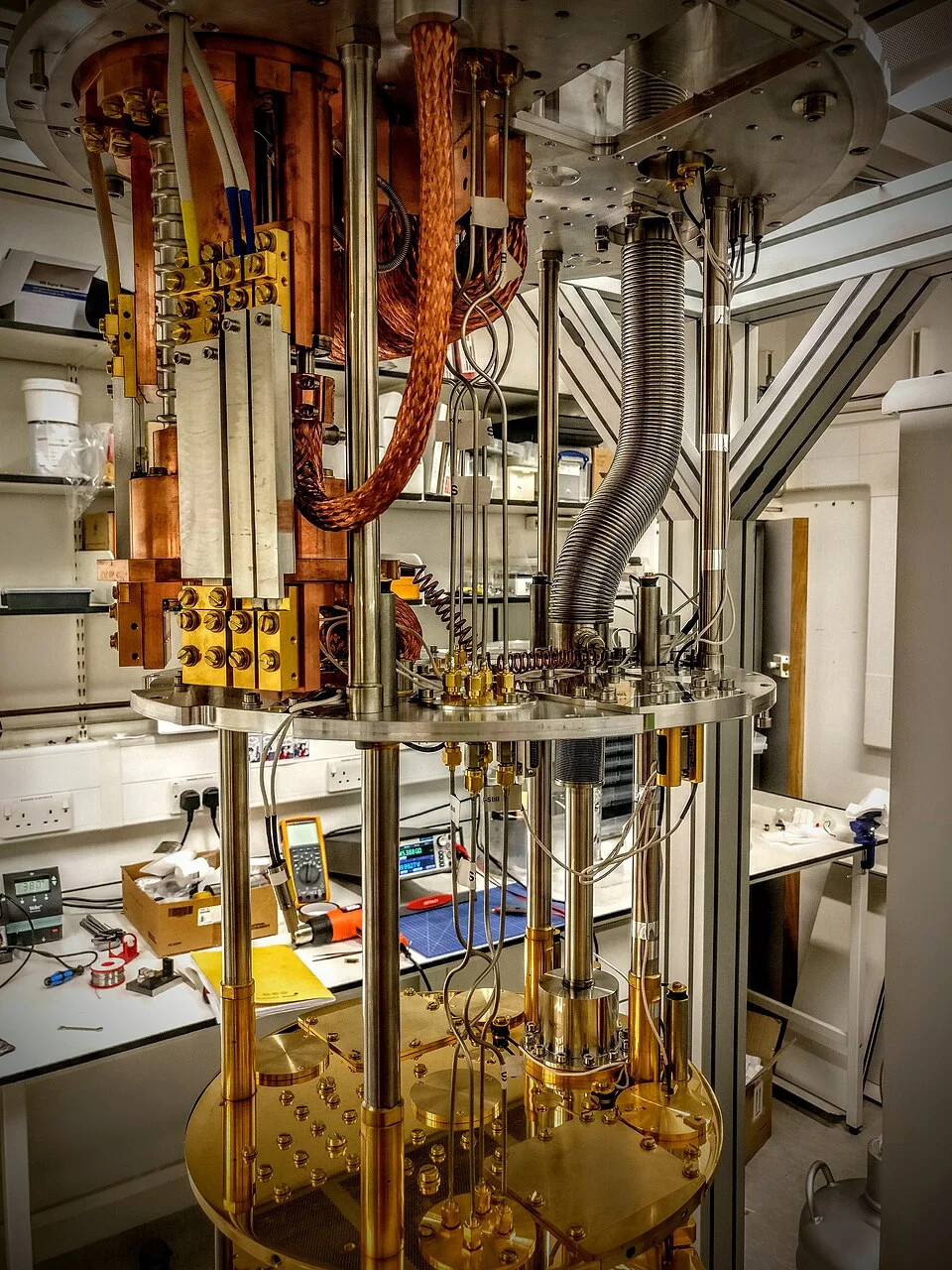
Quantum technology has an industry behind the machines. A preprint, not yet peer reviewed, posted on November 12 identifies 935 active companies founded with a quantum focus. Of those, 163 supply complementary technologies and 116 provide supporting services, including consultancy and training: together, 29.8% of the surveyed population.[1]
The study covers computing, sensing and communications, not just quantum computers. It is an AI-assisted, author-reviewed mapping of public evidence, with checks through November 2, rather than a complete business census.[1]
The categories make a practical difference. Building a processor and supplying something it needs are distinct jobs. Bluefors, for example, sells dilution refrigerators that cool quantum devices. Quantum Machines documents controllers that send pulses to quantum hardware, receive measurements and coordinate classical processing. These are examples of the infrastructure around a quantum system, not evidence that either company has solved useful quantum computing.[2][3]
For readers exploring the field, that suggests a more useful question than simply asking which machine will win: what must work around it? Cooling equipment, control electronics and their associated software have concrete roles even when they are less visible than a processor’s count.
The survey’s denominator matters. Its active quantum-born group excludes diversified incumbents and companies that entered quantum later. Post-quantum cryptography businesses are tracked separately unless they also have substantive quantum-computing, communications or sensing activity. Each company receives one main category.[1]
The authors acknowledge uneven public coverage. Their underlying dataset is available on request, limiting independent checking from the paper alone.[1]
Those choices make the map easier to read, but not a league table of economic strength. A company count tells readers neither how much revenue the businesses earn nor how well their products perform. The next useful test is to connect the map’s categories to actual customers, delivered systems and repeat sales.