
Quantum image classifiers can learn the wrong clue
An eight-qubit simulation shows why recognizing an image and exploiting a clue in its corner are different achievements.
Reading tools for text size, copying, printing and your reading list
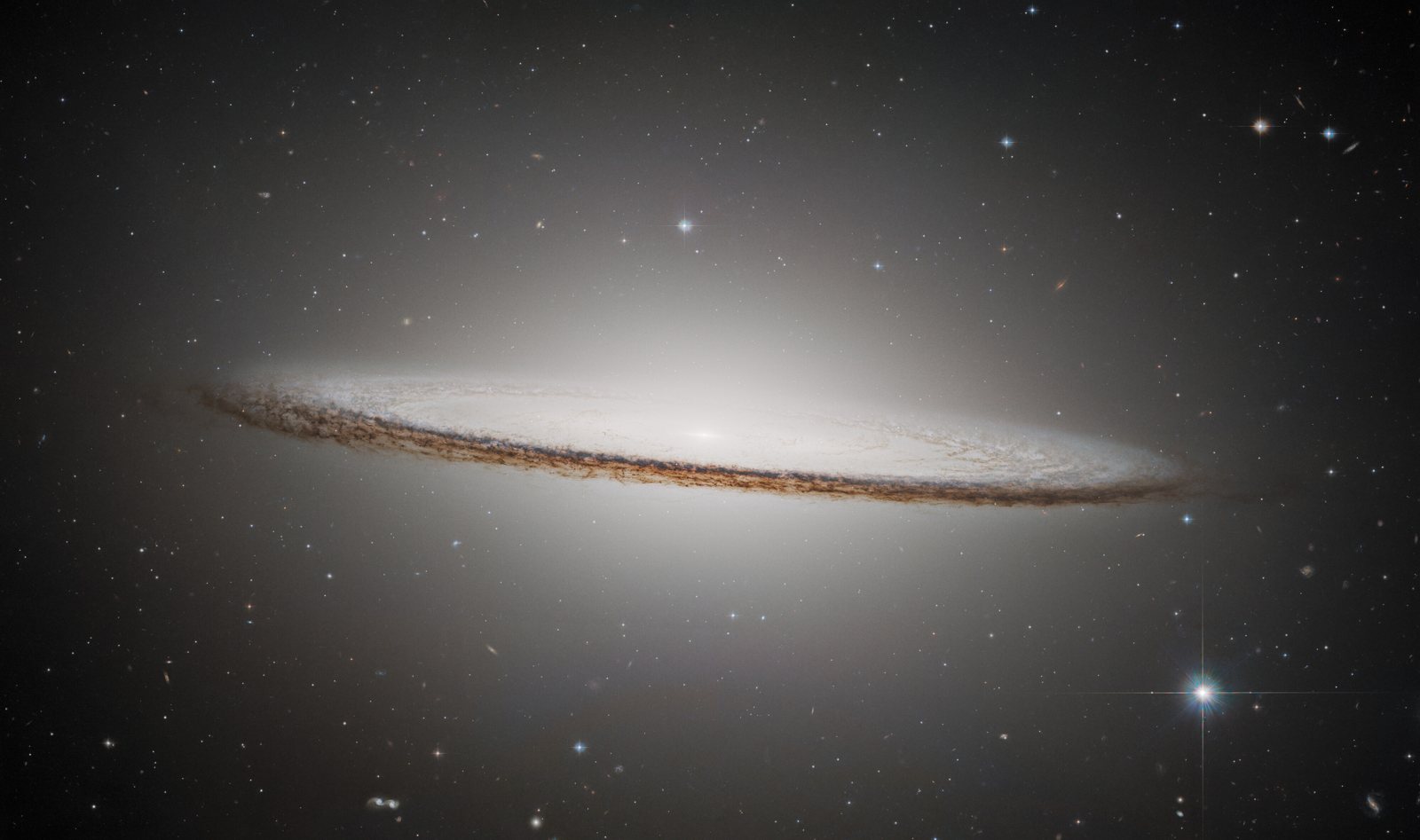
A quantum learning model can appear to recognize a galaxy while relying on a mark in the corner of its picture. A new preprint from researchers in Bari shows how a rule that ignores quarter-turns and reflections can block that particular shortcut.[1]
The study, submitted on November 10, compares four simulated eight- classifiers: trainable quantum models that assign pictures to categories. The tests used digits, geometric shapes, galaxies and red blood cells. They ran on ordinary computers simulating eight quantum bits, not quantum hardware, and do not establish an advantage over conventional AI.[1]
The researchers deliberately gave their models an easy way to get the right answer for the wrong reason. During training, each image carried a small corner patch whose position revealed its class. Models allowed to depend on orientation became nearly perfect when that same clue remained in test images, then fell to chance-level classification when the whole marked image was rotated or reflected.[1]
The safeguard was invariance: the complete model had to return the same answer after quarter-turns and reflections. Think of a galaxy photograph turned clockwise on a screen. Its orientation changes, but whether we see the galaxy’s disk face-on or edge-on does not. A rule that ignores that rotation cannot use a corner’s location as its deciding clue.[1]
Crucially, making the quantum circuit respect the symmetry was not enough. The measurement used to read its answer also had to respect it. An alternative model achieved invariance by averaging predictions across transformed copies of each image. On hardware, that approach would require additional circuit evaluations; the classical simulation can reuse a precomputed averaged operator.[1]
That comparison is the study's useful contribution. The models shared circuit layouts and parameter counts, helping separate the effect of symmetry from simply giving one competitor a larger model. Their main tests used only 40 training images, or 20 for the synthetic shapes.[1]
The protection has clear boundaries. A different clue, a central patch versus marks in all four corners, survived rotation; every model learned that shortcut. Removing the corner watermark also disrupted the invariant galaxy classifiers because it changed the normalized input, requiring a decision-threshold adjustment.[1]
The researchers selected tasks through pilot tests, and the simulations assumed exact state preparation and measurements without sampling noise. Their additional noise model did not include correlated errors or compilation into a real processor's native gates. Those limits matter before applying the findings to working hardware.[1]
The lesson is a practical one for evaluating quantum AI: test whether success survives changes to irrelevant clues, not just whether the model scores well on familiar-looking examples. A next meaningful test would keep that discipline on hardware and on tasks not selected during model development.[1]