
Quantum snapshots could reveal hidden energy flows
A numerical preprint combines ordinary readouts with calibration to infer a physical quantity they do not directly show.
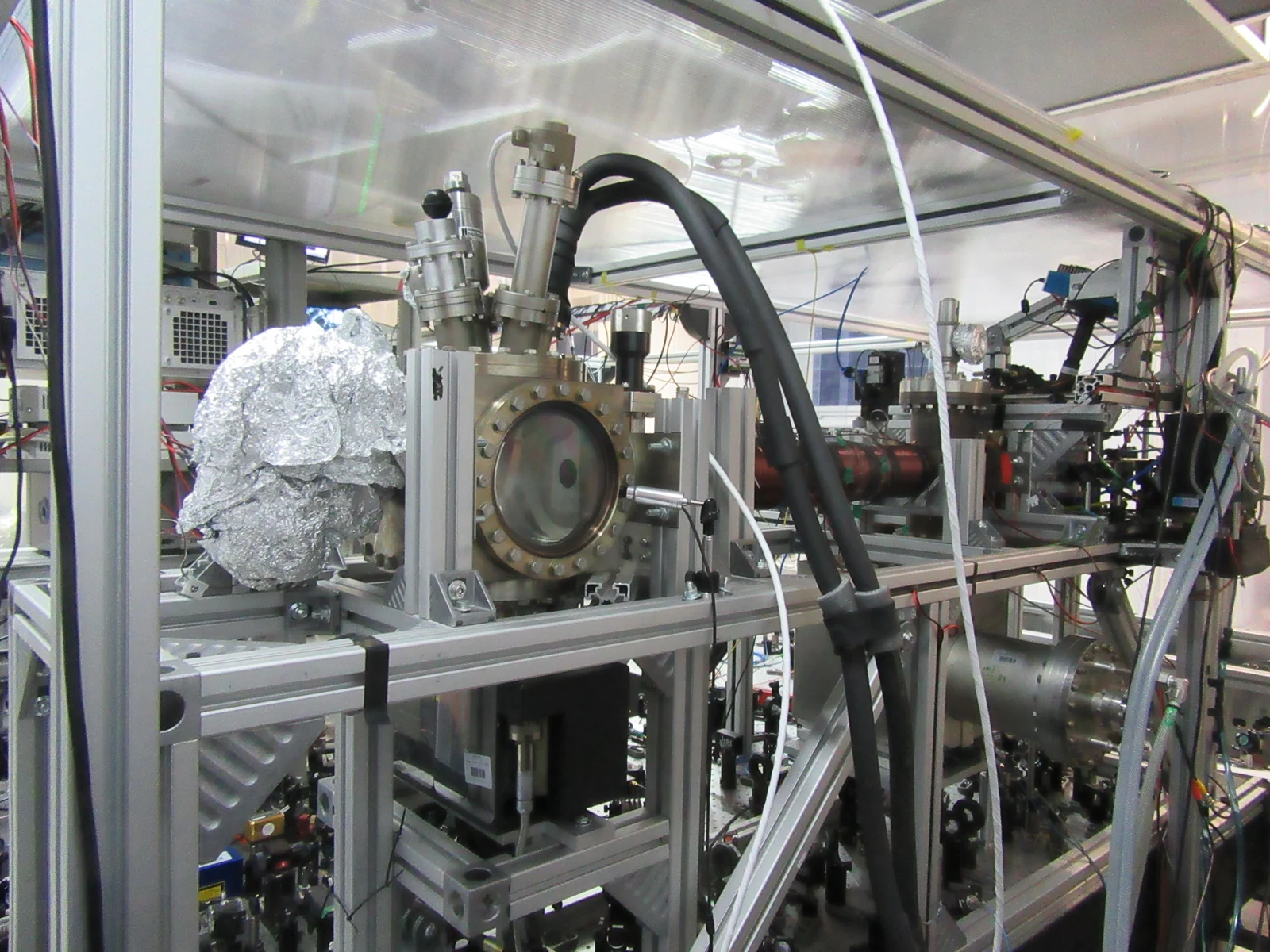

A new theory preprint proposes extracting energy-flow information from quantum measurements that do not directly reveal it. Jie Ren and colleagues combine fixed-basis snapshots with an independently calibrated relation that applies once small regions have relaxed toward equilibrium. Their numerical examples recover energy profiles and a diffusion constant, distinguish spin transport from energy spreading, and reconstruct other conserved densities. Submitted on 29 October, the work appears in arXiv's 30 October listing. It reports simulations, rather than a new laboratory demonstration.[1][2]
The broader idea of reading temperature from statistics already has experimental foundations. In a separate study published in September, Maxime Dixmerias and colleagues used atom-resolved number fluctuations to infer local and global temperatures in an ideal Fermi gas. That experiment used its own physical relationship between fluctuations and correlations. It supplies context for indirect quantum thermometry, but it is not experimental confirmation of the newly proposed snapshot method.[3]
There is also earlier work on reading transport from snapshots. A 2024 study by Devendra Singh Bhakuni and colleagues applied principal-component analysis to spin-chain data. Its information-spreading indicators followed the dynamical exponents of spin or energy transport in the systems studied. That earlier result places the new proposal in an existing research direction: the advance depends on precisely which additional physical quantity can be recovered.[4]
When the inference is reliable
The new proposal has explicit conditions. The calibration must describe the relevant local state, and the measured statistics must distinguish the quantities being inferred. Symmetries can create ambiguous answers; suitable information about the preparation may select a branch. Weak responses can amplify uncertainty. Those conditions determine when the inference is reliable.[1]
An ordinary thermometer offers a useful analogy. Its visible output is a length, voltage or number on a display. Temperature enters through a calibrated relationship. Merely making the display more precise would not rescue a calibration that belongs to a different instrument. The same distinction between reading an instrument and trusting its interpretation is useful here. Indirect measurement can be powerful precisely because the relationship is constrained, documented and tested.
A precise reading can still be ambiguous
A simple mathematical example shows what can go wrong. Suppose a hypothetical sensor reports the square of an unknown quantity. A reading of four is compatible with both plus two and minus two. Repeating the reading a thousand times does not choose between them. Additional information must settle the sign. The example separates statistical precision from a unique interpretation.
One reading can have two answers
Sensor rule: y = x²
Observed reading: y = 4
- x = +2
- (+2)² = 4
- x = −2
- (−2)² = 4
The experimental test still ahead
QubitWire's assessment is that the strongest experimental follow-up would compare an inferred profile with an independently measured reference wherever both are feasible. The test should specify which data establish the calibration and which data challenge it. It should also include deliberately unsuitable conditions. A method that visibly fails outside its intended range is easier to trust than one that produces a smooth answer for every input.
For readers, the useful distinction is between recovering a targeted physical quantity and reconstructing everything about a quantum state. A compelling future demonstration would identify a concrete experiment in which the extra information changes a scientific conclusion, then show that the inference survives independent checking. That would turn an appealing readout idea into a dependable tool, with a clearly stated job and a clearly stated operating range.