
An entanglement experiment shows why a success count is not enough
A processor experiment separates reported successes from the quality of its entangled pairs.
Reading tools for text size, copying, printing and your reading list
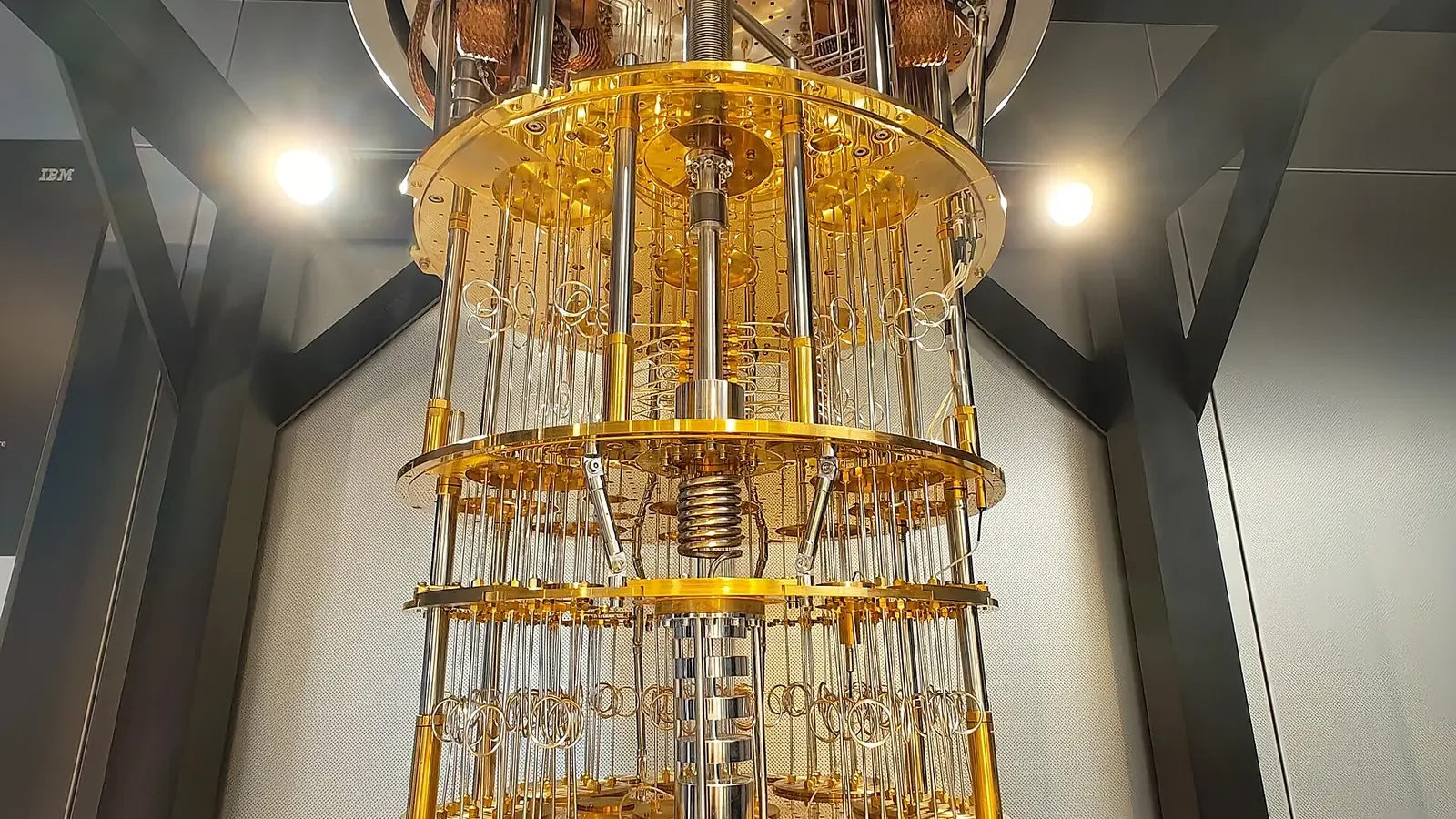
Measurements can extract an pair from three without choosing the pair beforehand. A November 12, 2026 Physical Review Applied paper tests this on IBM’s Aachen processor, not between distant laboratories.[1][2]
Four rounds plus a final strong-measurement fallback yielded about 0.85 successes per starting W state, a three-qubit entangled state. That is neither pairs per second nor 0.85 perfect pairs.[1][2]
The measured pairs became less faithful to the ideal state with later rounds. Researchers also bounded entanglement of formation: the least average entanglement in pure states whose mixture reproduces the noisy output. Their success-weighted average lower bound per input W state was about 0.64 for one round and 0.54 for four. Those bounds neither prove that actual entanglement decreased nor establish a yield of distillable perfect pairs.[1][2]
The tests used circuits with a predetermined number of rounds, not immediate stopping on success. The Aachen results appeared in a June 8, 2026 preprint revision; November brings peer-reviewed publication.[2][3][4]