
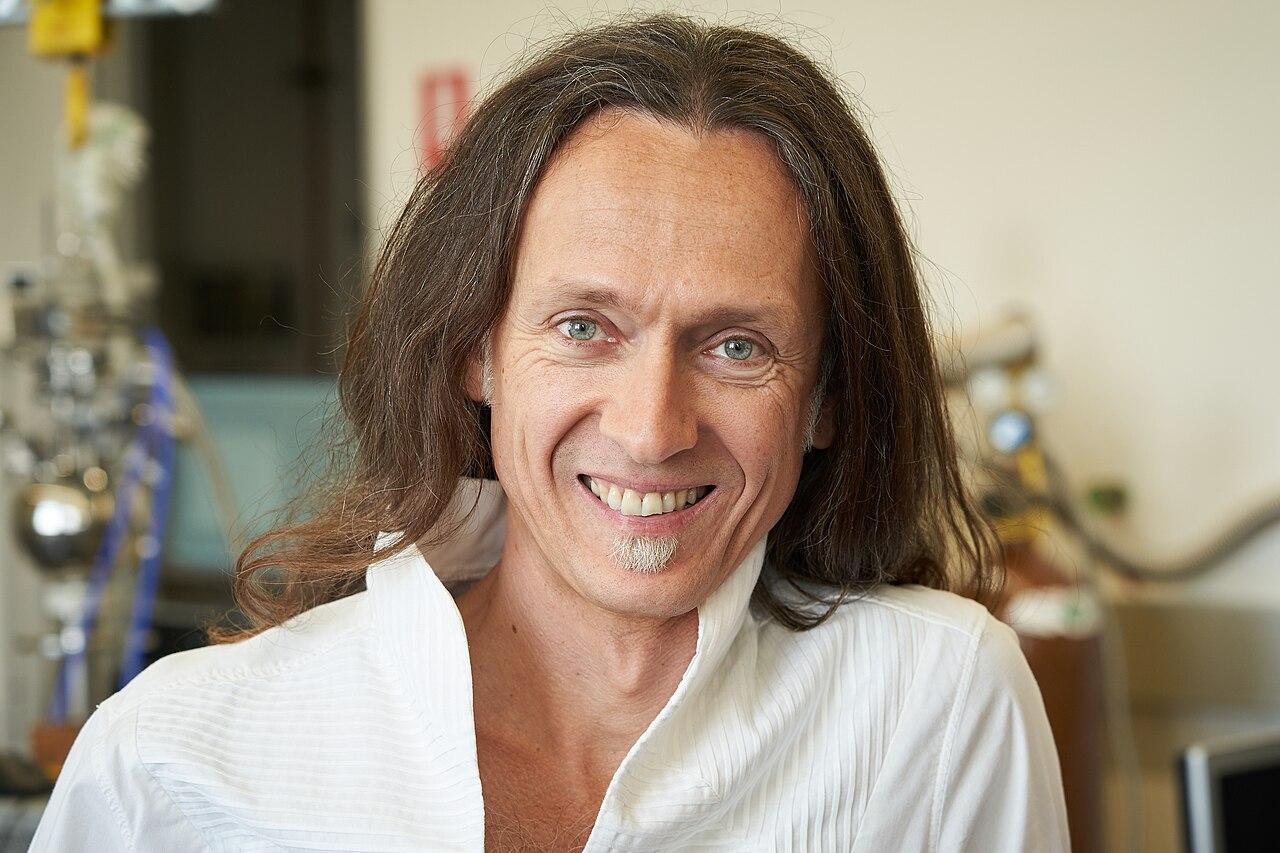


Uses the electron and nuclear spins of individual atoms in silicon as quantum information carriers, developing the control and readout methods needed to make those qubits usable.
UNSW SydneyarXivMorello’s contribution centers on making a single atom in silicon behave as a controllable information system. His group’s electron-spin work established practical readout and control, followed by nuclear-spin demonstrations that exploited a different part of the same atom. This gives silicon quantum computing both processing and memory possibilities. The research is significant because a qubit needs preparation, operations and measurement together; long coherence alone is insufficient. The cited results remain specific experimental demonstrations rather than evidence of a completed large-scale processor.
UNSW SydneyarXivWhat changes when quantum information uses more than two levels?
A qubit uses two states to encode quantum information. Systems with more available levels invite a different question: which states can be controlled and used together? More levels alone do not establish a proportionally more useful computer; the operations, errors and encoding still matter. [1]
Andrea Morello is listed on the organising committee for Beyond Qubits 2026, taking place in Sydney on 1–3 December. The meeting brings together research on qudits and other approaches beyond familiar qubit encodings, including control, error correction and algorithms. [1]
This is a dated contribution to a research community, distinct from a new experimental result. The event provides a route into the discussion. Its organising role remains part of the historical record after the meeting, without implying that Morello alone invented the approaches being discussed. [1]
Keep asking: What can the additional levels do under the available controls and error model?
Sources for this question
- Beyond Qubits 2026 — scope and organising committee — Beyond Qubits 2026 organisers.
Event scope, location, dates and Morello’s organising-committee role. This event relationship does not establish a new experiment or a change of employment.
Meeting dates: 1–3 December 2026; website checked 11 October. Checked 2026-10-11.
The work behind the recognition
Work, in context- 2012
A single-atom electron qubit
Coauthored the demonstration of an electron-spin qubit associated with a single phosphorus atom in silicon, as documented in UNSW’s research record.
Coauthor of the single-atom electron-spin experiment, as documented by UNSW; shared experimental credit.
Source-supported recordUNSW Sydney - 2013
Reading and controlling one nuclear spin
Coauthored electrical single-shot readout and coherent control of a phosphorus nuclear spin, integrating the atom into a silicon nanostructure.
Coauthor of the phosphorus nuclear-spin readout and control experiment; shared experimental credit.
Source-supported recordarXiv
The evidence map
Both views link each contribution to its sources. Choose a contribution on the map or read them all in the list.
A single-atom electron qubit
Scientia Professor Andrea Morello
Supports: Identity, professional identification and contribution context
Checked 19 Sept 2026Credit & limits: Coauthor of the single-atom electron-spin experiment, as documented by UNSW; shared experimental credit.
Read the full contribution| Contribution | Evidence & what it supports | Credit & limits |
|---|---|---|
| A single-atom electron qubit2012 | Institutional recordScientia Professor Andrea Morello Identity, professional identification and contribution context Checked 19 Sept 2026 | Coauthor of the single-atom electron-spin experiment, as documented by UNSW; shared experimental credit. |
| Reading and controlling one nuclear spin2013 | Primary paperHigh-fidelity readout and control of a nuclear spin qubit in silicon Coauthorship, phosphorus nuclear-spin readout and control Published 1 Feb 2013 · Checked 19 Sept 2026 | Coauthor of the phosphorus nuclear-spin readout and control experiment; shared experimental credit. |
Follow the evidence
2 sourcesPrimary papers, institutional records and attributed announcements. Each source supports the claims linked above.
- UNSW SydneyInstitutional record
Scientia Professor Andrea Morello
Identity, professional identification and contribution context
Checked 19 Sept 2026 - arXivPrimary paper
High-fidelity readout and control of a nuclear spin qubit in silicon
Coauthorship, phosphorus nuclear-spin readout and control
Published 1 Feb 2013 · Checked 19 Sept 2026