
Keep the context in the picture.
Two original teaching diagrams, with readable explanations, primary sources and reference files. These are conceptual aids, not measurements or source figures.
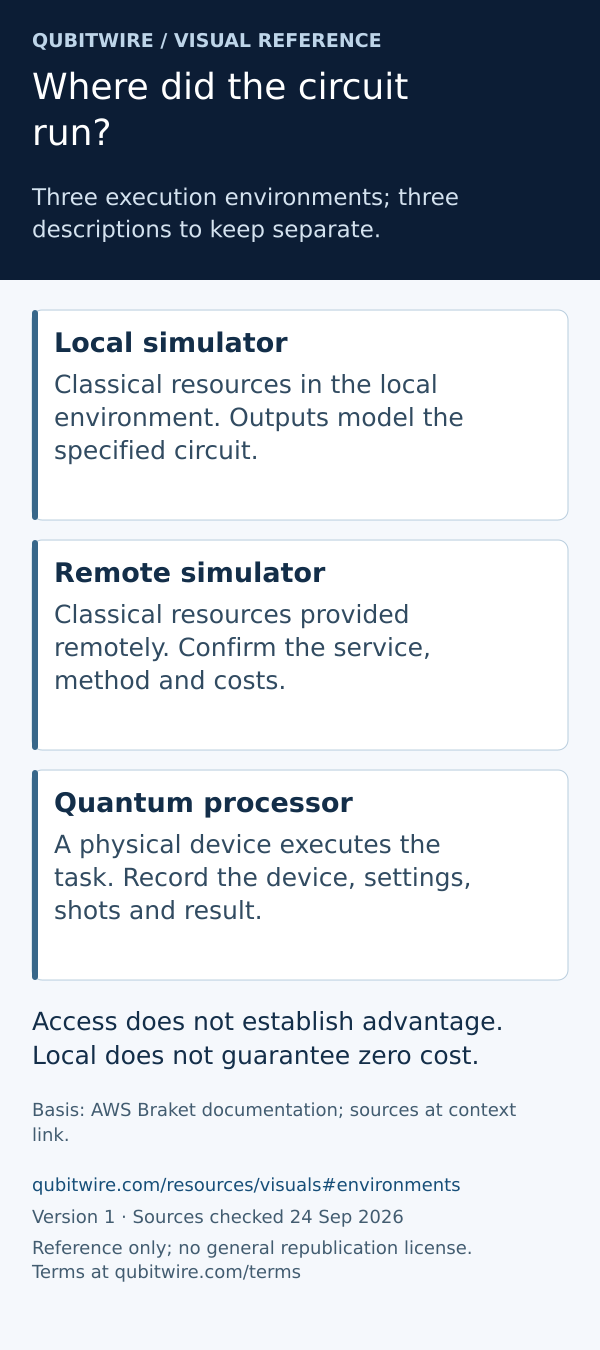
Where did the circuit run?
Three execution environments; three descriptions to keep separate.
Use the idea
When explaining an experiment, identify the task, environment and output first. A result from one environment cannot silently stand in for another, and service access alone supplies no performance comparison.
- Local simulator Classical resources in the local environment. Outputs model the specified circuit.
- Remote simulator Classical resources provided remotely. Confirm the service, method and costs.
- Quantum processor A physical device executes the task. Record the device, settings, shots and result.
Sources and permission
- AWS: What is Amazon Braket?Living documentation; publication date not stated
- AWS: Testing a quantum task with the local simulatorLiving documentation; publication date not stated
Original QubitWire schematic. Reference download; no general republication license is granted. Share the context link. QubitWire terms apply. Read the terms.
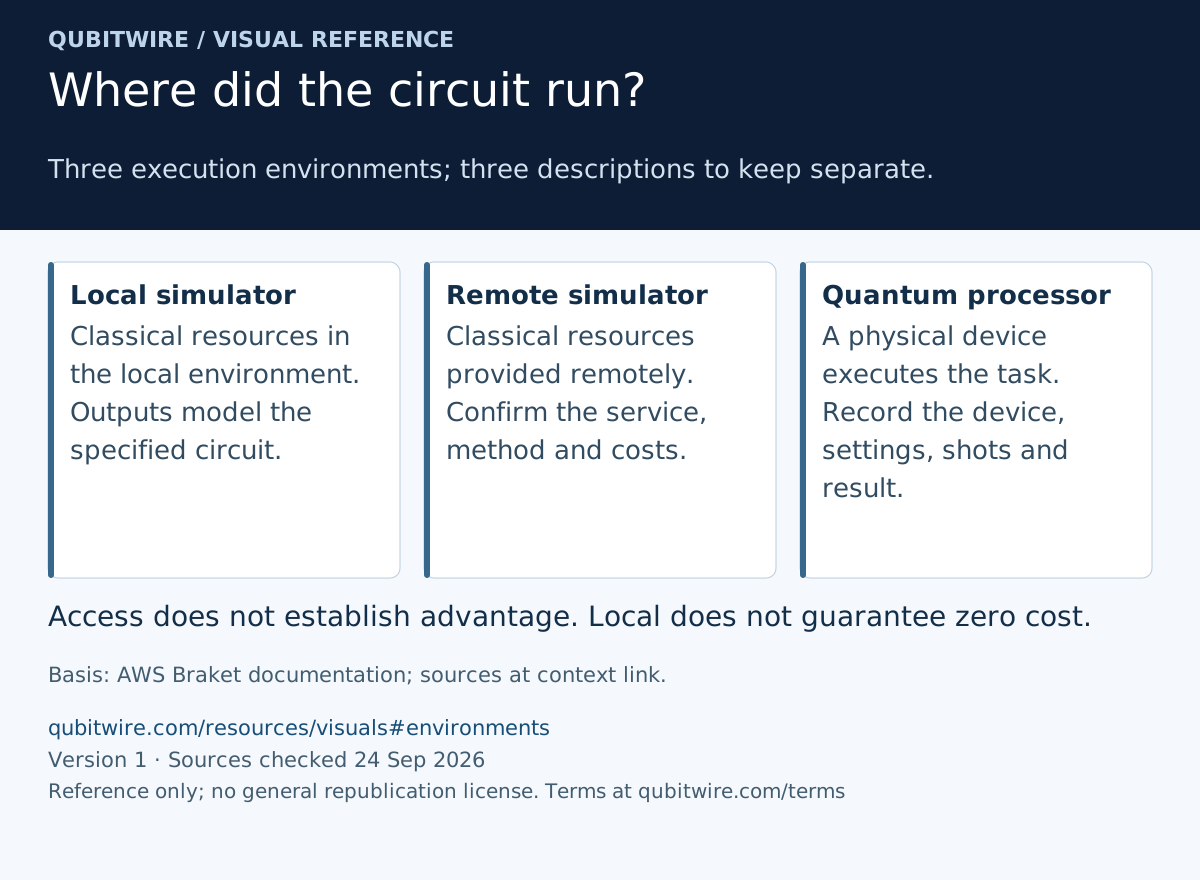
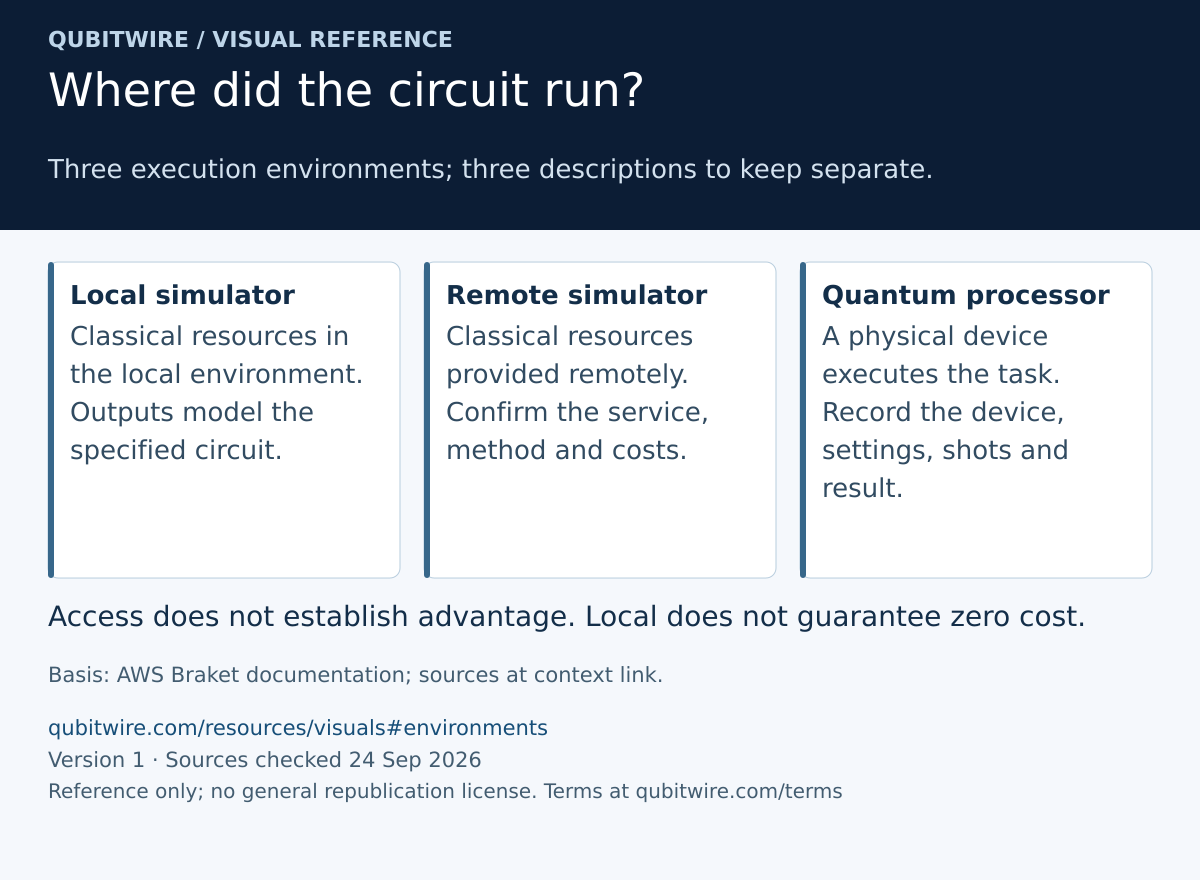
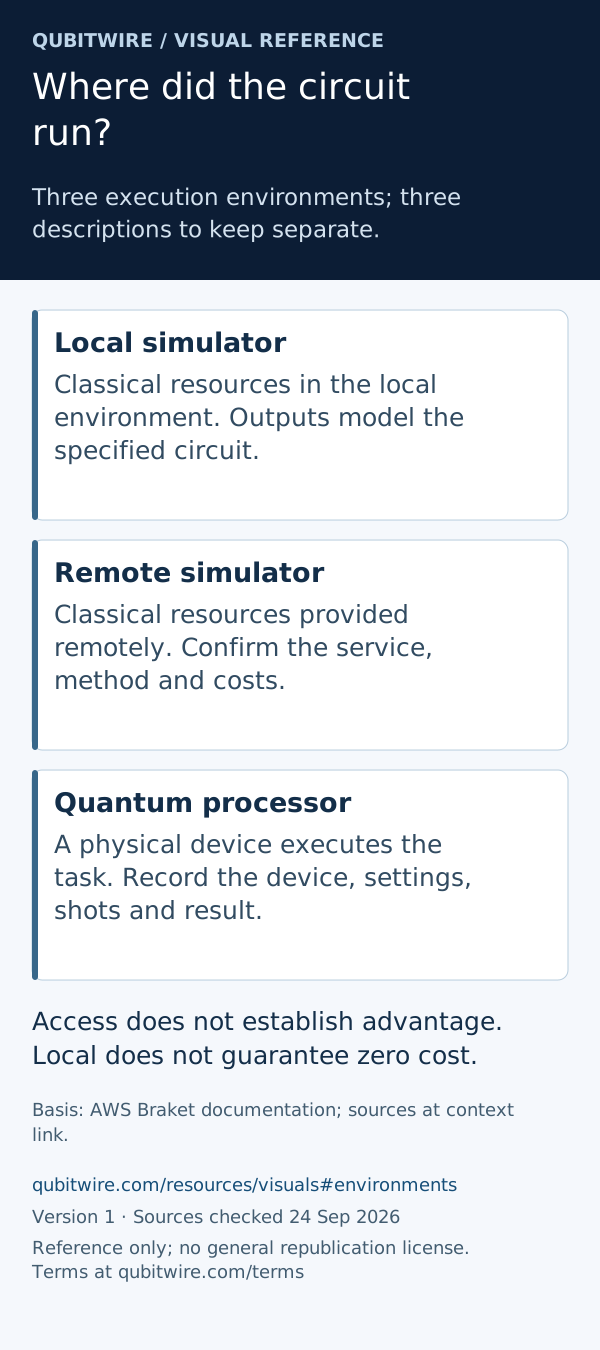
Selectable text with sources
Where did the circuit run? QubitWire, version 1. Sources checked 24 September 2026. https://qubitwire.com/resources/visuals#environments

Access does not establish advantage. Local does not guarantee zero cost.

Original QubitWire schematic. Reference download; no general republication license is granted. Share the context link. QubitWire terms apply.
Terms: https://qubitwire.com/terms

Sources:
AWS: What is Amazon Braket?: https://docs.aws.amazon.com/braket/latest/developerguide/what-is-braket.html
AWS: Testing a quantum task with the local simulator: https://docs.aws.amazon.com/braket/latest/developerguide/braket-send-to-local-simulator.html
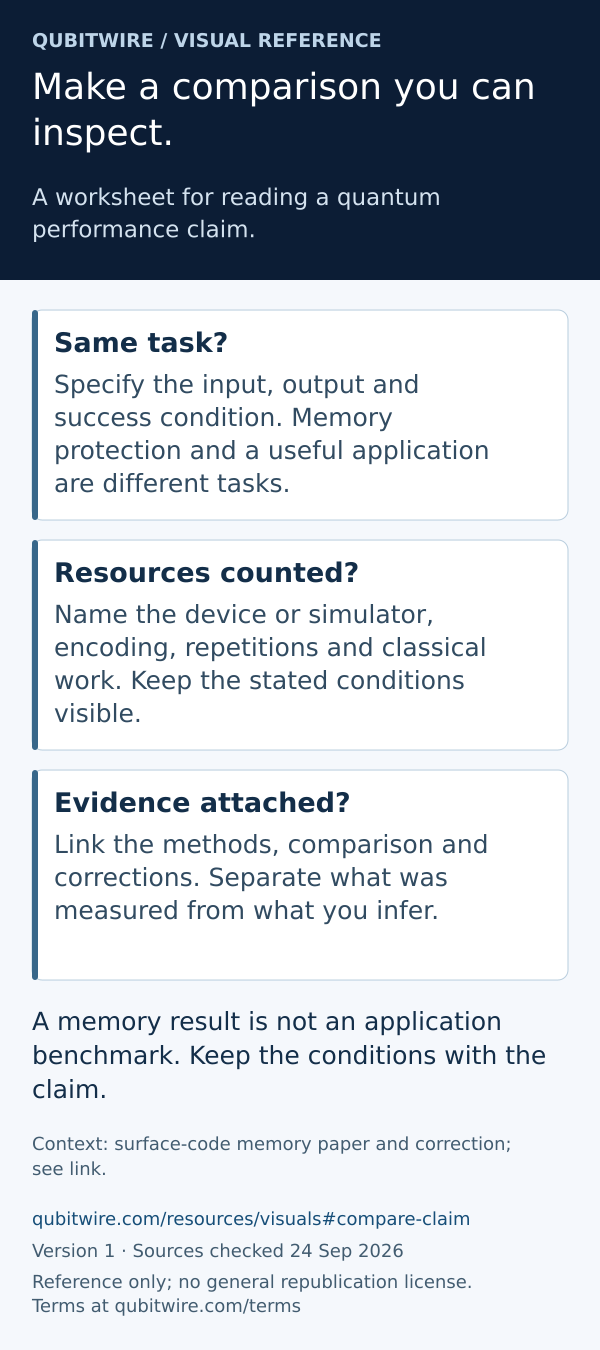
Make a comparison you can inspect.
A worksheet for reading a quantum performance claim.
Use the idea
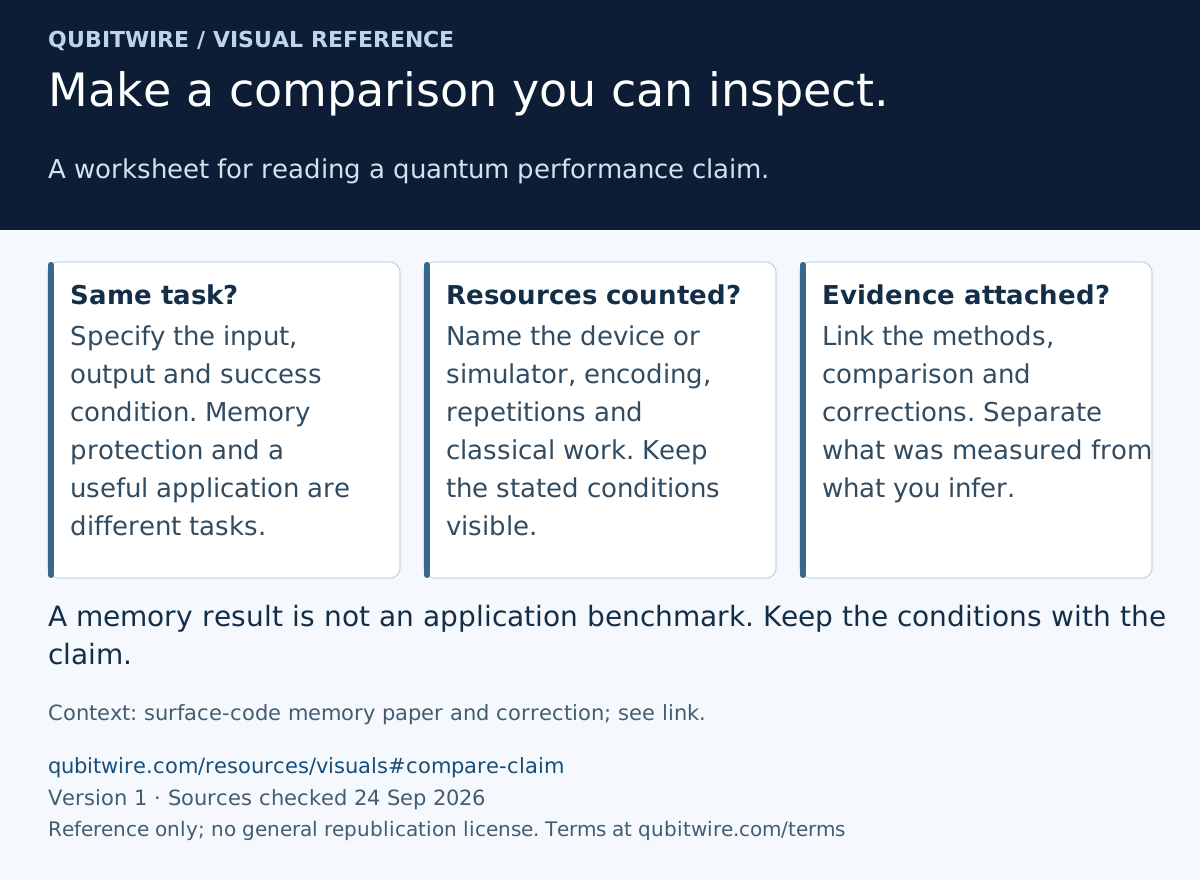
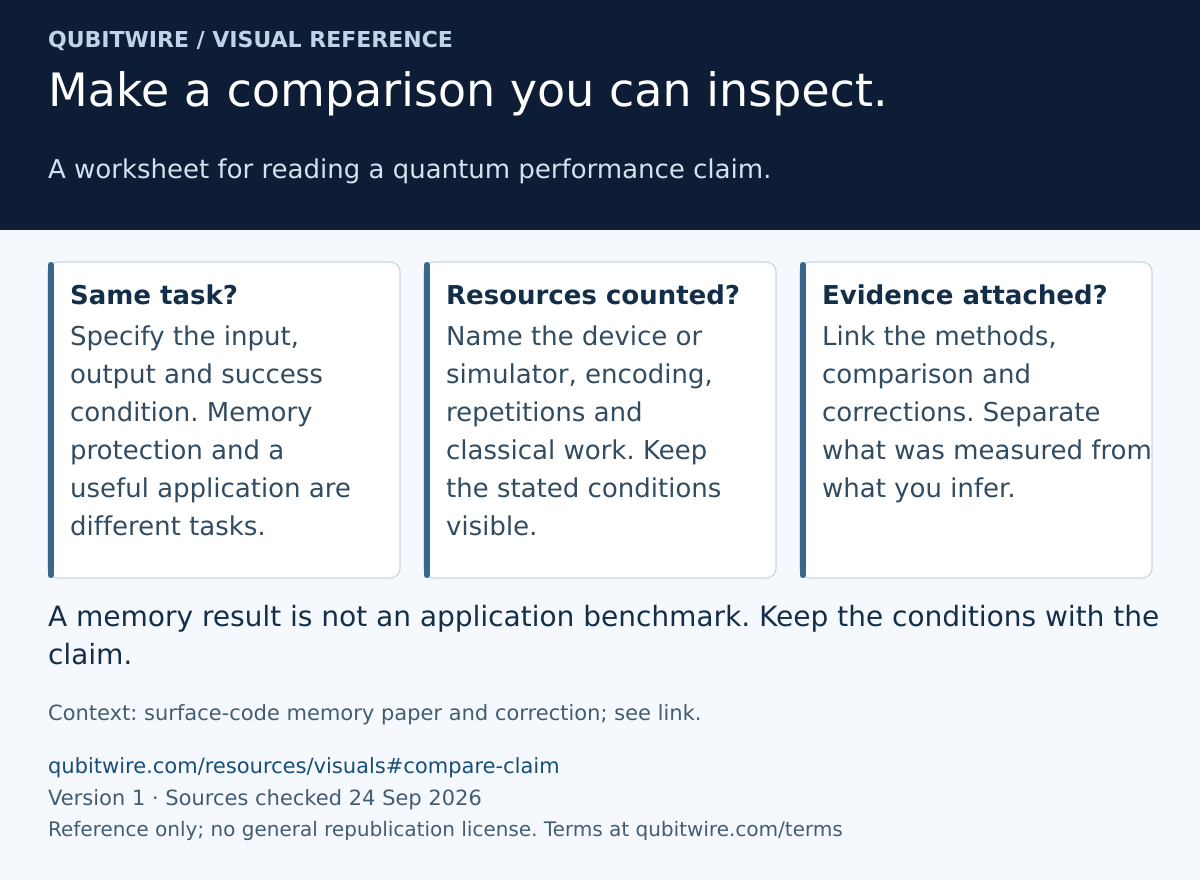
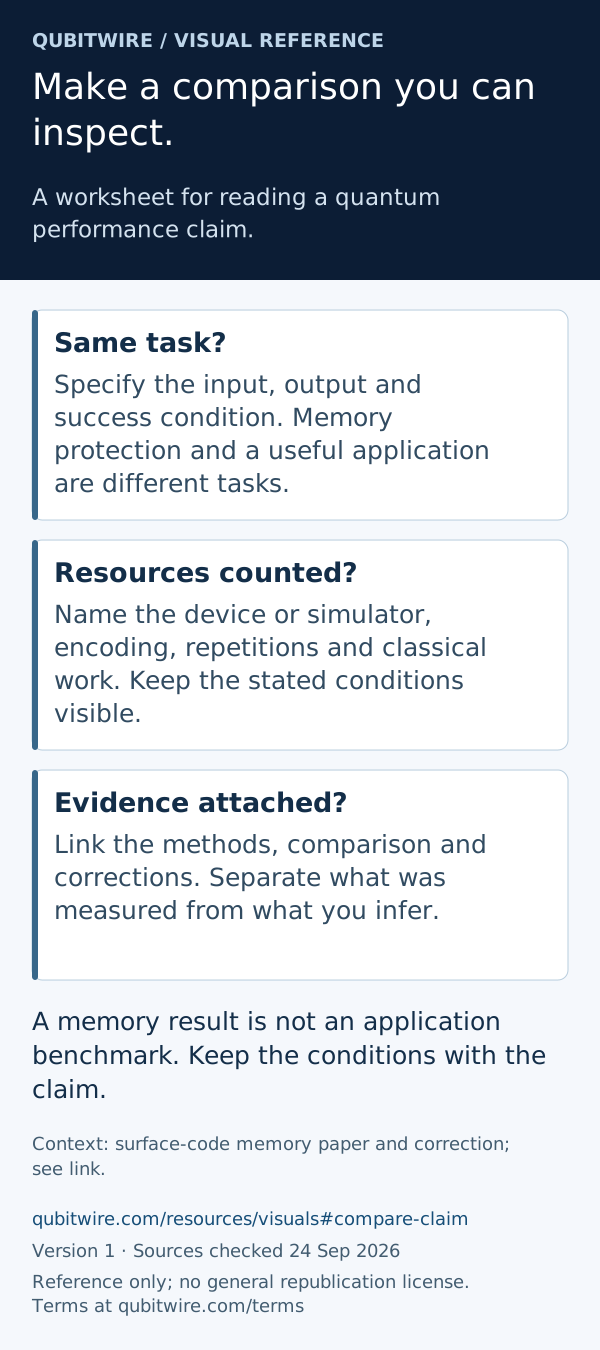
The three questions are QubitWire’s reading aid, not a scoring system or a result reported by the paper. They help expose mismatched tasks and missing context before making a numerical comparison.
- Same task? Specify the input, output and success condition. Memory protection and a useful application are different tasks.
- Resources counted? Name the device or simulator, encoding, repetitions and classical work. Keep the stated conditions visible.
- Evidence attached? Link the methods, comparison and corrections. Separate what was measured from what you infer.
Sources and permission
- Google Quantum AI and Collaborators: Quantum error correction below the surface code thresholdPublished online 9 December 2024
- Nature: Author correction to the surface-code memory paper28 April 2026
Original QubitWire schematic. Reference download; no general republication license is granted. Share the context link. QubitWire terms apply. Read the terms.
Selectable text with sources
Make a comparison you can inspect. QubitWire, version 1. Sources checked 24 September 2026. https://qubitwire.com/resources/visuals#compare-claim

A memory result is not an application benchmark. Keep the conditions with the claim.

Original QubitWire schematic. Reference download; no general republication license is granted. Share the context link. QubitWire terms apply.
Terms: https://qubitwire.com/terms

Sources:
Google Quantum AI and Collaborators: Quantum error correction below the surface code threshold: https://www.nature.com/articles/s41586-024-08449-y
Nature: Author correction to the surface-code memory paper: https://www.nature.com/articles/s41586-026-10559-8