
Why IBM quantum computers are colder than space
Original upload
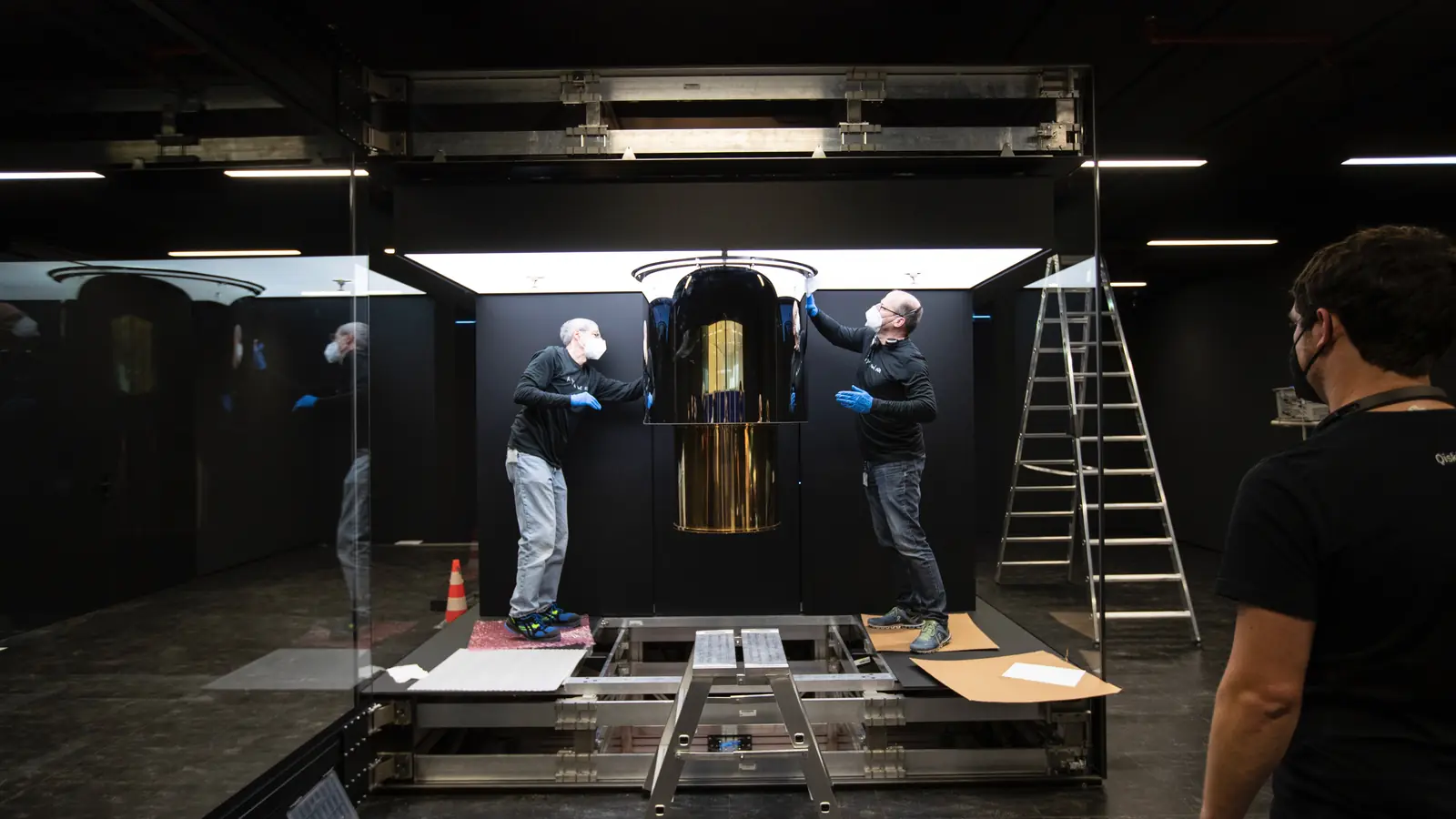 Context photo · Holger Muench / IBM · CC BY 2.0
Engineers install IBM Quantum System One at Fraunhofer. Archival quantum-computing context, not a video frame or the apparatus of another study.
Open on YouTubeBrowse more videosHow privacy choices workPhoto source and licenseIBM Research explains the cryogenic engineering used to keep superconducting qubits near absolute zero and why thermal noise matters. This educational hardware tour focuses on cooling the installation rather than benchmarking a processor's computational performance.
Viewing companion: The cold chip is only one part of the machine
A refrigerator provides a protected environment for superconducting qubits, while control and readout systems still have to deliver and measure signals carefully. Use this conversation to connect each surrounding component with its job. The useful distinction is between reaching a low temperature and operating a complete quantum system. This route concerns superconducting hardware; other architectures have different engineering requirements.
A question to keep in mind: What must the surrounding system control beyond the temperature of the chip?
Cooling supports the device. Cooling alone does not demonstrate a reliable logical calculation.
Original QubitWire learning notes. Explore the related guide →
Viewing question: After the video, read the source
Open the source behind the central claim. IBM’s official episode page supplies the superconducting and cryogenic context for this conversation. It describes systems engineering needed to house, cool and operate processors, alongside future plans.
Check the date and type of evidence behind each statement. A cooling-system milestone, a measured processor result and a forecast for an interconnected machine answer different questions. Follow the linked announcement before treating a programme’s intended destination as something already demonstrated.
- Which statement describes equipment operating now?
- Which statement is a future engineering aim?
- What measured result would establish the next capability?
Original QubitWire viewing questions. Source reading:
- Why IBM quantum computers are colder than space — official episode information ↗ — IBM.
Exact episode title, superconducting context, cryogenic engineering and linked announcements; company context remains attributed.
Episode information; publication date not stated.
Video by IBM Research. Added to QubitWire .