
Beijing wants quantum-dot sensors to tell it more about its waterways
Beijing has already used quantum-dot sensors in rivers. A new lab aims to combine sensing data with city records to see what it can learn about urban water systems.
Reading tools for text size, copying, printing and your reading list
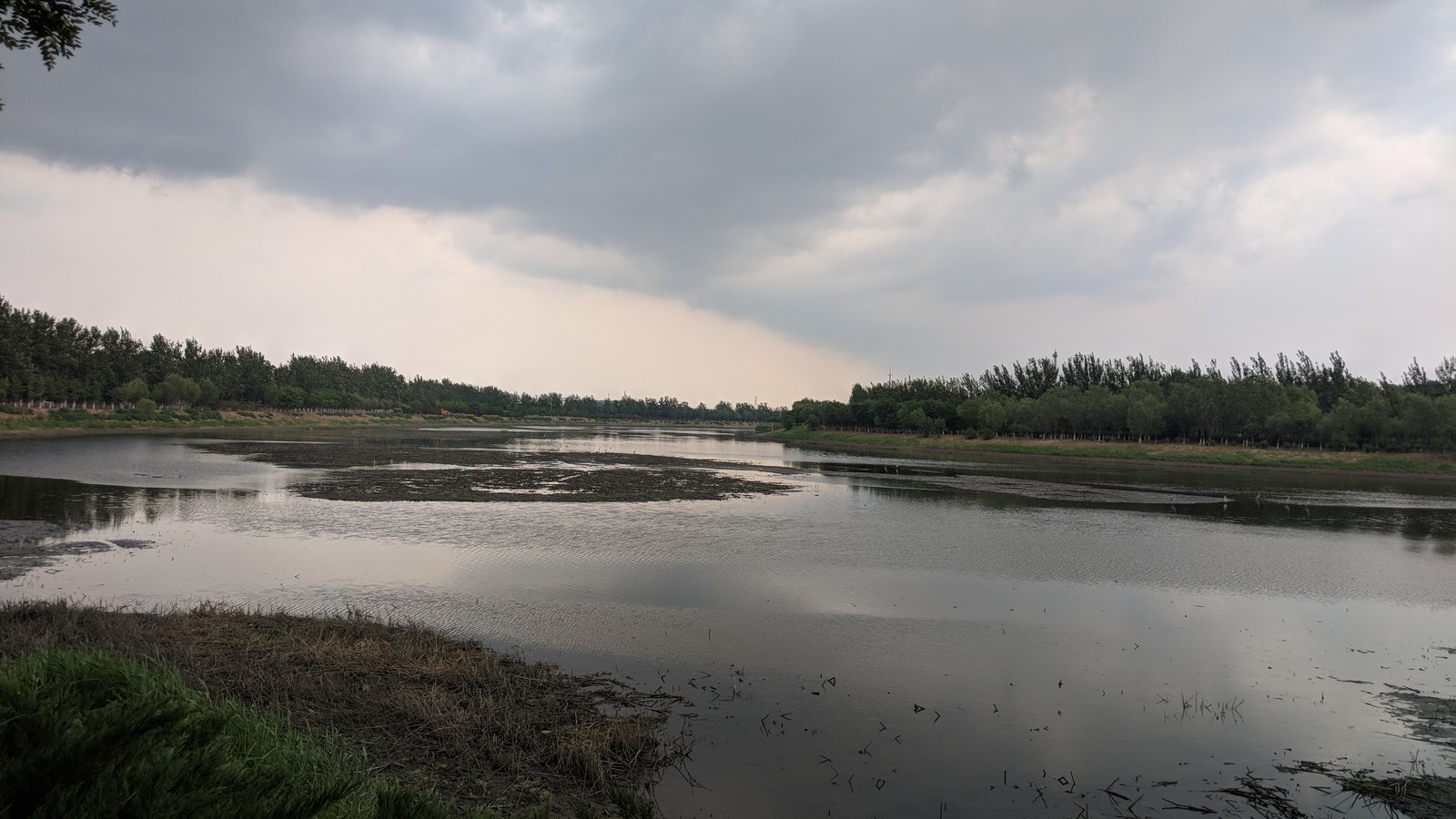
A change in the light coming back from a river can be an early clue that something in the water has changed. Beijing wants to put those clues alongside other city records. At the Zhongguancun Quantum Conference, which opened November 26, the Beijing Municipal Big Data Center and sensor company QuantaEye unveiled a joint lab to combine quantum sensing measurements with public-sector data. Urban water management is one of its proposed uses.[1][2]
The new development is the lab, not the invention or first deployment of the chip. In 2019, the Haidian District Water Authority reported that it and QuantaEye had installed 29 water-monitoring units in the Nansha River basin. Fourteen sites monitored sections of the main river and 15 monitored tributaries or channels. A separate 2022 municipal procurement notice sought six monitoring devices for a project at Wenyu River Park. The notice documented a planned purchase, not proof that the six devices went into service.[3][4]
How a chip can read water by looking at light
A spectrometer measures how much light is present at different wavelengths. In one foundational design, researchers used an array of tiny semiconductor crystals called quantum dots. Different groups of dots absorb different bands of light, and software reconstructs the spectrum from the array’s responses. That gives a compact instrument more to work with than an ordinary light sensor, which might tell you only that the returning light got brighter or dimmer. The quantum effect is in how the particles interact with light; this isn't a quantum computer analyzing the river.[5]
QuantaEye says its water-monitoring terminals use quantum-dot spectral sensors to track surface water and drainage networks. A spectrum isn't a chemical verdict on its own. It takes calibration and comparison with known samples to turn a change in the light into a useful estimate. A signal that looks unusual compared with yesterday’s can tell an operator where to look, but not necessarily what caused it. Measuring continuously is useful because it can show how a change passes through a network, rather than just what was in one sample at one moment.[3][5][6]
What a shared dataset could add
Suppose upstream and downstream sensors register a change at different times. Putting those readings on the same timeline as rainfall and the operation of a pumping station could help a water manager decide where to take a confirming sample. That is an example of what combining sensor and city data could do, not a result the new lab has reported.[1][2][3]
The unveiling reports did not name a first test site, publish a dataset, or show that the approach detects an incident faster than the city's existing system. A useful next milestone would be a field comparison that publishes both missed events and false alarms, alongside the time it took to act. That would show whether combining the records makes the city's response better, rather than simply producing a bigger dataset.[1][2][3]