
A Chinese quantum company lands ¥31 million in microscope orders
CIQTEK disclosed fresh orders for dual-beam instruments. Its filings show why electron microscopy, rather than quantum computing, leads the company’s sales.
Reading tools for text size, copying, printing and your reading list
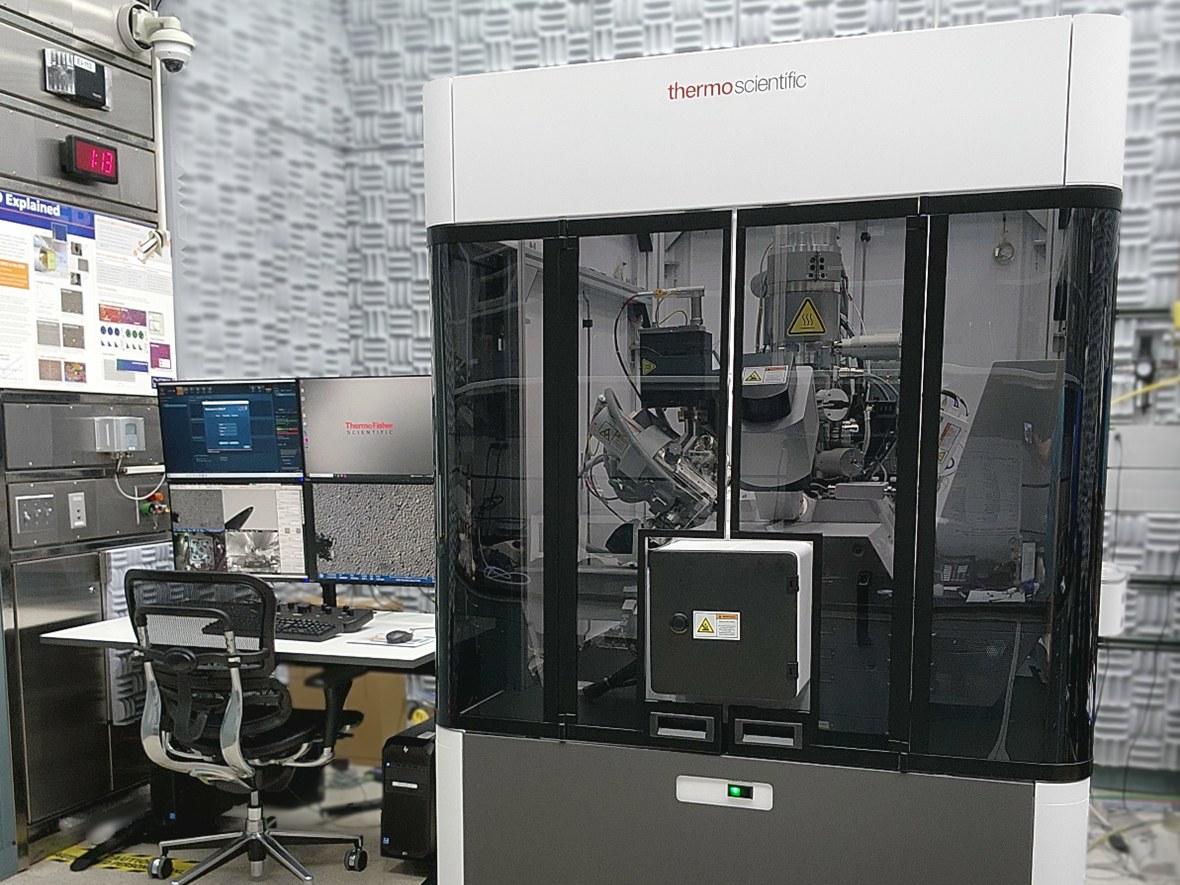
CIQTEK has accepted 31.32 million yuan in orders, including tax, for high-end electron microscopes. The Hefei company, whose Chinese name includes the word quantum, sells instruments that use quantum effects to sense tiny magnetic signals. But these orders are for a different kind of machine: a microscope with one beam to cut on a tiny scale and another to see what the cut revealed.[1][3][4]
In a filing dated November 28, CIQTEK said it accepted several purchase orders under a group procurement agreement from a buyer it identified only as Customer W. It did not disclose the number of machines, model, delivery timetable or buyer’s name. An earlier filing dated November 24 reported 142.19 million yuan in dual-beam microscope orders under a framework agreement with an unnamed customer. Neither filing gives enough information to identify the buyers or show where the instruments will be used.[1][2]
A microscope that can cut as well as look
A scanning electron microscope sweeps a beam of electrons over a sample and uses the response to form an image. Add a second beam made of ions, or electrically charged atoms, and the instrument can remove material to expose a cross-section. A chip engineer can use that combination to look under the surface of a device rather than guess what happened from the top. A researcher can also cut out a thin slice for another microscope that sees finer structural details.[3][4][5]
These tools are part of the equipment used to make and inspect advanced electronics, including some quantum devices. Researchers at the U.S. National Institute of Standards and Technology, for example, have used a separate dual-beam instrument to inspect a cross-section of a superconducting junction used in quantum voltage standards. That is a use of this kind of instrument, not evidence of what CIQTEK’s customer is doing. A microscope order is not a quantum computer sale.[1][4][5]
What the sales numbers say
The prospectus CIQTEK issued ahead of its Shanghai listing shows how much the business had shifted before this week’s orders. Electron microscopes accounted for 30.20% of its main-business revenue in 2023 and 56.29% in 2025. In 2025, the product line brought in about 373 million yuan, compared with about 218 million yuan for the category that combines quantum information technology and spin resonance. The narrower quantum computing product line accounted for about 22.7 million yuan, or 3.43% of main-business revenue.[3][6]
The latest order value is not revenue already earned. CIQTEK says it will recognize revenue according to delivery and acceptance, and it did not say when that would happen. The clearest takeaway is what customers agreed to buy: instruments for seeing and working on very small structures. For anyone tracking how a quantum company makes money while quantum computers mature, that distinction is more revealing than the name on the filing.[1][3]