
Delft’s UniQ project tackles quantum computing’s wiring problem
A six-year research project will develop spin qubits and their control electronics together, testing whether closer integration can reduce the hardware around the chip.
Reading tools for text size, copying, printing and your reading list
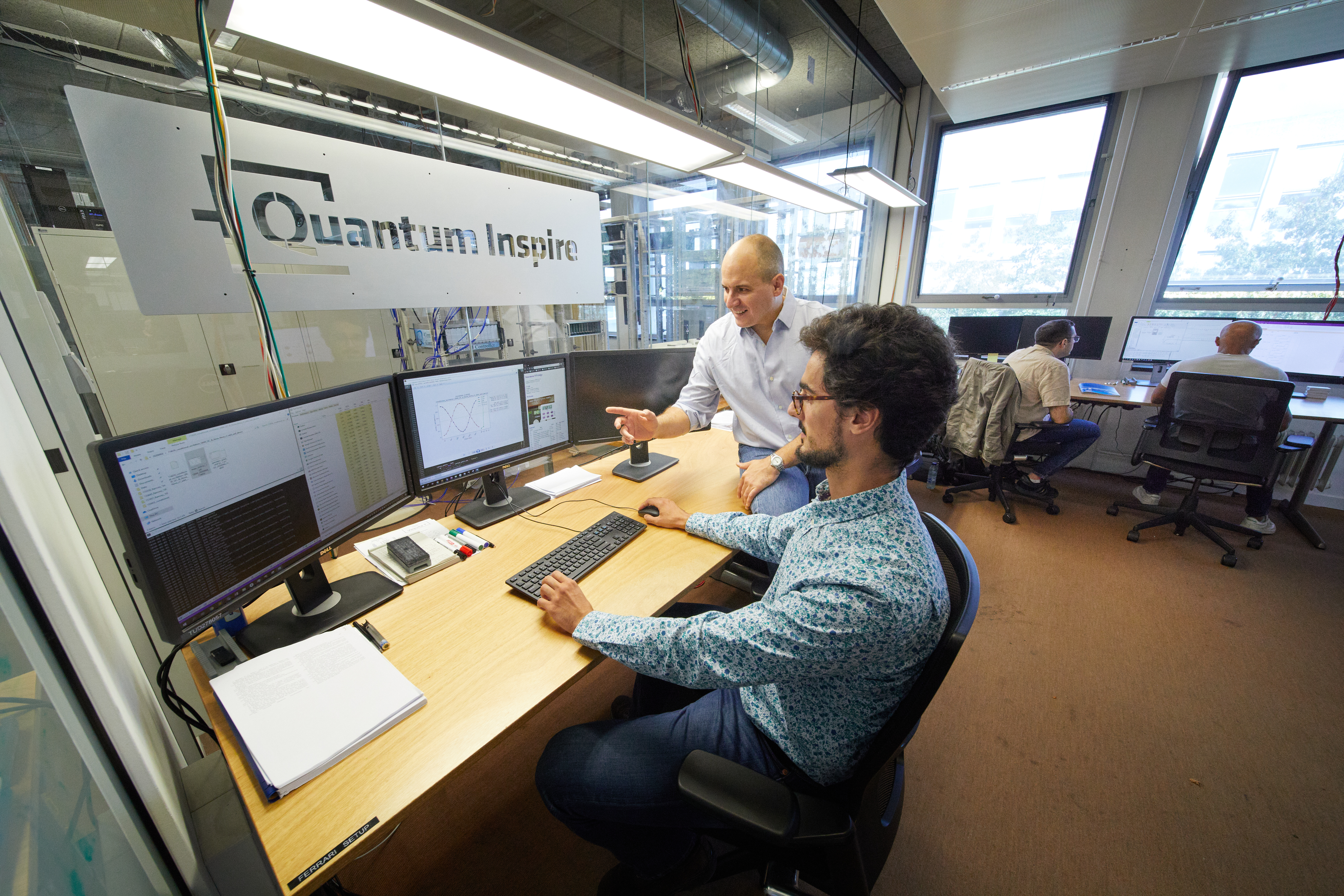
QuTech and TU Delft announced a six-year project on November 12 to bring quantum bits and more of their control electronics together on a chip. Funded through an ERC Synergy Grant, UniQ targets a problem that small quantum devices do not automatically solve: the wiring and equipment needed to operate them.[1]
The project is research, not a finished processor. Its four investigators are Fabio Sebastiano, Giordano Scappucci, Menno Veldhorst and Lieven Vandersypen. Spin encode quantum information in a particle’s spin. The team will develop their control, germanium materials and electronics together rather than connect them only at the end.[1]
Current experiments can need several electrical connections for each qubit, running between a refrigerator and external equipment. UniQ aims to integrate signal routing and pre-amplifiers, which strengthen faint measurement signals, near the qubits. The trade-off is heat: nearby electronics must operate without undermining the fragile quantum information.[1]
The teams will also investigate moving spin qubits within arrays to change which ones can interact. Integration tests are planned from the outset. The announcement supplies neither a grant amount nor a target qubit count.[1]
There is a useful distinction from another Delft initiative. In September, QuTech established a systems-integration unit for superconducting quantum computers. That work connects processors, refrigeration, packaging, wiring, control electronics and software into complete machines. UniQ addresses integration within a different kind of quantum chip; it is not a new name for that unit.[1][2][3]
The earlier project illustrates why the boundaries matter. QuTech described experience operating five generations of superconducting systems through Quantum Inspire, including commissioning, maintenance and user support. A processor is one part of that chain. Operating it reliably requires the other parts to work together, and a change to one can affect several others.[2]
The practical lesson is to look beyond the number of qubits. A chip can leave its designers with a much larger engineering problem outside it. Bringing functions closer together can simplify some connections while creating new constraints at their meeting point. That is the question UniQ now proposes to test, rather than a benefit already established by the funding award. The engineering details will determine the outcome.[1][2]