
A voltage moves a quantum boundary inside graphene
Nanoimaging reveals a route that need not follow the material’s outer edge.
Reading tools for text size, copying, printing and your reading list
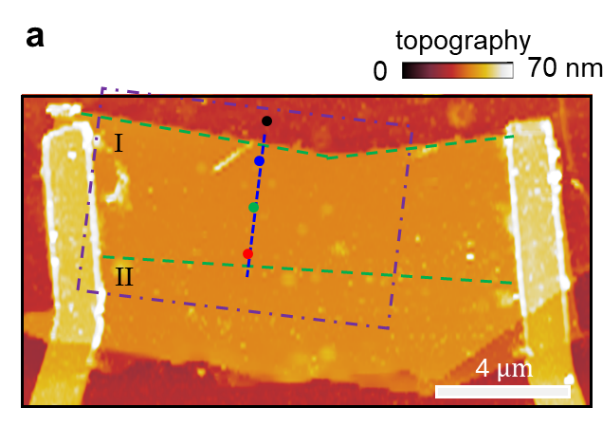
Researchers have moved an electronic boundary through the interior of graphene by changing an applied voltage. The result offers a different way to steer quantum Hall channels: move the route inside the material rather than rely only on its fixed outer edges.[2]
A team including Stony Brook and Brookhaven researchers reports the work in Light: Science & Applications on November 16. It was previously presented at the American Physical Society’s March meeting, so this is a new journal publication, not an experiment first disclosed yesterday.[1][2]
The researchers placed graphene on strontium titanate, whose electrical screening helps make the internal strip wide enough to examine. Terahertz measurements mapped uneven electron density; infrared photocurrent imaging tracked the moving boundary.[2]
The key voltage-controlled images were recorded at 25 kelvin and a magnetic field of seven tesla. The strip was about a micrometre wide. Those demanding conditions matter: this is a laboratory materials experiment, not a ready-made electronic switch.[1]
The potential payoff is reconfigurable paths for charge inside quantum materials. Demonstrating a movable boundary does not establish a quantum computer, a or faster computation.[1]