
A graphene device kept a quantum resistance near its target at 100 kelvin
At a temperature above liquid nitrogen’s boiling point, the device came within about two parts per million of a value set by nature. It was more precise when colder and still needed a strong magnet.
Reading tools for text size, copying, printing and your reading list
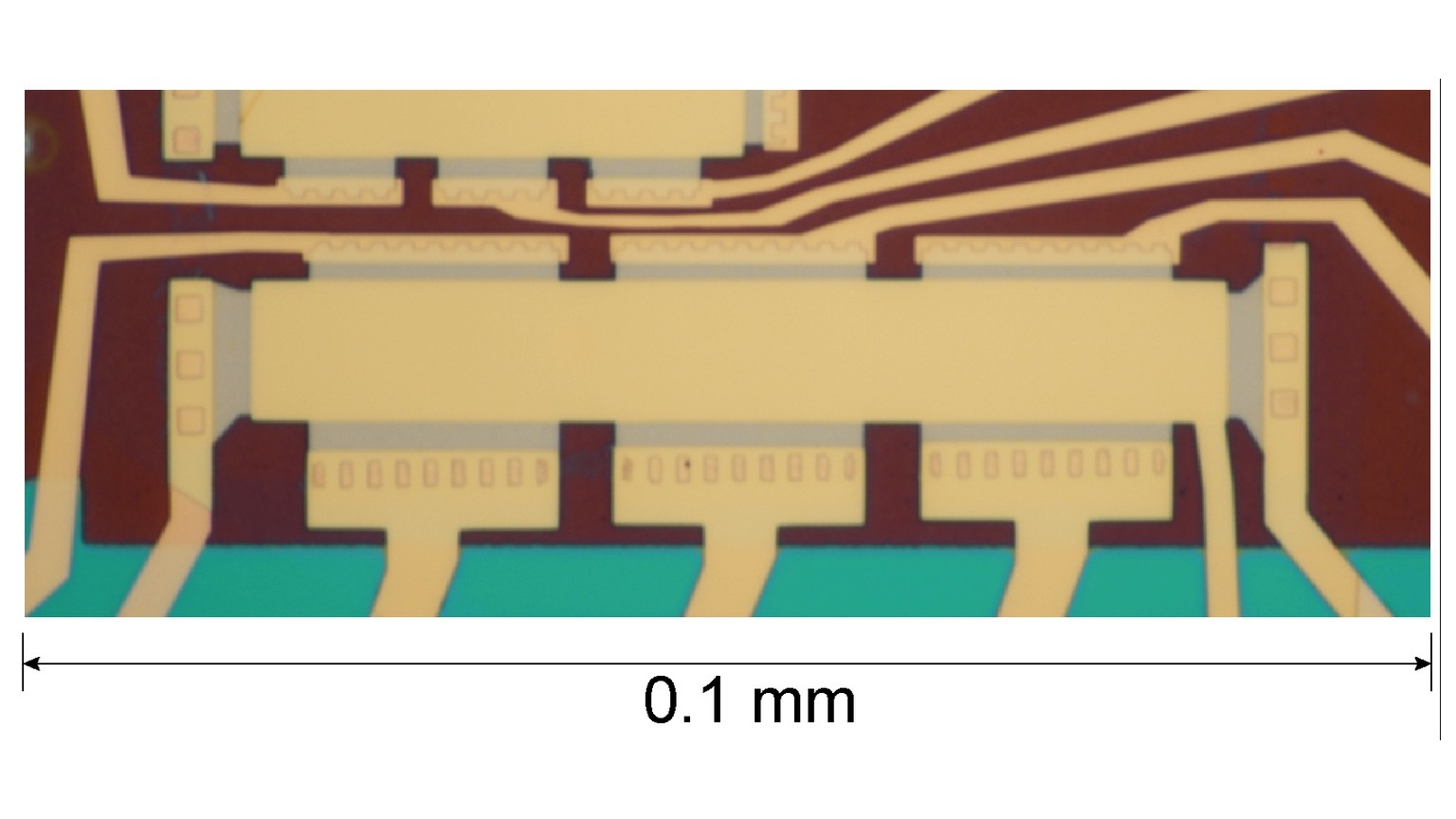
A graphene device roughly a tenth of a millimeter across stayed close to one of the most important numbers in electrical measurement even when researchers warmed it to 100 kelvin. That’s about −173 °C, still far below freezing but warmer than liquid nitrogen’s usual boiling point of 77 kelvin. At 100 kelvin the measured resistance was about two parts per million from the target, a difference of roughly 0.026 ohms on a reference of about 12,906 ohms.[1][2][3]
The experiment, described in a preprint in arXiv’s November 26 release, does not replace the standards used to calibrate electrical instruments today. It does put a number on a useful trade-off: the new device gets much closer to the target at lower temperatures, but retains a recognizable quantum reference well above the liquid-nitrogen mark. At both temperatures cited here, it needed a 12-tesla magnetic field.[1][4]
Why a resistance can be a reference
In an ordinary component, resistance depends on what it’s made of and how it was manufactured. In the quantum Hall effect, current flows through a very thin layer in a magnetic field, and the voltage measured across the layer changes in steps as conditions are varied. On a flat step, the ratio of that sideways voltage to the current provides a reference tied to fixed constants of nature. Measurement institutes use that repeatable value to anchor the calibration of other resistors and instruments.[1][2][3]
Kaining Yang and colleagues paired a single layer of graphene with a layered material called chromium oxychloride. The authors argue that interactions between the layers widen the energy gap that keeps the resistance on a step rather than drifting as the device warms. To find out how close it actually came to the expected value, they compared the device with a calibrated resistor using a measurement bridge. The bridge was at room temperature; the graphene device was not.[1]
The colder result was the more precise one
At 50 kelvin, the measured value was 15 parts per billion above the target, with a spread of 23 parts per billion across repeated readings. That spread is not the whole uncertainty budget: including the bridge and other effects, the authors put the combined standard uncertainty at about 34 parts per billion. The 100-kelvin figure describes how far the measured resistance was from the target in the temperature sweep, not a claim of equally precise calibration at both temperatures.[1]
The question for measurement labs is whether that warmer operating range can be made useful without trading away too much precision or simply moving the cost to a large magnet. That requires checking how consistently different devices reproduce the result and whether the strong field can be reduced. The ohm itself isn’t changing. What might change is how much equipment a lab needs to reproduce it reliably.[1][2][3]