
NVIDIA’s 13,000-fold speedup is for checking quantum errors
New software accelerates error-correction research, not the quantum chip itself.
Reading tools for text size, copying, printing and your reading list
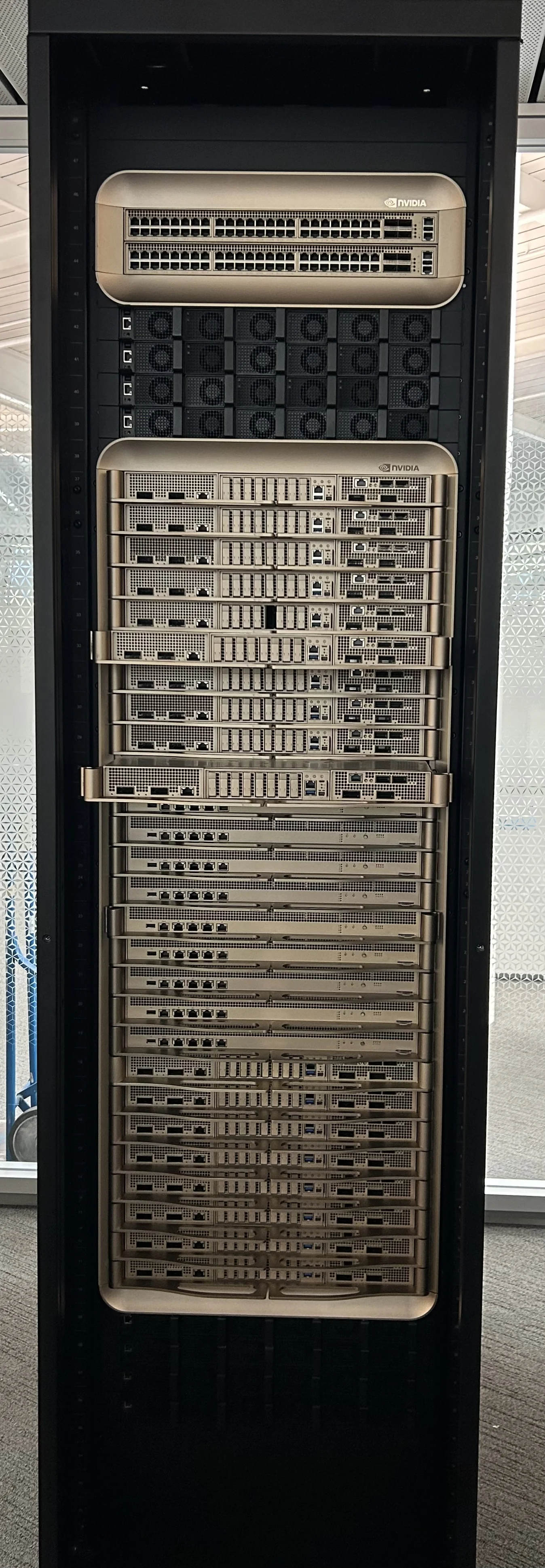
NVIDIA has released software that speeds up a demanding part of quantum-computer research: working out which errors probably occurred. Its November 16 announcement reports up to 13,000-fold faster decoding with TCBP-JOBS, now available in CUDA-Q QEC 0.9.0.[1]
A decoder is classical software, not a quantum processor. It interprets error-check measurements to suggest corrections. Faster decoding lets researchers test more designs for protecting fragile quantum information before building them.[1]
The headline comparison needs context. NVIDIA’s paper measures one GB200 GPU against one Grace CPU core running Tesseract’s unsparsified long-beam setting. The largest gains come on a particular family of codes, using simulated data. This is not a 13,000-fold improvement in a quantum chip, or an equal-hardware comparison.[2]
Accuracy is not uniformly better, either: the paper reports that Tesseract wins in some lower-noise tests. NVIDIA’s documentation also distinguishes rapid processing of large batches from the waiting time for an individual answer.[2][3]
That makes the immediate development a research tool, not proof of a working fault-tolerant computer. The authors say integration with a quantum controller and measurement of complete reaction times remain next steps. The practical promise is faster testing of error-correction ideas, with live-system performance still to establish.[2]
Keep your reading trail
Keep up with these topics
Explore the subjects covered in this story.