
Skip to content
BUSINESS + POLICY · QUANTUM FINANCE

OCBC puts banking problems into a quantum testbed

Conventional methods will be the comparison, not an afterthought.

Published Updated Source report Sources checked
Reading tools for text size, copying, printing and your reading list
My reading list
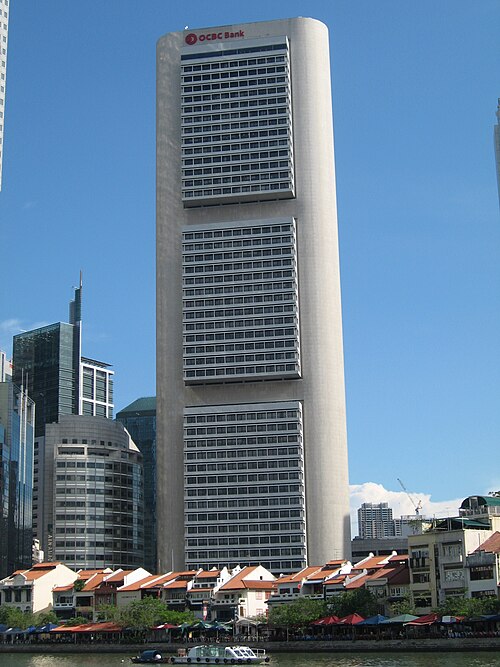
OCBC Centre rises above riverside shophouses in Singapore, with the bank’s name visible near the top.
OCBC Centre above the Singapore River in May 2006. The bank is contributing two financial use cases to the Q-FINEX testbed.Illustrative photoTerence Ong

OCBC is joining Q-FINEX to test quantum computing against conventional methods on banking problems, according to a November 18 announcement from implementation partner ST Engineering. The collaboration also includes a separate assessment of the bank’s preparation for post-quantum cryptography.[1]

OCBC will submit two use cases, covering credit and counterparty risk and optimisation, to the University of Western Australia’s QUISA researchers. They will develop quantum and hybrid algorithms and compare them with conventional approaches. ST Engineering could then implement promising candidates.[1]

How the bank would judge a result

In the November 18 announcement, OCBC’s Group Chief Information Officer Praveen Raina said the bank wants to see where quantum methods outperform those it uses today. The partners did not specify a dataset, a scoring metric, a benchmark result or a publication date. The statement also gives no project price or revenue guidance.[1]

Separately, ST Engineering will use its Quantizant platform to assess readiness and prioritise a cryptographic transition. A migration roadmap is not a completed security upgrade.[1]

A useful risk test could compare the error and time needed for the same estimate. An optimisation test could compare solution quality at the same time limit. Those are examples of questions a published benchmark could answer. The bank’s separate work on cryptographic readiness measures a different kind of progress.

Keep your reading trail

Evidence & context

1 linked source

Announced research collaboration

How to read the evidence and dates

An announcement records what an organization stated. An experiment reports an observation. A simulation or resource estimate depends on its assumptions. QubitWire’s analysis connects these sources; the labels are not quality scores.

Published is the article’s first QubitWire publication. Updated marks a substantive content change. Sources checked records a review of the underlying evidence. An older paper can support a new explanation, and another press release about the same work is not independent replication.

For material corrections, check the article’s context note and source trail. A routine formatting or link change does not create a new scientific result.

Sources

  1. ST Engineering announcement
READ NEXT

Continue exploring

All Business + Policy stories
  1. Photonic optimization

    QCi’s 9,980-Variable Optimizer: What the Number Really Means

    Dirac-3S targets larger photonic optimization problems. The useful comparison starts with what its variables represent and how an answer is evaluated.

    Published · Source report · Sources checked · About 2 min read
  2. Quantum finance

    Finance watchdog warns against quantum washing

    The global securities watchdog warns that firms may overstate what quantum products can do or how close they are to commercial use.

    Published · Source report · Sources checked · About 1 min read