
A quantum-dot key link runs for 19 hours
A campus fibre experiment reports a 19-hour quantum-dot key run. Alignment checks and key processing qualify the operating claim.
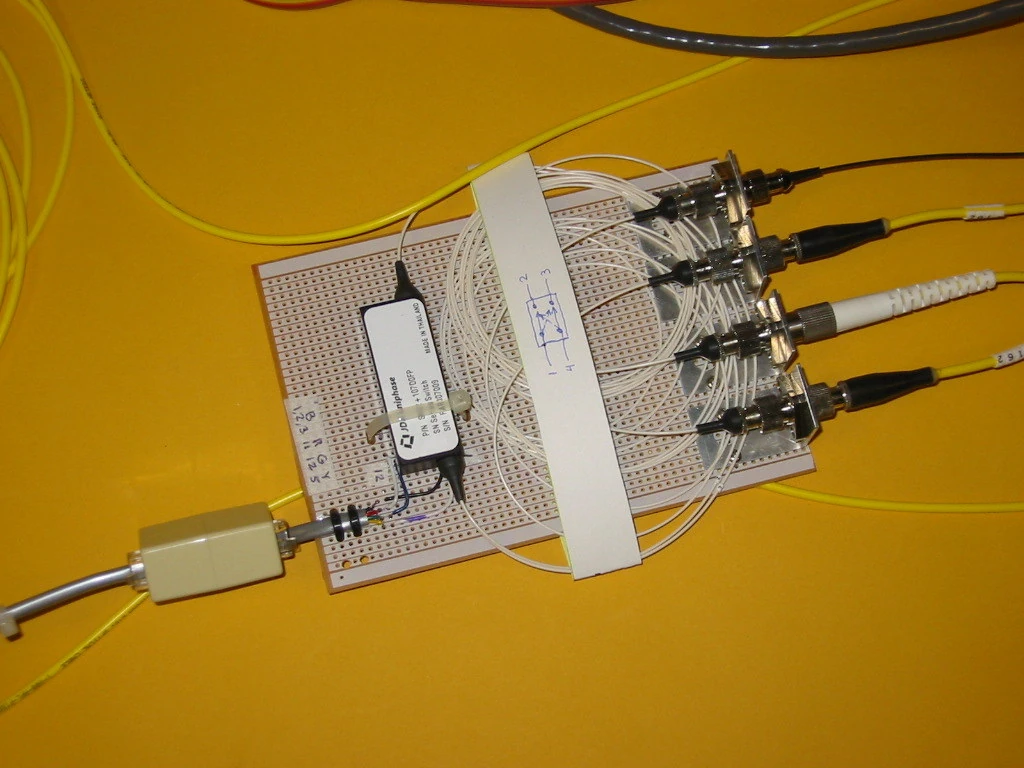

A Stuttgart campus experiment reports 14.2 million secure-key bits across 1.59 kilometres of deployed fibre during a 19-hour run. The October 27 preprint uses quantum-dot photons, frequency-converted from about 780 to 1,515 nanometres. Its reported average key rate is 206 bits per second.[1]
The researchers checked polarization hourly and compensated when required. Key processing used blocks; the result should not be described as an uninterrupted real-time key-delivery service. “Secure key” here identifies the authors’ analysis, not an independent certification of a complete communications product.[1]
The distinction between key rate and data rate is especially important. A key is material used by a cryptographic protocol. The amount of application traffic that can use it depends on the protocol and key-management policy. A headline about key production should therefore not substitute a video-streaming or internet-bandwidth claim.
Long runs answer a practical question that peak-rate snapshots cannot: what has to be maintained while the environment changes? For a deployed link, an honest operating account should include the cadence of alignment checks, interventions and data processing alongside the headline duration.
The frequency-conversion step also makes the interface itself part of the engineering story. When two subsystems prefer different wavelengths, a link needs a way to connect them without losing the correlations that make the protocol useful. Conversion efficiency alone would not establish that full requirement.
As an illustrative calculation, 256 key bits at the reported average rate correspond to about 1.24 seconds of production. That is arithmetic, not a measured protocol cycle or a recommendation about encryption. Actual key availability also depends on the processing and scheduling of the system.[1]
The result is most relevant as evidence about combining a semiconductor source with deployed infrastructure over time. Deployment readiness would require additional operational and security evidence. Reporting that boundary clearly makes the 19-hour experiment easier to assess, rather than turning it into a promise about an entire network.